Chef Dennis Wasko explores the history of the Jews of Georgia and their diverse and flavorful cuisine.
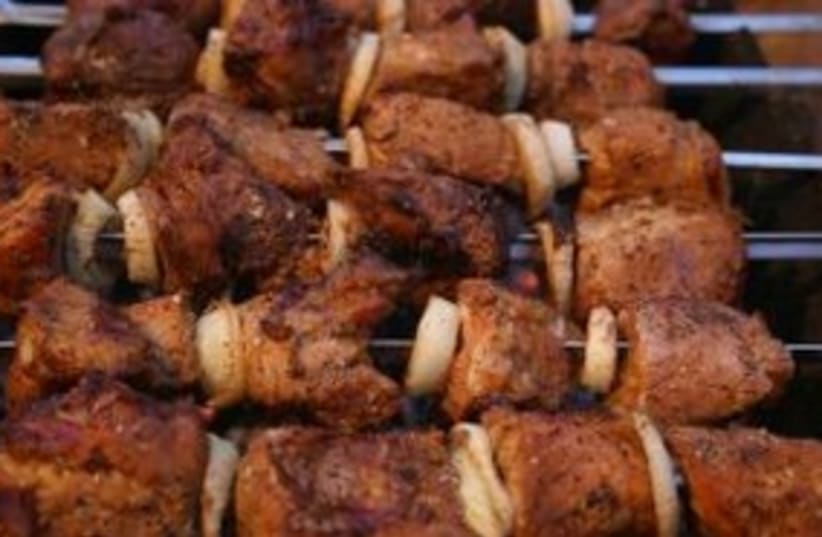
By DENNIS WASKOShashlik 311(photo credit: Courtesy)
Georgian Jews, which comprise one of the world’s oldest and proudest Diaspora communities, have lived in Georgia and the region for over 2,600 years. Tradition holds that Jews migrated to this area during the Babylonian captivity beginning in 586 BCE. From the beginning the Georgian Jewish community separated itself from the native population; however, though separate, Georgian Jews tried to live in peace with their non-Jewish neighbors. Unfortunately, Antisemitism made this practically impossible.While there are several accounts acknowledging the presence of Jews, not much is known about early Jewish history of Georgia.During the Middle Ages, life for the Jewish community was extremely difficult. After the terror of the Mongol invasion of 1236 CE, most Jews were forced to live in the independent western region of Georgia. There, they formed small communities along the Black Sea. However, their extreme poverty eventually forced them into serfdom - a humiliating fate that would plague them for 500 years. Jewish serfs were sold from master to master. As a result, Jewish families and communities were torn apart, and Jewish life became virtually impossible.When Georgia became part of the Russian Empire in 1801, the serfs became the property of the government and were forced to pay taxes to the Tsar. However, by the mid 1860’s serfdom was abolished and the former serfs were allowed to move to villages where other Jews were living. This intermingling led to the formation of Jewish communities throughout Georgia that became very close and protective of themselves. Unfortunately, antisemitism once again reared its ugly head under the Tsarist Government and Jews, who left the fields and began working as merchants and traders, were seen as a threat and as competition.To date, Georgia has been the scene of six blood libels against Jews. The first was recorded in 1850 - it was the first not only for Georgia, but the first in the entire Russian Empire. The worst case occurred in 1878 when nice Jews were accused of killing a Christian child to make Matzo with his blood for Passover. While the accused were exonerated, but blood libels continued to plague Georgia.Georgia enjoyed a short period of independence after the Russian Revolution, but by 1921 the Red Army invaded the Republic and seized control. Life under the Soviets, at first, was tolerable and basic freedoms were enjoyed, but quickly followingthe Georgian Rebellion of 1924 anti-Zionism and antisemitism became the norm. Jews were persecuted religiously and financially and were not allowed to leave the country. Things continued to be hard for the Jews, the last blood libel occurred as recently as 1965. Suffering continued through the 1970’s, but heroic efforts on the part of many, Jews eventually resulted in 30,000 people being allowed to immigrate to Israel.The fall of the Soviet Union marked the beginning of a better time for Georgian Jews. Though the region continues to be rocked by conflict, life for the Jews has vastly improved. Judaism is now officially protected in Georgia, and Jews enjoy full and equal rights. However, most Georgian Jews left the country to settle in Israel and around the world and today approximately only 13,000 Jews are left in Georgia.The cuisine of the Georgian Jews is very diverse and flavorful, reflecting the influences of centuries of foreign domination. Unique aspects of the cuisine include the reliance on bread instead of pasta or rice, a variety of cold dishes, and a devotion to walnuts and walnut based sauces. Georgian cuisine is also known for its use of wine vinegars, garlic, pepper, cumin, and hot chilies. Pomegranate seeds and juice are also used in many ways.Shashlik is probably the best known Georgian dish that is prepared all over the world. It is simply cubes of lamb or beef marinated in wine vinegar and grilled on a skewer over hot coals. Served with warm bread and an assortment of salads, it is a delicious way to become familiar with the Jews of Georgia.Shashlik(serves 4)Ingredients-1 pound boneless lamb or beef, cut into 2 inch cubes-1 medium onion, sliced-¼ cup red wine vinegar-¼ cup dry red wine-3 garlic cloves, sliced-½ teaspoon ground coriander-¼ teaspoon dried chili flakes or 1 of your favorite fresh hot chilies (optional)-¼ cup chopped parsley-½ teaspoon kosher salt-¼ teaspoon cracked black pepper-¼ cup vegetable oil-4 metal skewersDirections1. Combine all ingredients in a glass bowl. Marinate, covered, in the refrigerator for 1 day.2. Drain the meat, and blot dry with paper towels. Discard marinade and onion.3. Divide the meat evenly between the 4 skewers and grill over hot coals for about 15 minutes, turning the skewers occasionally to achieve for even browning. The skewers can also be broiled in the oven.4. Arrange the skewers on a platter and serve immediately. Serve with warm flatbread and assorted salads.Dennis Wasko has been a Professional Chef for 12 years and is the author of New Israeli Cuisine, www.newisraelicuisine.com, and Beyond The Kitchen Wall www.beyondthekitchenwall.net.
if(catID != 151){
var cont = `Take Israel home with the new Jerusalem Post Store