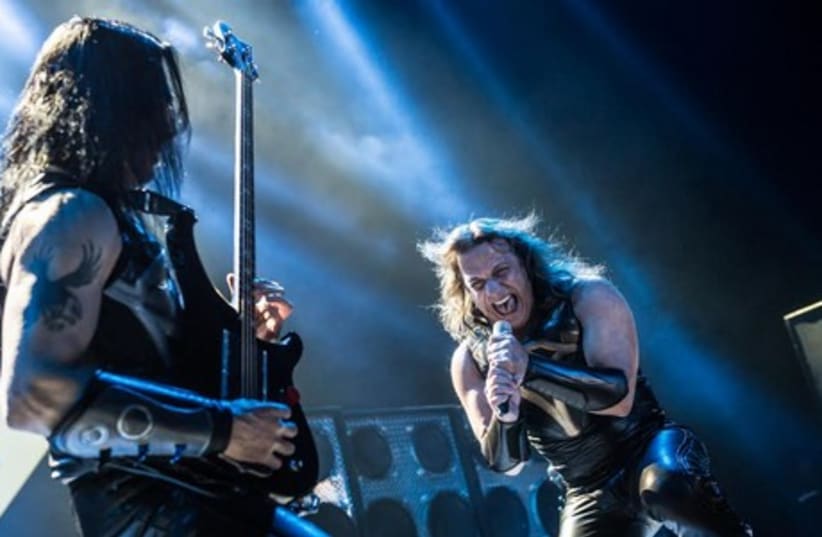
On Wednesday night some 2,000 hardcore Israeli metalheads descended on Hanger 11 in Tel Aviv to rock to one of the genre’s legendary groups.
By GIL STERN STERN REMENYManowar(photo credit: KAVIN NIXON)
On Wednesday night some 2,000 hardcore Israeli metalheads descended on Hanger 11 in Tel Aviv to rock to one of the genre’s legendary groups – Manowar.Formed in 1980, they were never a commercial success, but built up a large cult following over the years with their fantasy- and heavy metal-hero-themed songs. A large portion of the audience would not have been born until years after the 1988 release of their best known and biggest selling album, Kings of Metal (re-released in 2013).Young they may have been, but the crowd were well versed in the band’s songs and sang along word for word, stomping their feet, waving their fists and head banging their heads to the thunderous rock anthems.In many ways, Manowar are a 1980s heavy metal stereotype. The songs are formulaic ‘80s heavy metal, with hard and heavy guitar riffs, two verses, two choruses, screeching guitar solos and even screechier vocals from lead singer Eric Adams making up most of their songs.Having said that, some of those songs, especially the best ones from Kings of Metal, are great live numbers that can really stir up the excitement. And much of the crowd lapped it up.However, these were die-hard fans who had been dreaming of their heroes coming to play for them for years. This was the band’s first visit to Israel and their fans were so enraptured, they would have forgiven the band for any imperfections in the show – and unfortunately there were many.The sound balance was off for a lot of the numbers. It also took the band until the encore before they actually communicated with the audience. Not having anyone shout “Hello Tel Aviv” or introduce any song was something very much missing from the usual live experience. Each time the band had fired up the atmosphere with two or three stomping numbers, they went off stage to make way for snippets of documentary about the re-recording of Kings of Metal. This did not work at all. It brought everyone crashing back down to earth and left many standing around wondering what the point of it all was.The worst point of the night was a bass guitar solo from Joey DeMaio which lasted way too long, seemed to be consist simply of a large number of notes played randomly and very quickly, and featured probably the worst, most out of tune, painful-to-theears rendition of “Hava Nagilla” that one could possibly imagine. Don’t get me wrong. I am a genuine heavy metal fan. I love the music and I love it heavy and loud.But I’ll have nightmares about that “Hava Nagilla” for years to come.The encore was definitely the best part of the night. It featured three more rousing, anthemic songs –which were not punctuated by any daft documentary snippets – and DeMaio finally communicated with the crowd. He strutted on the stage in comedic Spinal Tap fashion, hysterically rendering a long soliloquy about Israeli heavy metal warriors in Hebrew, interspersed with the “F” word. That, together with great renditions of their best songs, got the whole crowd really going wild and demonstrated what a great show it could have been had the entire set been like this.Regardless of the issues, the die-hard fans went home happy, and cheered and screamed with delight when the band promised them several times at the end that they would definitely come back to do more shows in Israel. Not sure that this heavy metal fan will bother, though.
if(catID != 151){
var cont = `Take Israel home with the new Jerusalem Post Store