The Jerusalem Post
Jpost search icon google-icon iphone
  Set as Homepage
Tue, Jun 18, 2013   10 Tammuz, 5773
newspapers magazines
 
    • Breaking News
    • Diplomacy & Politics
    • Defense
    • National
    • Mideast
    • Syria
    • Iran
    • World
    • Business
    • Sports
    • Health & Science
    • Environment
  • Video
  • Opinion
    • Columnists
    • Editorials
    • Op-Eds
    • Letters
  • Jewish World
  • Lifestyle
    • Arts & Culture
    • Food & Wine
    • Travel
  • Features
    • Insights & Features
    • Week in review
    • On the Web
    • Shalva Superheroes
    • Obama in Israel
  • Blogs
    • In the news
    • Judaism
    • From the Middle East
    • Lifestyle
    • Aliya
    • Science and Technology
  • JPost Apps
    • iPhone app
    • iPad app
    • Android app
    • Twitter
    • Facebook
    • RSS feeds
    • JPost Toolbar
    • JPost Newsletter
    • JPost Alert
  • Premium Zone
    • The Jerusalem Report
    • Magazine
    • Metro
    • In Jerusalem
    • ePaper
    • Expert Opinion
    • Q&A
    • Dash
    • Christian Edition
    • Ivrit
  • French
    • Politique & Social
    • Affaires Palestiniennes
    • Diplomatie & Monde
    • Art & Culture
    • Israel
  • Green Israel
JPost Learn Hebrew  
Advertise with us  
Nefesh Guided Aliyah  
Eldan  
AFMDA  
YTA  
Isram Group  
JPost Twitter  
JPost Facebook  
Classifieds  


Breaking News
 
 
  • JPost.com
  • Business
  • Commentary
 

Global Agenda: Tidings of comfort?

By PINCHAS LANDAU
12/20/2012 22:49
Tweet

The improved atmosphere in Europe is something to be enjoyed while it lasts, but is not an indication that the financial crisis is over.

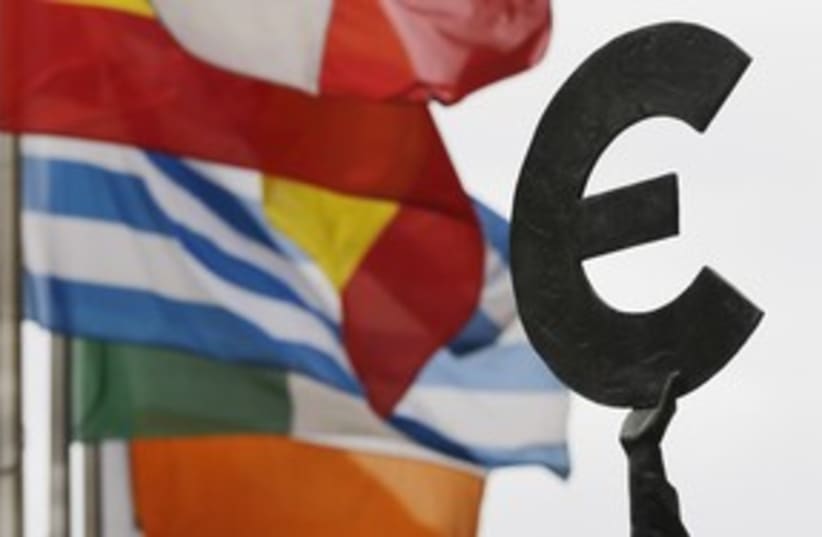
Euro symbol near European flags
Euro symbol near European flags Photo: REUTERS/Francois Lenoir
What’s news in Europe? On the basis of developments in the financial markets, there seems to have been a dramatic improvement in the economic and financial situation of the periphery countries, namely Greece, Italy, Portugal, Spain and Ireland. Known collectively by the unflattering acronym “PIIGS,” these have been the epicenter of the wider European economic and sovereign-debt crisis for over three years.

However, things have changed. As usual, the change shows up most strikingly in the stock markets. To take the extreme example, the main index of the Athens Stock Exchange slumped to about 500 in July, but it has been trading between 850-900 in December. A profit of 75 percent to 80% in half a year is certainly cool, but not many people recommended taking the plunge into Greek equities in July, and probably very few had the guts to actually do so. The exchanges in Lisbon, Madrid and elsewhere have also recorded large jumps, albeit smaller than those of Greece.

More important, by far, is that the market for government bonds of these countries has improved enormously.

The spreads between the yield on Italian and Spanish bonds and those of Germany have shrunken significantly, so that, while still large, they are no longer “life-threatening.”

All this has been achieved on the basis of a firm commitment by the European Central Bank to buy the bonds of troubled countries, subject to various conditions – of which the most important is that the countries themselves apply for a rescue package and then accept the (onerous) terms that the lenders (read Germany) will demand.

Perhaps most impressive of all is that the improvement is not limited to the financial markets, which, as more and more people are realizing, are entirely manipulated by government and central-bank activities and barely function any more in their primary task of “price discovery.”

Spain has become the poster boy of the improvement under way in economic structures; the Rajoy government has passed, in the teeth of intense opposition from unions and sections of the public, landmark reforms in the labor market and elsewhere.

The goal of these reforms, in all of the PIIGS countries, is to make their economies more competitive with Germany and the other “northern” EU countries. The problem for the periphery countries has been that their labor costs were far too high, relatively, their productivity too low and their laws too rigid. Taking a leaf from Germany itself, which underwent a painful reform program in the years 2003-2008, the Spanish and others are trying to improve their competitiveness without using the traditional method of devaluing their currencies. This is because, as members of the European monetary union, they don’t have their own currencies anymore. The only choice left, therefore, is “internal devaluation,” which means reducing wages and benefits sufficiently to get back on a par with Germany.

But the extent of the “internal devaluation” necessary (i.e., the reduction in real wages and ancillary benefits) is huge. Goldman Sachs, which has no interest in exaggerating the severity of the problem, estimates that in Greece and Portugal the reduction needed is in the order of 50% – and even in Spain and Italy in excess of 30%. These are massive “adjustments,” which, if carried through, will surely help bring down the very high unemployment rates that these countries are enduring. But they also imply that most working people will suffer very hefty reductions in their standard of living. Of course, those who move from being unemployed to having a job are much happier. But those who still have a job and are required to work in it harder for considerably less real income are not happy at all.

Even Goldman Sachs is dubious that an “internal devaluation” of the size needed can be imposed on the populations of these countries without a sociopolitical explosion.

There is, in addition, the very real issue of the banking systems of the PIIGS countries, which are all bankrupt and are kept alive by transfers from the ECB and/or Germany.

Spain, in particular, is belatedly facing up to the consequences of a real-estate boom and bust that, on a relative basis, was much greater than the one in the US and has gutted its banks.

But the mega-problem of Europe going forward is that both the financial and, especially, the economic aspects of the crisis are not limited to the PIIGS countries. Rather, they encompass France, which is especially resistant to structural reforms, as this year’s elections showed, as well as the UK. Nor is Germany itself as strong and vibrant as it was, and it is certainly incapable of carrying the PIIGS on its back for several more years.

In short, it seems that the improved atmosphere in Europe is something to be enjoyed while it lasts, but not to be taken as an indication that the European crisis is over and that the euro, and the EU itself, are safe.

landaup@netvision.net.il
  • Send
  • Large
  • Small
  • Print
  • Share
Most Viewed in
1
Exclusive: Israel, India agree to start hi-tech trade fund
2
Comment: Who’s who on the ICIJ list of tax evaders?
3
Ingredients for successful mergers and acquisitions
4
Sheshinksi to head 2nd c'tee on natural resources
JPost Community
Tweet
Europe Finance Economy PIIGS Growth EU
Tweets by @Jerusalem_Post
Share this article
Tweet
Share
Send
Your comment must be approved by a moderator before being published on JPost.com. Disqus users can post comments automatically.

Comments must adhere to our Talkback policy. If you believe that a comment has breached the Talkback policy, please press the flag icon to bring it to the attention of our moderation team.
JPost Services
conferenceConference
newsletterNewsletter
iphoneMobile Apps
kotelcamKotel Cam
kolboJPost Alert
premiumPremium
JPost TV News  
Mobile Apps  
Bank Hapoalim  
Meir Panim  
Israel Law Center  
Inbal Hotel Jerusale  
Meier on Rothschild  
Weizmann Institute o  
JPost Premium Zone  
JPost kotel Camera  
         
 
Israel Focus
JPost TV News
Watch Now!  
Israel Law Center
The ultimate Mission to Israel, October 21 – 28, 2013 Register now!  
Nefesh B'Nefesh Guided Aliyah
Already living in Israel? Enjoy the Benefits of Aliyah!  
Give "Freedom" this Passover
to needy Israeli families. Donate now  
YTA – A Yeshiva in Israel…
in English. Come Join Us  
War Threatens
Protect the People of Northern Israel  
Bank Hapoalim
Israeli's number one bank  
Jerusalem Post Lite
Lite Edition of the Jerusalem Post for English improvement  
Learn Hebrew with us
Get 10 minutes free personal coaching in Hebrew through phone or Skype  
JPost newspapers
Sign up for the JPost newspapers and receive one month free subscription  
Kosher English Magazine
English language weekly magazine - especially for religious people  
JReport Kindle Edition
Now you can get the Jerusalem Report directly to your Kindle  
JPost Premium Edition
The very best articles are available only in our Premium edition  
Lifestyle Magazine
 
 
Real Estate
Meier on Rothschild
Tel Aviv's Most Prestigious Address  
Don't Look For a House!
In Israel, our website will do it for you!  
 
Travel
Tourism Magazine
June 2013  
The Inbal Jerusalem Hotel
Hot summer deal, order now!  
Eldan Rent a Car
20% off all Car Rental Reservations in Israel  
Hertz Car Rental
Special Online Discounts!  
The King David Jerusalem Hotel
One of the world's truly iconic hotels, and a Jerusalem landmark  


Sites Of Interest:

Jerusalem Hotels
KKL-JNF
Poalim Online
BreitBart.com
Our Friends
Jerusalem Attractions
Jerusalem Tours
itraveljerusalem.com

JPost sites:

Learn Hebrew
The Jerusalem Report
Our Magazines
JPost Edition Francaise
Green Israel
Christian World
Jerusalem Post Lite

Services:

JPost Mobile Apps
JPost Premium
JPost Newsletter
JPost Toolbar
JPost News Ticker
JPost RSS feeds
JPost Archives
JPost Alert
JPost Kotel Cam

JPost Conferences:

NYC Conference
Diplomatic Conference

Information:

About Us
Feedback
Staff E-mails
Copyright
Sitemap
News Partners
Advertise with Us
Statistics
Ad Specs
Terms Of Service
Jpost.com, the online edition of the Jerusalem Post Newspaper - the most read and best-selling English-language newspaper in Israel. For analysis and opinion from Israel, the Jewish World and the Middle East. Jpost.com offers expert and in-depth reporting from Israel, the Jewish World and the Middle East, including diplomacy and defense, the Palestinian-Israeli conflict, the Arab Spring, the Mideast peace process, politics in Israel, life in Jerusalem, Israel's international affairs, Iran and its nuclear program, Syria and the Syrian civil war, Lebanon, the Palestinian Authority, the West Bank and Gaza Strip, Israel's world of business and finance, and Jewish life in Israel and the Diaspora.
 
About Us | Advertise with Us | Subscribe | Premium | Newsletter | RSS | Contact Us
 
All rights reserved © The Jerusalem Post 1995 - 2012