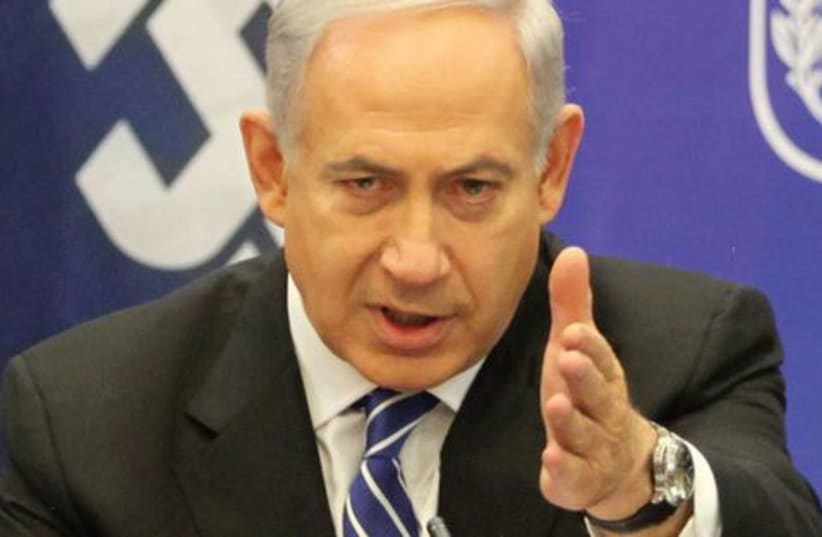
In BBC interview, PM warns that Syrian chemical arms, anti-aircraft weapons could change balance of power in Mideast.
By JPOST.COM STAFFNetanyahu521(photo credit: Marc Israel Sellem)
Prime Minister Binyamin Netanyahu told the BBC on Wednesday that Israel is prepared to defend itself should Syrian President Bashar Assad's chemical weapons and anti-aircraft weapons fall into the wrong hands."The main arms of concern to us are the arms that are already in Syria - these are anti-aircraft weapons, these are chemical weapons and other very, very dangerous weapons that could be game changers," he said in an interview with the BBC.Netanyahu warned these weapons could change the balance of power in the Middle East, and stressed that it is not just in Israel's interest to stop these weapons from getting into the wrong hands, but it's in other countries' interest as well.Despite this, Netanyahu echoed past statements that Israel doesn't seek to interfere in the Syrian civil war. "We are prepared to defend ourselves if the need arises and I think people know that what I say is both measured and serious," he said.Click for full JPost coverageThe prime minister was in London on Wednesday to attend the funeral of former British prime minister Margaret Thatcher.Netanyahu discussed Syria's civil war in meetings with British Prime Minister David Cameron and Canadian Prime Minister Stephen Harper while in London on Wednesday.France and Britain have pressed the case for amending or lifting an EU arms embargo on Syria to support the outgunned rebels waging a two-year-old uprising against Assad and help end a civil war that has already claimed an estimated 70,000 lives and displaced millions of people.But other G8 countries such as Russia and Germany have opposed the move, fearing it could lead to weapons falling into the hands of Islamist militants and fuel a regional conflict.Israel believes that around one in 10 of the rebels are Sunni Muslim radicals, officials told Reuters.Changing the EU arms ban on Syria, which must be renewed or amended by June 1, needs backing from all 27 EU states. Britain and France have said they could act alone if they do not get their way.Reuters contributed to this report.
if(catID != 151){
var cont = `Take Israel home with the new Jerusalem Post Store