Schalit’s captivity: No sunlight but given radio, TV
IDF prepared for much worse scenarios regarding Gilad's health, mental state; Military Intelligence will begin debriefing in the coming weeks.
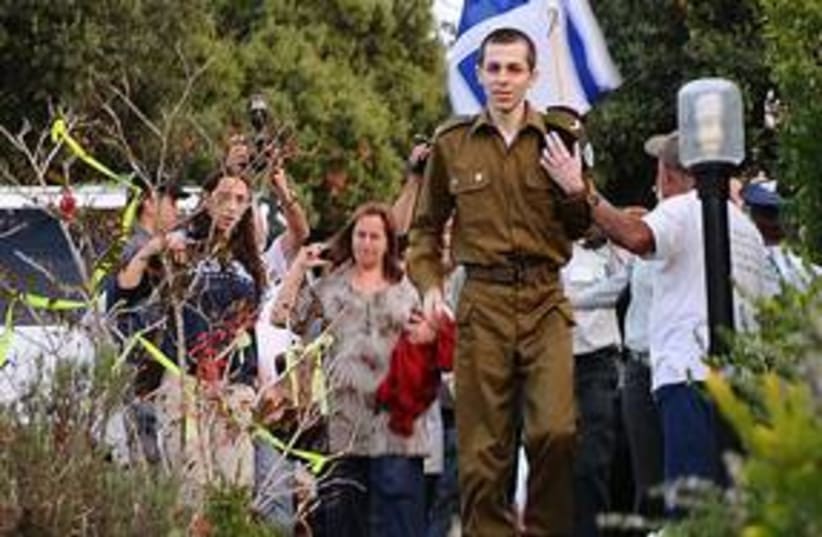
By YAAKOV KATZGilad Schalit arrives at his home in Mitzpe Hila 311(photo credit: IDF Spokesman)
When Gilad Schalit sat down minutes after crossing into Israel for his first conversation with an IDF psychologist, he smiled and said to the doctor: “I knew you would be surprised by my condition.”Schalit was right.The IDF had prepared for a far worse scenario. It equipped a standard armored military jeep with sophisticated medical equipment for the short fiveminute drive from the Kerem Shalom crossing with Egypt to a nearby base and deployed medical equipment that it had used in Haiti at the Tel Nof Air Force Base as well.RELATED:Noam Schalit: Gilad's conditions were harsh, improved later Schalit: I thought I'd be held captive for years to comeWhile Schalit appeared skinny and pale, according to IDF estimates, he received regular amounts of food while in Hamas captivity. His pale and skinny appearance is understood to be the result of the mental pressure he had been under during the five years and four months of his imprisonment.IDF officers who met with Schalit refrained from asking direct questions about the conditions of his captivity but he volunteered a few details.He rarely saw sunlight but he was given a radio and TV by his captors so he could follow the news. That is how, for example, he knew that Binyamin Netanyahu was prime minister and that Lt.-Gen. Benny Gantz was the IDF chief of General Staff.On the other hand, Schalit said during his interview with Egyptian TV that he was not used to seeing people during his captivity. This could be interpreted as meaning that he was held by a small number of guards who rarely interacted with him.In the coming weeks, military intelligence will begin meeting with Schalit to debrief him on his experiences and to try to glean information that could be useful for Israel. One question that will likely come up is whether Schalit was aware of Ahmed Jabari’s involvement in his captivity. Jabari appeared on Egyptian TV on Tuesday accompanying Schalit to the Rafah Crossing.
In addition, Israel will want to learn about his routine, his captors and where he was kept. Defense officials said the debriefing would only begin after medical authorities gave the green light.Rami Igra, a former head of the Mossad’s MIA Division said Tuesday that Schalit looked surprisingly good and that it appeared Hamas had made an effort to release him presentable.“Hamas had an interest in making him look good so it could say that it treated him well and in a humane manner,” Igra said. “At the same time though, the paleness is likely the result of the immense pressure he was under.”Click for full JPost coverage on Gilad Schalit
if(catID != 151){
var cont = `Take Israel home with the new Jerusalem Post Store