Palestinians detonate bomb as IDF conducts routine patrol in Kissufim; terrorists also fire Kassam into Eshkol region.
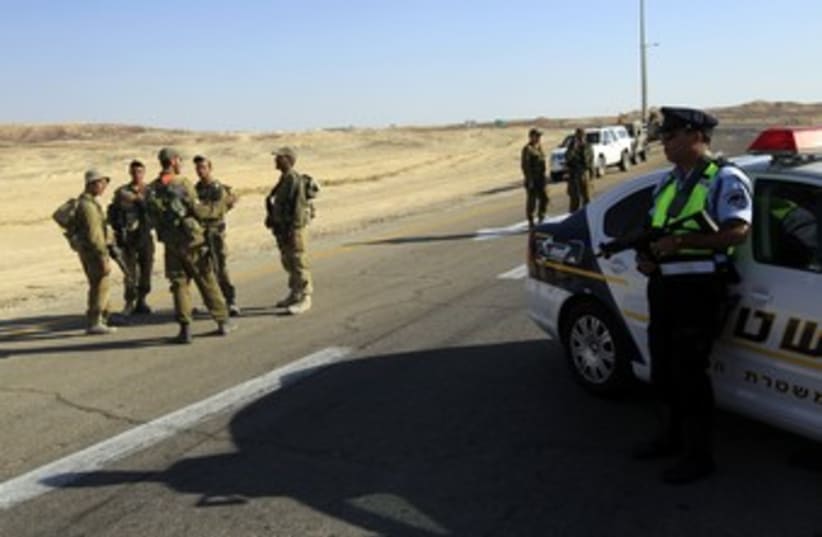
By YAAKOV LAPPIN, JPOST.COM STAFFIDF patrol in South after 2011 cross border attack 370 (R)(photo credit: Ronen Zvulun / Reuters)
An explosion tore through the Gaza-Israel border on Tuesday morning, injuring three IDF soldiers.The blast occurred as an IDF force was on a routine patrol along the edge of central Gaza. Paramedics treated all of the injured soldiers at the scene, two of whom suffered light injuries. The third soldier with moderate injuries was evacuated to the Soroka University Medical Center in Beersheba via helicopter .Shortly after the bomb attack, terrorists from the Gaza Strip fired a Kassam rocket into southern Israel.The rocket landed in the Eshkol region. There were no reports of damages or injuries.Last month, terrorists detonated an explosive on the Gaza-Israel border, seriously injuring an IDF company commander, who later lost a hand. The explosive was placed on a gate in the Kissufim region, near Kibbutz Ein Hashlosha.Earlier this week, the IDF appointed a new Gaza Division commander on Sunday evening, naming Brig.-Gen.Micky Edelstein as the new military figure responsible for Israel’s most volatile border.“The Southern Command, [and] the Gaza Division, you are the commanders and combat soldiers who are ready at any time... to protect the State of Israel’s southern border and provide peace and quiet, support, and routine life as much as possible to citizens,” OC Southern Command Maj.- Gen. Tal Russo said during the ceremony.“At this time, like every day of the year, our soldiers are on standby on the border, standing against our enemies and against anyone who wants to violate the security of the state,” Russo added.The border experiences frequent attacks by a host of Gazan terrorist factions, including Hamas, Islamic Jihad, and smaller organizations.The attacks take the form of mortar fire, explosives, rocket fire and machine-gun attacks, as well as attempts to cross the border into Israel.Early on Monday, a Gazan man who approached the border and ignored soldiers’ orders to stop was shot dead.Palestinian medical sources said the man suffered from a mental condition.Jerusalem Post staff contributed to this report.
if(catID != 151){
var cont = `Take Israel home with the new Jerusalem Post Store