More rockets fired at South despite reports of ceasefire
One rocket intercepted by Iron Dome, a second falls south of Ashkelon; Color Red siren activated heard throughout South; new rocket fire puts reported ceasefire with Hamas in question.
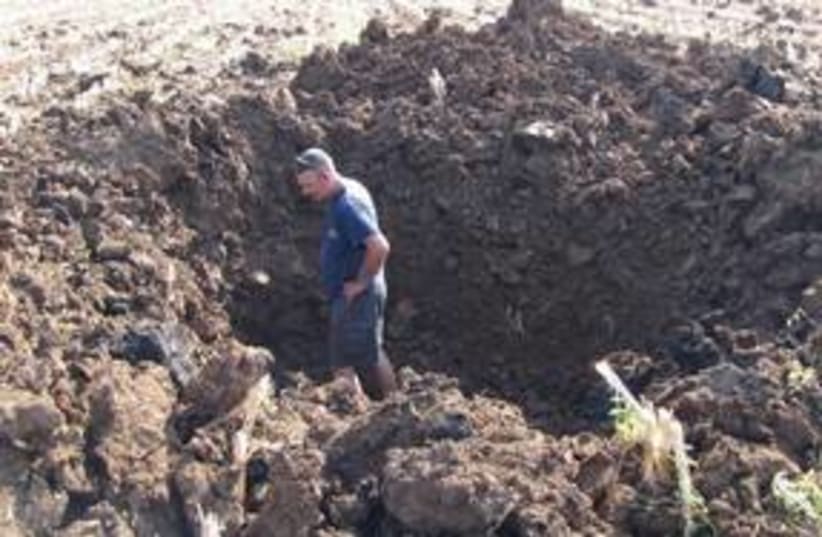
By YAAKOV LAPPINA policeman stands in the crater from a Grad rocket 311(photo credit: Be'er Tuvia Regional Council)
Despite reports that Hamas was seeking an immediate ceasefire with Israel, rocket and mortar attacks on southern Israel from Gaza resumed in Sunday evening after an afternoon lull.One rocket exploded in the Sderot area. No injuries were reported.RELATED:Aharonovitch: Rocket attacks on South will continue Iron Dome intercepts more than 15 rockets this weekend Less than an hour earlier, two rockets were fired at Ashkelon on Sunday night. One was intercepted by the Iron Dome anti-rocket shield, and another fell south of the city in open area, failing to cause injuries or damages.Minutes earlier, the Color Red rocket alert had been activated in the Sha'ar Henegev Regional Council, sending residents fleeing for cover. A rocket fell near a kibbutz in the area. No injuries were reported.More than 20 rockets were fired into Israel in the morning. Barrages of rockets were fired at Beersheba and Ashkelon.Around half of the rockets fired at both cities were intercepted by Iron Dome.One rocket struck an empty high school and pierced the roof, sending shrapnel flying.Luckily, the building was empty due to the summer holidays.The farming community of Eshkol Regional Council was shelled byPalestinian mortars throughout the day. One of the shells retrieved by IDF sappers contained phosphorous, which is designed to create a more intense fire after detonation.Police have asked members of the public to follow Home Front Command safety instructions.
if(catID != 151){
var cont = `Take Israel home with the new Jerusalem Post Store