Dagan: Israeli airstrike on Iran nuclear plant 'foolish'
Former Mossad chief warns attack on Iranian reactors would cause regional war in which missiles from Iran, Hezbollah would be fired.
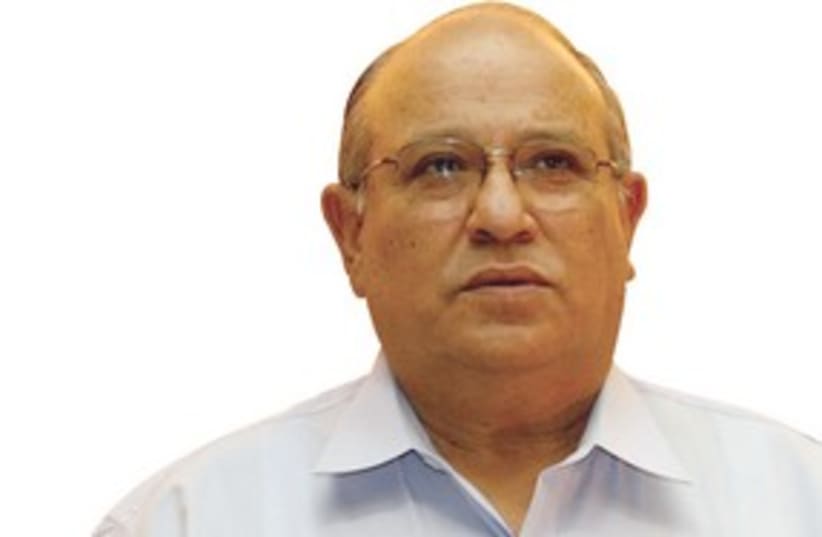
By YAAKOV KATZDagan 311(photo credit: Ariel Jerozolimski)
An Israel Air Force attack against Iran’s nuclear facilities would start a regional war whose end Israel cannot foresee, former Mossad chief Meir Dagan said on Friday.“An aerial attack against Iran’s nuclear reactors would be foolish,” Dagan was widely reported in the media as telling a conference of senior faculty at the Hebrew University in Jerusalem on Friday, in his first public remarks since leaving office earlier this year.RELATED:Herzog Prize awarded to Dagan“Anyone attacking Iran needs to understand that it could start a regional war which will include missile fire from Iran and Hezbollah in Lebanon. The Iranian problem must be made an international problem, and we must continue to work to delay the nuclear program,” he said.This was the first time Dagan had made his opposition to an Israeli strike against Iran public. In the past he has called for continued covert action against Iran and for investing in opposition groups within the country with the objective of toppling the Islamic regime run by Ayatollah Ali Khamenei.Before leaving office in January, Dagan broke away from earlier predictions and said that in his view, Iran would obtain a nuclear weapon only in 2015.With regard to the ongoing upheaval in the Middle East, Dagan downplayed the significance of the toppling of Hosni Mubarak in Egypt, saying Cairo had merely seen a “change of leaders, and not a revolution.”Dagan said the same elite would continue to rule Egypt, adding that the chance the Muslim Brotherhood would take power was minimal.He also predicted that a new regime would not dramatically change Egypt’s relations with Israel.Israel, he said, would benefit from the removal of Bashar Assad as the ruler of Syria, which could lead to a stop in the flow of weaponry to Hezbollah. Iran’s influence over the region would also be curbed, he said.“Assad and the Alawite elite will fight until the end since they do not have an alternative. It is either win or die, and they understand that,” he said.The former Mossad chief said the so-called “tsunami” in the Middle East was actually giving expression to historic rifts in Arab society. He added, however, that a certain barrier of fear had been breached, and that it was no longer possible to hide events taking place in the region.Dagan said he was in favor of conducting a prisoner swap to secure the release of Gilad Schalit – but “not at any price.” Prisoners released in 2004 in exchange for businessman Elhanan Tannenbaum were subsequently responsible for murdering over 200 Israelis, he said.Jerusalem Post staff contributed to this report.
if(catID != 151){
var cont = `Take Israel home with the new Jerusalem Post Store