IDF fears Syrian army will back up border protesters
Military training for scenario in which Syria defends protesters attempting to rush border following PA statehood bid in September.
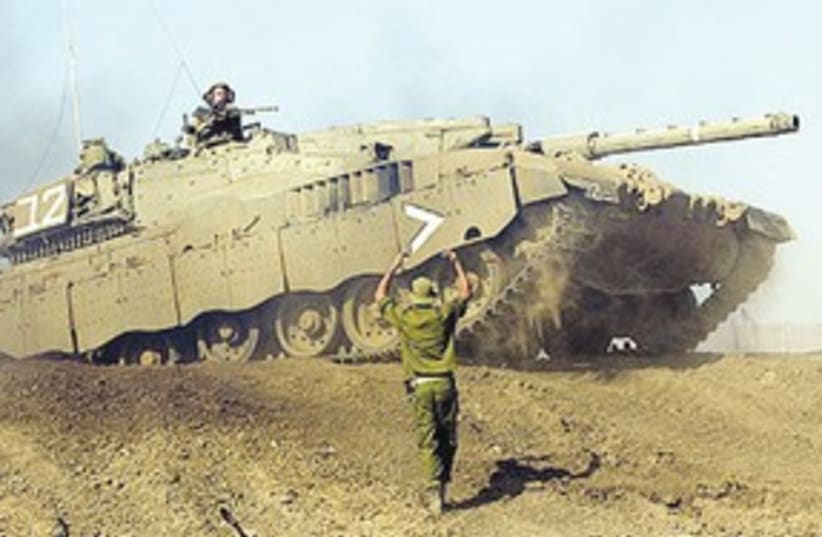
By YAAKOV KATZIDF Tank 311(photo credit: Courtesy)
The army is preparing for the possibility that Syrian soldiers will deploy along the border and actively defend men who try to infiltrate the Golan Heights during demonstrations expected to break out following the Palestinian Authority’s unilateral declaration of statehood at the United Nations in September.The IDF got its first taste of the demonstrations along the Syrian border on May 15 when Palestinian protestors crossed into Majdal Shams.RELATED:IDF writing doctrine on containing border marchesSecurity and Defense: OutfencedA few weeks later, protests again broke out near Majdal Shams but the IDF succeeded in preventing an infiltration.Syria media later reported that more than 20 people were killed.The IDF has been training forces for a scenario during which soldiers from the Syrian military will also approach the border and try to actively defend protesters attempting to infiltrate Israeli territory.“We could face civilians who start a demonstration and are then joined by the military as part of the regime’s so-called desire to protect its civilians,” one IDF officer explained.Due to this possibility, the IDF will likely deploy tanks along the border with troops to prevent a violation of Israeli sovereignty and confront the Syrian soldiers if necessary. The IDF has held a number of exercises recently including the use of tanks to enable soldiers to practice how they will respond in such a scenario.“The number one goal will be to deescalate the situation and try to defuse tensions to prevent a larger conflict,” another defense official explained.Part of the IDF’s strategy is to contact various international organizations and governments to work together to contain the demonstrations. The IDF is holding talks with UNIFIL in Lebanon and UNDOF in Syria in an effort to get the two peacekeeping forces to deploy along their respective borders.Last week, The Jerusalem Post reported the army was procuring new non-lethal weapons that will help disperse large demonstrations and marches that could break out in the West Bank and along the borders in the North. The Ground Forces Command has also instituted new rules of engagement for snipers who will be deployed to stop demonstrations and marches, including at what distance they are allowed to open fire.
Related TagsUNIFIL
if(catID != 151){
var cont = `Take Israel home with the new Jerusalem Post Store