Could Defense Minister be scrapping deputy IDF chief appointment due to the Harpaz document?
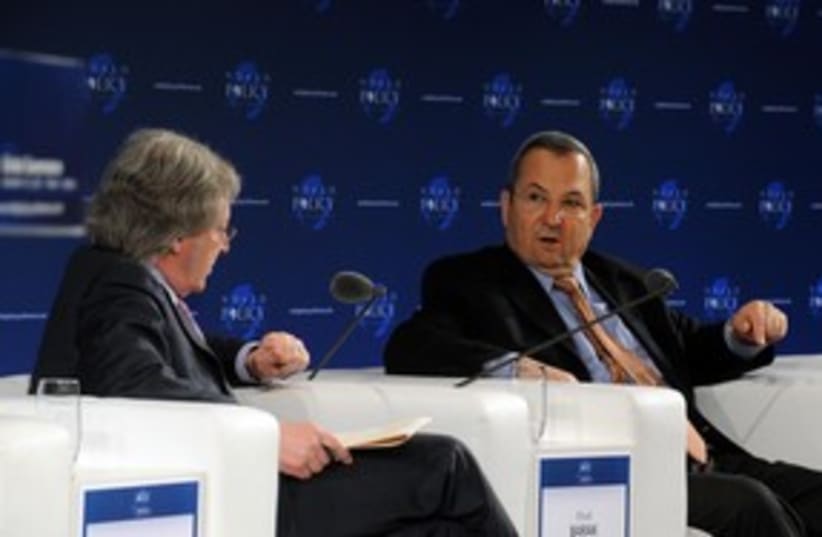
By YAAKOV KATZBarak 311(photo credit: Ariel Harmoni / Defense Ministry)
The question of who will be the next IDF deputy chief of staff lies at the core of ongoing debates within the Israeli defense establishment. Insiders are predicting that Defense Minister Ehud Barak will not promote officers who were involved in what has become known as the Harpaz Document affair.One such officer could be Maj.-Gen. Gadi Eizenkot, who served as the head of the OC Northern Command until July and has been waiting to be appointed the deputy chief of staff in place of Maj.-Gen. Yair Naveh. Expectations were that Eizenkot would then compete against Naveh in 2014 to replace Chief of Staff Lt.-Gen. Benny Gantz.RELATED:US commander visits Israel to finalize missile drillNavy completing secret 2 year submarine upgradeBut now, that might not be the case since even a year-anda- half later the Harpaz Document has yet to go away. State Comptroller Micha Lindenstrauss is expected to release his report on the Harpaz affair in the coming months.Eizenkot, who previously served as head of the IDF Operations Directorate, as the defense minister’s military advisor and commander of the Judea and Samaria Division, removed his candidacy to replace Lt.-Gen. (res.) Gabi Ashkenazi, paving the way for Gantz’s appointment.
The Harpaz Document – named for the alleged forger Boaz Harpaz – was a paper which detailed a strategy how to get former OC Southern Command Maj.-Gen. (res.) Yoav Galant appointed chief of staff. Galant was appointed but in the end lost the job over a land scandal he was involved in at his home in Moshav Amikam.Ashkenazi, who received the document, showed it to Eizenkot who decided not to bring it to Barak’s attention. It didn’t help Eizenkot that one of his close friends, Gabi Siboni, was instrumental in leaking the document to Channel 2 in August 2010.If Barak decides to veto Eizenkot’s appointment as deputy chief of staff, the officer will be left with two options – either retire from the IDF or try and find another position, hope that Barak leaves the post after elections and try again to be appointed chief of staff after Gantz’s term ends in 2014.Other names that have been floated as a potential deputy chief of staff have been Israel Air Force commander Maj.- Gen. Ido Nehushtan, OC Central Command Maj.-Gen. Avi Mizrahi and the IDF attaché to the US Maj.-Gen. Gadi Shamni.The Walla news website was the first to publicize news of Barak’s discontent with Eizenkot.Barak’s media adviser Barak Seri refused to answer Jerusalem Post questions regarding speculation that Eizenkot would be not be appointed the next deputy chief of staff.Another appointment that has the IDF on its toes is the next IAF commander to replace Nehushtan, scheduled to step down from his post in April.The selection is considered extremely sensitive due to the possibility that Israel will attack Iran’s nuclear facilities in the coming years.The main contenders for the post are OC Planning Directorate Maj.-Gen. Amir Eshel; Maj.-Gen. Yohanan Locker, Prime Minister Binyamin Netanyahu’s military adviser; and Brig.-Gen. Nimrod Shefer, the current deputy commander of the air force.Eshel, who was deputy commander of the IAF from 2006 to 2008, is considered the front-runner. Locker is also believed to have strong chances due to his close relationship with Netanyahu.While the IDF chief of staff appoints members of the General Staff, the appointment needs to be approved by Barak, who has intervened recently in a number of key military appointments.Gantz is said to have made up his mind but has yet to publicize the decision, possibly an indication that he is not in agreement with Barak about other appointments, such as the next deputy chief of staff.
Related Tagsyoav galant
if(catID != 151){
var cont = `Take Israel home with the new Jerusalem Post Store