IDF brigade was re-arresting Palestinian freed in Schalit deal near Hebron; soldier moderately injured.
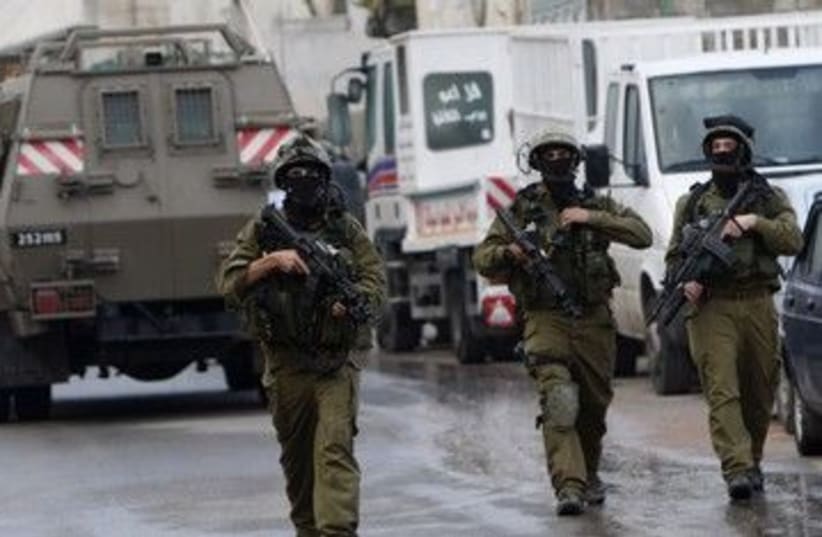
By YAAKOV KATZIDF soldiers patrol during a raid 390 (R)(photo credit: Abed Omar Qusini / Reuters)
A Palestinian stabbed an IDF soldier in the village of Yatta in the South Hebron Hills on Thursday.The soldier returned fire, wounding the attacker and killing another Palestinian with him. The two Palestinians that were shot were both teenagers. The soldier was moderately wounded and evacuated to Hadassah University Medical Center in Jerusalem’s Ein Kerem.The soldier was part of a force from the Kfir Brigade that had entered the village to arrest Khalid Makhamira, a 39-year-old Palestinian who was recently released as part of the prisoner exchange for Gilad Schalit.IDF sources said that Makhamira had been arrested in 2006 and was serving a life sentence for involvement in a series of shooting attacks in the West Bank during the second intifada.He was originally a Fatah member before he went into jail, later switching allegiance to Hamas during his five years in prison.Makhamira was re-arrested for allegedly engaging in terrorist activity and particularly the smuggling of money for terrorists in the West Bank, according to IDF sources.The sources said that Makhamira was the fifth Palestinian released in the Schalit deal to have been re-arrested.The stabbing took place a few hours after Nitzan Alon was promoted to the rank of major-general and was appointed head of the Central Command in place of Maj.-Gen. Avi Mizrahi.Alon, who previously served as commander of the Judea and Samaria Division, will officially take up his post Sunday in a ceremony at Central Command headquarters in Jerusalem.During the ceremony on Thursday, Mizrahi said that the position was the most “complicated and difficult” that he had performed throughout his career.
if(catID != 151){
var cont = `Take Israel home with the new Jerusalem Post Store