South pounded by rockets, prepares for more violence
IAF strikes two terrorists on motorbike in Gaza; at least 15 rockets fired into Israel; tourists advised to immediately leave Sinai.
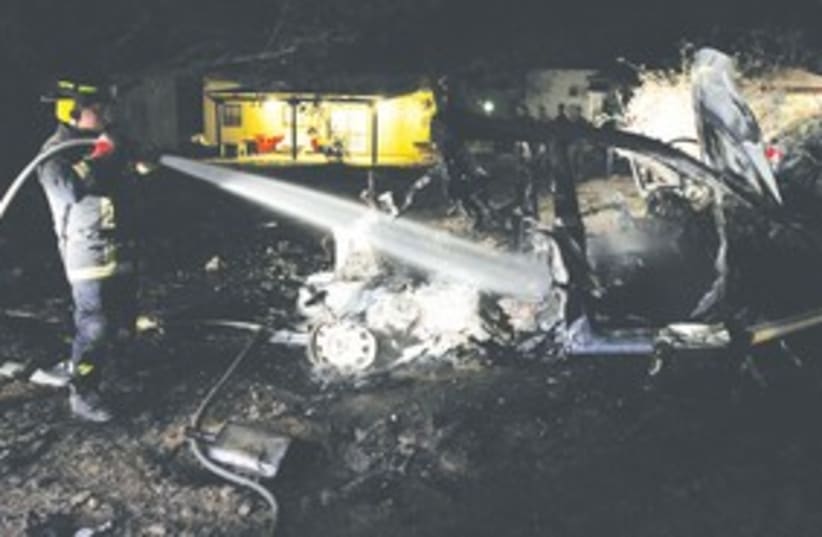
By YAAKOV KATZA car fire started by a Gazan rocket 311(photo credit: REUTERS)
The South braced for a weekend of violence on Thursday night as rocket fire intensified and the IDF struck back, killing two terrorists in the Gaza Strip.At least 15 rockets and mortar shells pounded southern Israel, hitting open areas near Ashkelon and in the Sha’ar Hanegev Regional Council. A mortar shell struck the Erez crossing, which is frequently used by Palestinians to enter Israel for medical treatments, causing extensive damage.RELATED:IDF strikes targets in Gaza in response to rocket fire 'PA silence over terror raises questions about statehood'The Israel Air Force immediately struck a motorbike traveling in northern Gaza that military sources said was being driven by two men from Islamic Jihad who had fired the mortar shells at the Erez crossing.Defense officials said Israel would hold Hamas responsible for the increase in rocket fire that began on Wednesday after a short lull and included more than 20 rockets that struck Israel throughout the night. IDF sources said Islamic Jihad was behind the rocket fire and that there were indications that Hamas was trying to rein in the group to prevent a larger Israeli retaliation.Palestinians reported around 10 people killed in IAF strikes that began on Wednesday night and that a total of 22 have been killed since the beginning of hostilities last week. According to the IDF, a majority are known terrorists.The Ma’an news agency reported on Thursday that seven Palestinians were killed in air strikes overnight Wednesday against a weapons-smuggling tunnel in the southern Gaza town of Rafah. Four bodies were retrieved from the tunnel on Thursday afternoon. Another three Palestinians were killed in an air strike in Beit Lahiya in northern Gaza.Defense Minister Ehud Barak said he was satisfied with the IDF operations so far. Defense officials said that Israel planned to continue to restrain itself but would begin escalating its response if the rocket attacks from Gaza continued.“I’m extremely satisfied by this achievement,” because it signals “that we mean business and we are not going to accept the massacre of our civilians on the roads,” Barak told CNN.The Home Front Command issued new instructions to the general public in the South on Thursday, banning large outdoor events and urging residents of towns under fire to remain near bomb shelters.The IDF remained on high alert along the border with Egypt out of concern that additional terrorist cells were planning attacks against Israel, similar to the ones carried out last week near Eilat.
According to one report on Thursday, the Shin Bet (Israel Security Agency), which had provided intelligence regarding the attacks several weeks before they occurred, had recommended that the IDF attack some members of the cell while they were still in the Gaza Strip, in an effort to thwart the attack. The IDF, however, decided not to follow the recommendation out of concern that such a strike would set off a new conflict with Hamas and other armed groups in Gaza.The Shin Bet refused to confirm the report, which first appeared on Army Radio.Also on Thursday, the Counter-Terror Bureau in the Prime Minister’s Office reiterated its warning to Israelis to immediately leave the Sinai Peninsula due to fears that terrorists are roaming freely there with plans to attack or kidnap Israeli vacationers.
if(catID != 151){
var cont = `Take Israel home with the new Jerusalem Post Store