"The role of the US is uncontested and irreplaceable, but everybody sees that it's not enough," French president says; EU nears trade deal with PA.
By REUTERSSarkozy mad 311 R(photo credit: REUTERS)
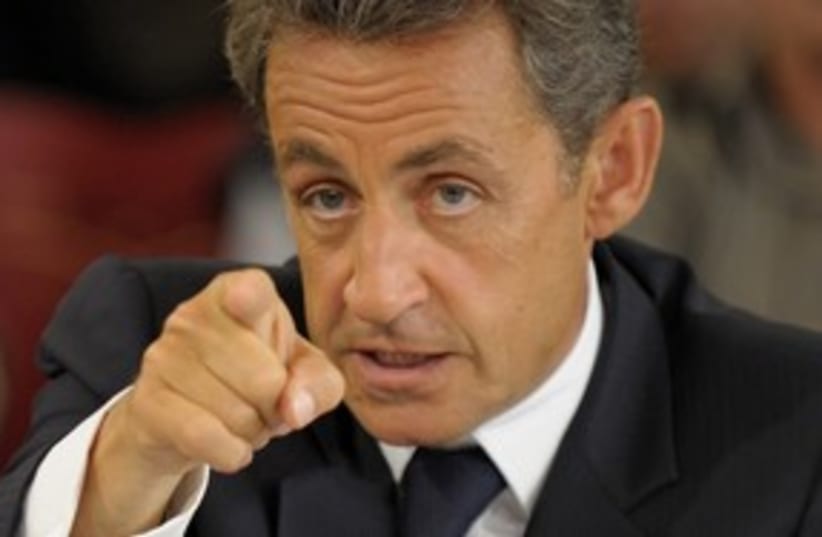
French President Nicolas Sarkozy said on Wednesday he wanted to see a united European Union voice on the issue of Palestinian statehood at next month's United Nations General Assembly and urged Washington to do more for peace."The 27 countries of the European Union must express themselves with one voice," Sarkozy said in an opening speech to an annual conference of French ambassadors.RELATED:'Jordan's King tells Abbas to reconsider statehood'Landau: If PA goes to UN, declare all agreements null"The role of the US is uncontested and irreplaceable, but everybody sees that it is not enough. We have to widen the circle of negotiation, think of the role and pertinence of the quartet."Sarkozy said the world could not continue to leave the Palestinian peace process frozen while the Arab Spring forces change elsewhere in the region.Up until now most of the EU’s countries have refrained from committing on how they would vote on the resolution, saying that it depended on the text. EU foreign policy chief Catherine Ashton was scheduled to convene an informal meeting of the EU’s 27 foreign ministers on September 2 where the issue will be discussed.
The EU moved closer to a trade deal with the Palestinian Authority on Wednesday, in what could be construed as a sign of support for the statehood bid. The European Parliament's International trade committee voted 27-0 to fully open markets to farm and fish products from the West Bank and Gaza Strip. The vote paved the way for full parliamentary approval for a deal later this year.While small -- trade between the EU and the West Bank and Gaza was worth 60 million euros in 2009, of which just 10 percent constituted Palestinian exports to the EU -- the move nonetheless represents an opportunity for exports to boost an economy weakened by chronic conflict with Israel."This deal is enormously important. It gives more power to the Palestinians to trade directly with the EU. And it's a signal of good will from the international community that comes at an important time," said Maria Eleni Koppa, a Greek socialist lawmaker who led the committee's discussion on the issue.The West Bank and Gaza mostly export vegetables, fruits and cut flowers to the European Union, while the territories import EU machinery, chemicals and transport equipment.The new deal will give Palestinian exporters unlimited duty-free access to European markets for farm goods and products as well as fresh and processed fish."For us this is one of the agreements that will help us build the economy of an independent sovereign state," Majed Bamya, a Palestinian diplomat in Brussels, told Reuters.The full European Parliament is due to vote on the trade agreement in late September.Once approved, the deal needs final backing from EU member states and ratification by the Palestinian Authority. It is expected to enter into force before the end of 2011.Herb Keinon contributed to this report.Click for full Jpost coverage
if(catID != 151){
var cont = `Take Israel home with the new Jerusalem Post Store