Campaigns against privatization of national parks launched
Society for the Protection of Nature, Ir Amim launch dual campaigns against government plans to privatize 120 national parks.
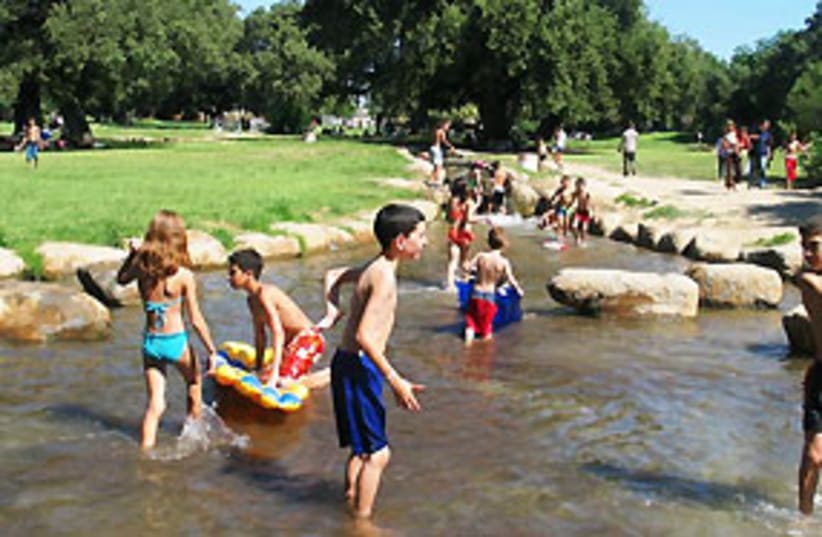
By SHARON UDASINtal forest tourism 311(photo credit: Dudu Ferro)
Both the Society for the Protection of Nature and liberal NGO Ir Amim have launched in the past two days parallel but unrelated campaigns against government plans to privatize 120 national parks.Led by MK Yisrael Hasson (Kadima), the government bill that would make the parks available for sale passed by majority vote in its preliminary Knesset reading on July 27.Among the parks slated for privatization, SPNI expressed specific concern about Palmachim Beach, the Judean Mountains National Park, Mekorot Hayarkon National Park, Hof Hasharon, the Carmel, Mount Tabor, the Alexander River and Masada.While the two campaigns against the bill have no direct affiliation to each other, they have nearly the same names – SPNI’s movement is called “Nature is not for sale” and Ir Amim’s operation is called “Not for sale” – and both argue that natural, public space must remain under national control.“The goal of the campaign is to convey the unequivocal message that it is forbidden to sell nature and to arouse the public to oppose the bill and sign a petition,” a spokesman from SPNI said in a statement.SPNI’s movement will be taking advantage of the upcoming holiday season by making hikers and travelers aware of the bill and will also be launching a “viral” online campaign through Facebook, videos, petitions and newsletters, according to the organization.
“Management of lands of national importance must be done by public state bodies, all the more so when we are talking open spaces as valued as national parks, and therefore it is forbidden to transfer the management to private hands,” said Nir Papay, vice president of environmental and nature preservation, in a statement.“Managing nature is different from managing a group of buildings.”The Ir Amim campaign, meanwhile, has already launched its website notforsale.org.il, as well as a YouTube video called “Stop Selling Our Country” that features actors Tali Sharon and Eldad Prives. On the website, the public can send messages to every member of the Knesset, a spokesman from Ir Amim told The Jerusalem Post on Tuesday.“The goal of the campaign is to stop the dangerous legislation and return full control over natural and historical assets to the general public,” a statement from the group said.Ir Amim believes that the government’s push to legally privatize the 120 parks is largely rooted in an effort to preempt the group’s High Court case about private company Elad’s administration of the City of David, which is slated to be judged next month.“We think that the City of David could be a dangerous precedent and the same could happen with others – this is a red light,” the Ir Amim spokesman told the Post.Officials from the Israel Nature and Parks Authority – the government body currently responsible for running the national parks – agreed that there was a possibility that the privatization move was based on the City of David conflict, but still expressed dissatisfaction with selling the parks to private owners.“If somebody thinks that the NPA cannot take care of heritage sites because of the lack of tools and lack of budgets, then they should vote to give us a bigger budget and more people – that wouldn’t be the answer even if there was a problem,” officials from the group told the Post.In the past 10 years, documented visits to the country’s national parks have quadrupled to 8 million annually, according to the officials.Meanwhile, former INPA director Eli Amitai had sent a letter to Environmental Protection Minister Gilad Erdan in March asking him to block this legislation, but the minister did not agree to do so, they explained.“If the country decides that certain sites are important enough that we declare them as national parks and nature reserves…then the country should run them,” the officials said.“This situation where companies run national parks is unheard of in the Western world.”The Environmental Protection Ministry said that its official stance on the issue is that the office approves of privatizing national parks only in limited circumstances but not as a general policy.
if(catID != 151){
var cont = `Take Israel home with the new Jerusalem Post Store