The Jerusalem Post
Jpost search icon google-icon iphone
  Set as Homepage
Wed, Jun 19, 2013   11 Tammuz, 5773
newspapers magazines
 
    • Breaking News
    • Diplomacy & Politics
    • Defense
    • National
    • Mideast
    • Syria
    • Iran
    • World
    • Business
    • Sports
    • Health & Science
    • Environment
  • Video
  • Opinion
    • Columnists
    • Editorials
    • Op-Eds
    • Letters
  • Jewish World
  • Lifestyle
    • Arts & Culture
    • Food & Wine
    • Travel
  • Features
    • Insights & Features
    • Week in review
    • On the Web
    • Shalva Superheroes
    • Obama in Israel
  • Blogs
    • In the news
    • Judaism
    • From the Middle East
    • Lifestyle
    • Aliya
    • Science and Technology
  • JPost Apps
    • iPhone app
    • iPad app
    • Android app
    • Twitter
    • Facebook
    • RSS feeds
    • JPost Toolbar
    • JPost Newsletter
    • JPost Alert
  • Premium Zone
    • The Jerusalem Report
    • Magazine
    • Metro
    • In Jerusalem
    • ePaper
    • Expert Opinion
    • Q&A
    • Dash
    • Christian Edition
    • Ivrit
  • French
    • Politique & Social
    • Affaires Palestiniennes
    • Diplomatie & Monde
    • Art & Culture
    • Israel
  • Green Israel
JPost Learn Hebrew  
Advertise with us  
Nefesh Guided Aliyah  
Eldan  
AFMDA  
YTA  
Isram Group  
JPost Twitter  
JPost Facebook  
Classifieds  


Breaking News
 
 
  • JPost.com
  • Enviro- Tech
 

'Comparison between Chernobyl, Japan out of place'

By EHUD ZION WALDOKS
LAST UPDATED: 03/15/2011 01:57
Tweet

Israeli experts say "two blasts at Fukushima reactors were controlled explosions to release pressure."

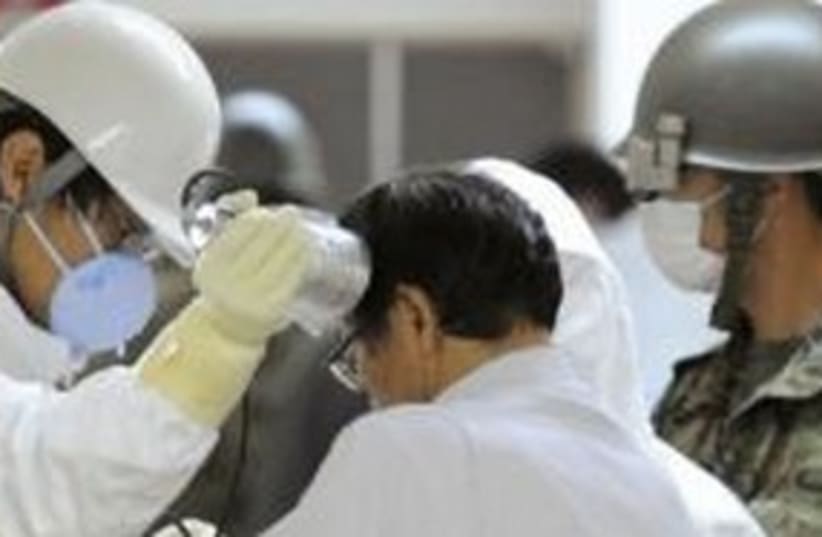
Man evacuated from radiation zone in Japan tested
Man evacuated from radiation zone in Japan tested Photo: REUTERS
The risk of a radioactive leak from the Japanese nuclear reactors at Fukushima damaged by last week’s tsunamis is minimal, Israeli nuclear engineers said Monday.

“In Japan, there’s a massive disaster with thousands killed by the earthquake and tsunamis. At Fukushima, only 14 people have been injured lightly yet the media spends 80 percent of its time talking about the reactors,” Prof. Arye Dubi said Monday. Dubi is a professor in the Department of Nuclear Engineering at Ben-Gurion University of the Negev, which is the only university in Israel with a nuclear engineering program at the moment.

RELATED:
Japanese nuke plant operators won't rule out meltdown
Israeli firm’s cameras recording Japanese nuclear core
Japanese PM says country facing worst crisis since WWII

Moreover, “There’s no comparison with Chernobyl. Chernobyl was a 3,200MW reactor which exploded while working at peak capacity. The three reactors in Japan are around 500MW each and they were immediately and successfully turned off with the first tremors of the earthquake. Once it turns off, its output is reduced to about 5% or 25MW,” Dubi said.

There were no cracks in the pressure chambers that contain the radioactive material, he added, “there was no integrity breach.”

“The nuclear materials continue to emit dwindling radioactivity for a week to 10 days and need to be cooled down,” Dubi said.

It is those cooling systems which have been damaged and not the pressure chambers themselves, he explained.

“With the systems damaged, the material continues to heat up and produce steam and the pressure builds. That pressure needs to be released. The two explosions were controlled explosions to release the pressure; they didn’t happen by themselves,” he said.

The white clouds that came rushing out were steam “and the amount of radiation they emit is minimal and not dangerous,” Dubi said.

Although the Japanese government has evacuated the area and started checking people, they have not found a single sick person, Dubi said.

Two of the reactors were now being cooled with seawater, so the danger of an explosion was minimal, he said.

Using seawater to cool the reactor renders it inoperable in the future.

“There are two considerations when deciding whether to use seawater – safety and economics. Each reactor costs about $100m. so it’s not a decision to take lightly.

“However, the reactors have to be cooled down to prevent a leak and that’s a chance you can’t take, so they had to use seawater,” he said.

The third reactor needs to be connected by a pipe to the sea and Dubi said he expected that to happen later Monday night.

Prof. Yigal Ronen, also of BGU’s Department of Nuclear Engineering, concurred with Dubi, although he was less emphatic.

“The earthquake and tsunamis were an extremely rare event. There are a number of systems designed to prevent a radiation leak and at least two of them seem to be holding up,” he said.

The radioactive material is wrapped, there’s an outside building made of steel that shields the reactor and there’s an iron dome that prevents leakages, he said.

“The danger is if all of the protective systems have been compromised,” he said.

The buildings that house the nuclear fuel seem to be intact and the iron domes as well, he said.

“To all appearances, the situation seems to be trending towards the positive,” he added cautiously.
Ronen also concurred that any radiation which was released with the steam was negligible.

Turning to the chances of such an occurrence in Israel, both Dubi and Ronen dismissed any such scenario.

“The reactors in Japan are second generation ones built 40 years ago and they survived a 9.0 earthquake and subsequent tsunamis. That’s very impressive for the industry,” Dubi said.

Any reactors built in Israel in the future to generate electricity would be third or fourth generation and even more resistant to earthquakes, he said.

As it is, Israel’s two research reactors, one at Dimona and one at Sorek, were so tiny as to be in a different league entirely from the Japanese ones, the two professors said.

“The power of the research reactors, and therefore its radioactive material, is about 1% of the Japanese ones,” Ronen said.

“Moreover, the Dimona reactor has been designed to withstand even 9.0 earthquakes,” he added.

Should Israel bring in reactors to generate electricity, “they would be about 200MW each and even an 11.0 earthquake wouldn't shake them,” Dubi asserted.

On Sunday, the Israel Atomic Energy Commission said in a statement that the research reactors were designed to withstand natural disasters and that the emergency forces were well trained to deal with a leakage, should one occur.
  • Send
  • Large
  • Small
  • Print
  • Share
Most Viewed in
1
J'lem team hopes to build solar oasis in Rwanda
2
Second int’l firm signs on Israeli gas exploration
3
Tel Aviv-J'lem road to receive NIS 2.5b. overhaul
4
Cancer researcher lauds ruling against gene patents
JPost Community
Tweet
Japan Fukushima nuclear engineer Chernobyl reactor radioactivity controlled explosions Ben Gurion University earthquake tsunami
Tweets about "#jpost"
Share this article
Tweet
Share
Send
Your comment must be approved by a moderator before being published on JPost.com. Disqus users can post comments automatically.

Comments must adhere to our Talkback policy. If you believe that a comment has breached the Talkback policy, please press the flag icon to bring it to the attention of our moderation team.
JPost Services
conferenceConference
newsletterNewsletter
iphoneMobile Apps
kotelcamKotel Cam
kolboJPost Alert
premiumPremium
JPost TV News  
Mobile Apps  
Bank Hapoalim  
Meir Panim  
Israel Law Center  
Inbal Hotel Jerusale  
Meier on Rothschild  
Weizmann Institute o  
JPost Premium Zone  
JPost kotel Camera  
         
 
Israel Focus
JPost TV News
Watch Now!  
Donate to Save Lives in Israel
 
Israel Law Center
The ultimate Mission to Israel, October 21 – 28, 2013 Register now!  
Nefesh B'Nefesh Guided Aliyah
Already living in Israel? Enjoy the Benefits of Aliyah!  
One year International MBA
in English, Bar-Ilan University, Israel – Open House July 9, 2013, 17:30  
Give "Freedom" this Passover
to needy Israeli families. Donate now  
YTA – A Yeshiva in Israel…
in English. Come Join Us  
War Threatens
Protect the People of Northern Israel  
Bank Hapoalim
Israeli's number one bank  
Jerusalem Post Lite
Lite Edition of the Jerusalem Post for English improvement  
Learn Hebrew with us
Get 10 minutes free personal coaching in Hebrew through phone or Skype  
JPost newspapers
Sign up for the JPost newspapers and receive one month free subscription  
Kosher English Magazine
English language weekly magazine - especially for religious people  
JReport Kindle Edition
Now you can get the Jerusalem Report directly to your Kindle  
JPost Premium Edition
The very best articles are available only in our Premium edition  
Lifestyle Magazine
 
 
Real Estate
Meier on Rothschild
Tel Aviv's Most Prestigious Address  
Don't Look For a House!
In Israel, our website will do it for you!  
 
Travel
Tourism Magazine
June 2013  
The Inbal Jerusalem Hotel
Hot summer deal, order now!  
Eldan Rent a Car
20% off all Car Rental Reservations in Israel  
Hertz Car Rental
Special Online Discounts!  
The King David Jerusalem Hotel
One of the world's truly iconic hotels, and a Jerusalem landmark  


Sites Of Interest:

Jerusalem Hotels
KKL-JNF
Poalim Online
BreitBart.com
Our Friends
Jerusalem Attractions
Jerusalem Tours
itraveljerusalem.com

JPost sites:

Learn Hebrew
The Jerusalem Report
Our Magazines
JPost Edition Francaise
Green Israel
Christian World
Jerusalem Post Lite

Services:

JPost Mobile Apps
JPost Premium
JPost Newsletter
JPost Toolbar
JPost News Ticker
JPost RSS feeds
JPost Archives
JPost Alert
JPost Kotel Cam

JPost Conferences:

NYC Conference
Diplomatic Conference

Information:

About Us
Feedback
Staff E-mails
Copyright
Sitemap
News Partners
Advertise with Us
Statistics
Ad Specs
Terms Of Service
Jpost.com, the online edition of the Jerusalem Post Newspaper - the most read and best-selling English-language newspaper in Israel. For analysis and opinion from Israel, the Jewish World and the Middle East. Jpost.com offers expert and in-depth reporting from Israel, the Jewish World and the Middle East, including diplomacy and defense, the Palestinian-Israeli conflict, the Arab Spring, the Mideast peace process, politics in Israel, life in Jerusalem, Israel's international affairs, Iran and its nuclear program, Syria and the Syrian civil war, Lebanon, the Palestinian Authority, the West Bank and Gaza Strip, Israel's world of business and finance, and Jewish life in Israel and the Diaspora.
 
About Us | Advertise with Us | Subscribe | Premium | Newsletter | RSS | Contact Us
 
All rights reserved © The Jerusalem Post 1995 - 2012