The Jerusalem Post
Jpost search icon google-icon iphone
  Set as Homepage
Wed, Jun 19, 2013   11 Tammuz, 5773
newspapers magazines
 
    • Breaking News
    • Diplomacy & Politics
    • Defense
    • National
    • Mideast
    • Syria
    • Iran
    • World
    • Business
    • Sports
    • Health & Science
    • Environment
  • Video
  • Opinion
    • Columnists
    • Editorials
    • Op-Eds
    • Letters
  • Jewish World
  • Lifestyle
    • Arts & Culture
    • Food & Wine
    • Travel
  • Features
    • Insights & Features
    • Week in review
    • On the Web
    • Shalva Superheroes
    • Obama in Israel
  • Blogs
    • In the news
    • Judaism
    • From the Middle East
    • Lifestyle
    • Aliya
    • Science and Technology
  • JPost Apps
    • iPhone app
    • iPad app
    • Android app
    • Twitter
    • Facebook
    • RSS feeds
    • JPost Toolbar
    • JPost Newsletter
    • JPost Alert
  • Premium Zone
    • The Jerusalem Report
    • Magazine
    • Metro
    • In Jerusalem
    • ePaper
    • Expert Opinion
    • Q&A
    • Dash
    • Christian Edition
    • Ivrit
  • French
    • Politique & Social
    • Affaires Palestiniennes
    • Diplomatie & Monde
    • Art & Culture
    • Israel
  • Green Israel
JPost Learn Hebrew  
Advertise with us  
Nefesh Guided Aliyah  
Eldan  
AFMDA  
YTA  
Isram Group  
JPost Twitter  
JPost Facebook  
Classifieds  


Breaking News
 
 
  • JPost.com
  • Enviro- Tech
 

Desert blooms, one olive tree at a time

By SHARON UDASIN
04/18/2012 23:18
Tweet

New funding initiative by Ben Gurion University will provide for the growth of an olive tree fores.

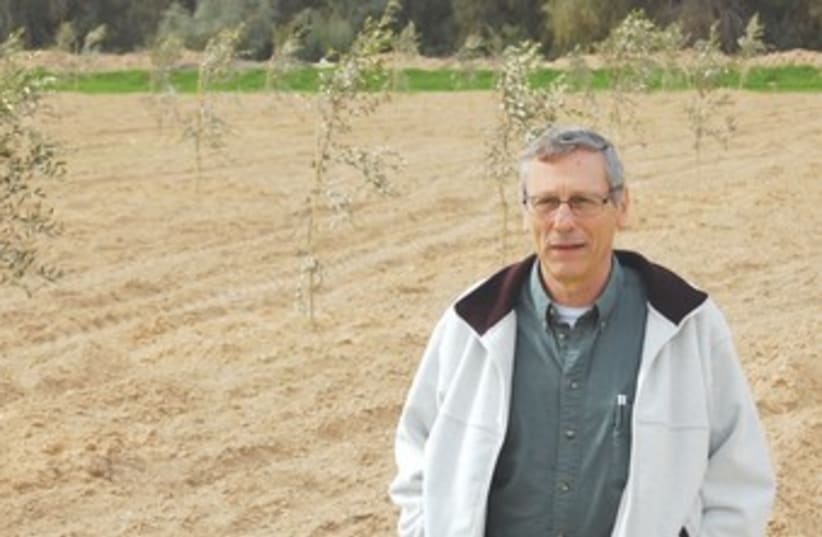
BGU PROFESSOR Pedro Berliner
BGU PROFESSOR Pedro Berliner Photo: Courtesy Ben-Gurion University of the Negev

American Associates of Ben Gurion University of the Negev (AABGU) have launched a new funding initiative that will provide for the growth of an olive tree forest at a university agricultural research farm.

The project, called “Plant a Tree to Seed Desert Research,” will take place at the Wadi Mashash research farm, located about 32 km. south of Beersheba.

  • Gold rush in the mountains of Eilat

Contributing to a BGU mission of “making the desert bloom,” the initiative will also allow donors to dedicate individual trees to the person of their choice.

Wadi Mashash, the area where the olive grove will crop up, is the only site in Israel where agricultural production is based solely on the collection of the desert’s rare flood-waters, according to the AABGU. Tactics developed at this specific farm have already been used to promote sustainable development projects in other drylands – particularly tree growth projects in African nations, the organization reported.

“The olive tree is a symbol of Israel, a reminder of our extraordinary heritage in our biblical homeland and a prized example of the remarkable agricultural and energy potential of drylands around the world,” said Doron Krakow, AABGU executive vice president, in a statement released by his office. “The research done at Wadi Mashash will bring knowledge to the world – knowledge that will help produce food, cash crops and more sustainable farming practices.”

Planting, managing and researching at the olive grove is being carried out by students at the Albert Katz International School for Desert Studies, from BGU’s Blaustein Institutes for Desert Research based in Sde Boker.

The first phase of planting – about 240 olive trees – has already been completed, as the Wadi Mashash area had “good luck” with receiving rainwater this winter, according to Prof.

Pedro Berliner, director of the Blaustein Institutes and head of the olive grove project.

“Our irrigation is ancient Nabatean type in which we collect runoff,” he told The Jerusalem Post on Wednesday. “Our plot was flooded. The moment our plot was flooded we planted our trees.”

Two more successive plots will follow, in which the researchers are aiming to plant 600 to 700 additional trees, Berliner said.

Olive trees, a staple food provider for the region, were the ideal new crop choice for the research farm, according to Berliner.

“Olive trees are originally from this area,” he said. “Any research we carry out here is relevant to the whole area.”

Meanwhile, he explained, olive trees are not customarily irrigated – they rely on rainwater only – so in areas where precipitation is highly variable, an ample supply of runoff can be a great advantage for tree survival.

While at one point crops thrived on runoff water in both Shivta National Park and in Avdat National Park, the Wadi Mashash research farm is now the only place in the country where this watering method is being actively used in agriculture, Berliner confirmed.

The researchers are planting the groves using an “intercrop system,” in which a row of grain grows between each row of olive trees. Because of the wide breadth of their roots and branches, trees cannot be planted that close to each other, and a lot of water loss therefore occurs in the top portion of the soil, according to Berliner.

“Instead of letting that happen we developed a system in which we put plants in between the rows of trees,” he said. “These plants take up the water that would be lost to the atmosphere.”

If the olive tree branches eventually become overgrown and provide too much shade over the grain plants in between them, the researchers will then need to do some selective pruning to ensure that enough radiation is reaching the other plants, Berliner explained. The researchers already began developing this “runoff agroforestry system” by intercropping grain plants between trees used for firewood and fodder only. But in this scenario, pruning was much simpler, as there were no olives to worry about.

Now, the researchers have the slightly more complicated challenge of determining the best ways to simultaneously grow olives and grains, using runoff as the sole source of irrigation, and analyzing economic return per unit area, Berliner explained. Only then will they be able to transfer their techniques to farmers in the region, he said.

A single olive tree costs $180, three cost $500, 10 cost $1,600 and 18 cost $3,000, according to AABGU. The university will specially acknowledge donors of 36 trees, which costs $5,000, by permanently recognizing their names on the BGU Sde Boker campus.

  • Send
  • Large
  • Small
  • Print
  • Share
This article is by :
Sharon Udasin

Follow @sharonudasin
Recent stories:
  • J'lem team hopes to build solar oasis in...
  • Clinton: Israel must make peace in order...
  • TA municipality tries out 25 electric sc...
  • Second int’l firm signs on Israeli gas e...
Most Viewed in
1
J'lem team hopes to build solar oasis in Rwanda
2
Second int’l firm signs on Israeli gas exploration
3
Netanyahu announces 40% of natural gas reserves to be exported
4
Tel Aviv-J'lem road to receive NIS 2.5b. overhaul
JPost Community
Tweet
olive tree Ben Gurion Doron Krakow AABGU Sde Boker Albert Katz
Tweets about "#jpost"
Share this article
Tweet
Share
Send
Your comment must be approved by a moderator before being published on JPost.com. Disqus users can post comments automatically.

Comments must adhere to our Talkback policy. If you believe that a comment has breached the Talkback policy, please press the flag icon to bring it to the attention of our moderation team.
JPost Services
conferenceConference
newsletterNewsletter
iphoneMobile Apps
kotelcamKotel Cam
kolboJPost Alert
premiumPremium
JPost TV News  
Mobile Apps  
Bank Hapoalim  
Meir Panim  
Israel Law Center  
Inbal Hotel Jerusale  
Meier on Rothschild  
Weizmann Institute o  
JPost Premium Zone  
JPost kotel Camera  
         
 
Israel Focus
JPost TV News
Watch Now!  
Donate to Save Lives in Israel
 
Israel Law Center
The ultimate Mission to Israel, October 21 – 28, 2013 Register now!  
Nefesh B'Nefesh Guided Aliyah
Already living in Israel? Enjoy the Benefits of Aliyah!  
One year International MBA
in English, Bar-Ilan University, Israel – Open House July 9, 2013, 17:30  
Give "Freedom" this Passover
to needy Israeli families. Donate now  
YTA – A Yeshiva in Israel…
in English. Come Join Us  
War Threatens
Protect the People of Northern Israel  
Bank Hapoalim
Israeli's number one bank  
Jerusalem Post Lite
Lite Edition of the Jerusalem Post for English improvement  
Learn Hebrew with us
Get 10 minutes free personal coaching in Hebrew through phone or Skype  
JPost newspapers
Sign up for the JPost newspapers and receive one month free subscription  
Kosher English Magazine
English language weekly magazine - especially for religious people  
JReport Kindle Edition
Now you can get the Jerusalem Report directly to your Kindle  
JPost Premium Edition
The very best articles are available only in our Premium edition  
Lifestyle Magazine
 
 
Real Estate
Meier on Rothschild
Tel Aviv's Most Prestigious Address  
Don't Look For a House!
In Israel, our website will do it for you!  
 
Travel
Tourism Magazine
June 2013  
The Inbal Jerusalem Hotel
Hot summer deal, order now!  
Eldan Rent a Car
20% off all Car Rental Reservations in Israel  
Hertz Car Rental
Special Online Discounts!  
The King David Jerusalem Hotel
One of the world's truly iconic hotels, and a Jerusalem landmark  


Sites Of Interest:

Jerusalem Hotels
KKL-JNF
Poalim Online
BreitBart.com
Our Friends
Jerusalem Attractions
Jerusalem Tours
itraveljerusalem.com

JPost sites:

Learn Hebrew
The Jerusalem Report
Our Magazines
JPost Edition Francaise
Green Israel
Christian World
Jerusalem Post Lite

Services:

JPost Mobile Apps
JPost Premium
JPost Newsletter
JPost Toolbar
JPost News Ticker
JPost RSS feeds
JPost Archives
JPost Alert
JPost Kotel Cam

JPost Conferences:

NYC Conference
Diplomatic Conference

Information:

About Us
Feedback
Staff E-mails
Copyright
Sitemap
News Partners
Advertise with Us
Statistics
Ad Specs
Terms Of Service
Jpost.com, the online edition of the Jerusalem Post Newspaper - the most read and best-selling English-language newspaper in Israel. For analysis and opinion from Israel, the Jewish World and the Middle East. Jpost.com offers expert and in-depth reporting from Israel, the Jewish World and the Middle East, including diplomacy and defense, the Palestinian-Israeli conflict, the Arab Spring, the Mideast peace process, politics in Israel, life in Jerusalem, Israel's international affairs, Iran and its nuclear program, Syria and the Syrian civil war, Lebanon, the Palestinian Authority, the West Bank and Gaza Strip, Israel's world of business and finance, and Jewish life in Israel and the Diaspora.
 
About Us | Advertise with Us | Subscribe | Premium | Newsletter | RSS | Contact Us
 
All rights reserved © The Jerusalem Post 1995 - 2012