Are Muslims a new niche market? Many US-based businesses think so and have even created products that cater to this community.
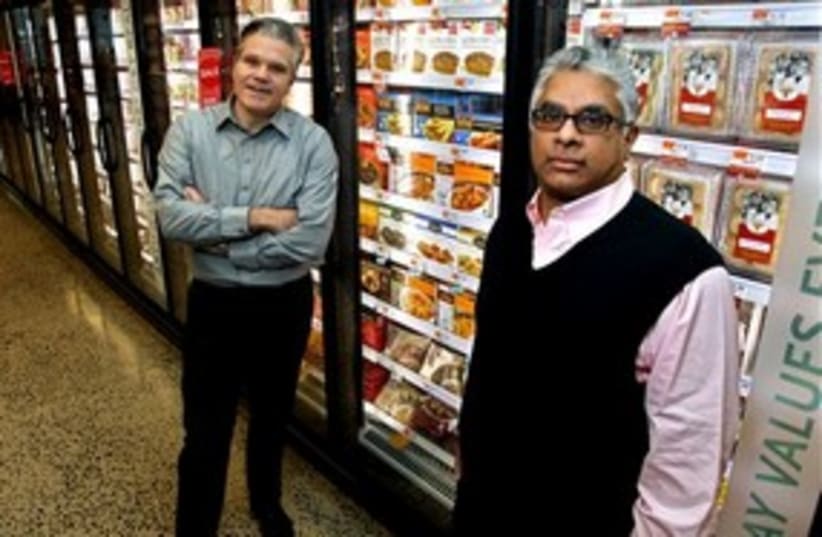
By ASSOCIATED PRESSWhole Foods 311(photo credit: Associated Press)
In the ballroom of an upscale hotel a short train ride from New York, advertisers, food industry executives and market researchers mingled — the men in dark suits, the women in headscarves and Western dress. Chocolates made according to Islamic dietary laws were placed at each table.The setting was the American Muslim Consumer Conference, which aimed to promote Muslims as a new market segment for US companies. While corporations have long catered to Muslim communities in Europe, businesses have only tentatively started to follow suit in the US— and they are doing so at a time of intensified anti-Muslim feeling that companies worry could hurt them, too. American Muslims seeking more acknowledgment in the marketplace argue that businesses have more to gain than lose by reaching out to the community."We are not saying, 'Support us,'" said Faisal Masood, a graduate of the University of Illinois, Chicago, and management consultant. "But we want them to understand what our values are."There are signs the industry is stirring: Masood, a Wall Street executive who organized the gathering, had attracted only 200 or so attendees when he started the event last year. This year, he had to close registration at 400 to keep from going over capacity.The worldwide market for Islamically permitted goods, called halal, has grown to more than half a billion dollars annually. Ritually slaughtered meat is a mainstay, but the halal industry is much broader, including foods and seasoning that omit alcohol, pork products and other forbidden ingredients, along with cosmetics, finance and clothing.Corporations have been courting immigrant Muslim communities in Europe for several years. Nestle, for example, has about 20 factories in Europe with halal-certified production lines and advertises to Western Muslims through its marketing campaign called "Taste of Home." Nestle plans to increase its ethnic and halal offerings in Europe in coming years.In the United States, iconic American companies such as McDonald's (which already has a popular halal menu overseas) and Wal-Mart have entered the halal arena. In August, the natural grocery giant Whole Foods began selling its first nationally distributed halal food product — frozen Indian entrees called Saffron Road.Along with new customers, however, the companies draw critics and can become targets in the ideological battle over Islam and terrorism.Abdalhamid Evans, project director with the World Halal Forum Europe, which works with the global halal industry, said a recent backlash has prompted some mainstream businesses in Europe to keep a lower profile about their halal products or scale back their offerings.In the United Kingdom, after Kentucky Fried Chicken rolled out halal menu options in several dozen stores, the restaurant chain pulled the items in a few locations in the face of protests. Critics dubbed the menu "terror chicken."Last September, the Daily Mail of London reported that many British supermarkets, fast-food chains, hospitals, schools, pubs and sporting arenas such as Wembley Stadium, were serving some halal meat and poultry without notifying the public. A large share of meat sold in Britain comes from New Zealand, where the slaughterhouses have expanded halal production as they try to boost their already robust exports to Islamic countries.In the uproar that followed, Barnabas Aid, a group that fights Christian persecution worldwide, started a petition in Britain against what it called the "imposition" of halal. It "may be interpreted as an act of Islamic supremacy," the group said.US companies have also faced some resistance, although on a smaller scale.Last year, Best Buy Inc. was inundated with calls, e-mails and letters complaining that the company was anti-American after acknowledging a Muslim holiday — "Eid al-Adha," or the Feast of the Sacrifice — for the first time in a national advertisement. That year, Eid al-Adha fell around Thanksgiving, so the ad, a small bubble at the bottom of the page, appeared in the company's Thanksgiving flier. Critics seized on the timing in their complaints."They used very abusive language," said Nausheena Hussain, a marketing manager for Best Buy in Minnesota. "It was pretty sad."Best Buy executives stood by their decision. The company saw the holiday greeting as part of a larger goal of reaching consumers from different cultures. Soon, Muslims started calling to thank Best Buy and set up a Facebook page honoring the company, which continues to acknowledge Muslim holidays."It's a very viable customer segment," said Zainab Ali, senior marketing manager with the money transfer company MoneyGram, which ran a special Ramadan promotion this year for Muslims in the US, Europe and elsewhere. "You just need to get over some of the fear and look at them as just another consumer."The potential for profit is drawing more companies to the idea.This year, Ogilvy & Mather, the global advertising firm, started an international Islamic branding consultancy called Ogilvy Noor that includes an emphasis on US Muslims. ("Noor" means "light" in Arabic.) Muslims came to the United States in large numbers for doctorates, engineering and medical degrees, after the federal government eased immigration quotas in the 1960s. Studies have found that a significant percentage of Muslims are better educated and wealthier than other Americans.Joohi Tahir, vice president of marketing and sales for Crescent Foods, the halal chicken producers based in Chicago, said Wal-Mart executives approached Crescent Foods two years ago looking for a halal chicken supplier, then invited Crescent executives to Wal-Mart headquarters in Arkansas to advise them on reaching Muslim consumers.That same year, Wal-Mart opened a supercenter in Dearborn, Mich., an area with one of the largest Muslim and Arab populations in the country. The store is geared for Mideast consumers, with a range of halal products, including specialty foods."Mainstream is coming to halal," Tahir said.Wal-Mart spokesman Bill Wertz said the merchandise in each store can vary according to the needs of the surrounding community, so it is difficult to know the exact number of US stores that carry halal products. But several in Michigan and at least one store in Canada have advertised that they offer some halal items.Manufacturers entering the field hope they can appeal to non-Muslims as well.Jack Acree, executive vice president of American Halal Co., which produces the Saffron Road products, emphasizes that the entrees are not only halal, but also all-natural and humanely farmed, and free of antibiotics and hormones."Muslims are highly educated and live in metro areas, and they're shopping with us already," said Errol Schweizer, senior global grocery coordinator for Whole Foods. "If we have a customer base where there's a big Muslim population, it makes sense for us to service that population."Schweizer would not answer directly when asked if anyone complained to the company over its Muslim outreach. He said only that halal foods will be judged like any other products — by whether the items sell.For Muslims, the issue is not just a matter of convenience. Recognition by major companies is an important sign of acceptance as they struggle to establish themselves in the US. They are following in the footsteps of American Jews, who struggled for decades for mainstream acceptance of kosher food — and of Judaism.Despite the sometimes unfriendly climate for Muslims, Evans, of the World Halal Forum, said it is inevitable that a large number of businesses will reach out Muslim consumers, given the wealth and size of the Muslim population — more than a billion people worldwide — and their presence in the West."It isn't a question of whether they're going to do it," Evans said. "It's a question of where and when and how."
if(catID != 151){
var cont = `Take Israel home with the new Jerusalem Post Store