CBS: Israeli medical research studies are slipping
Surveys show decline, Health Ministry chief scientist says quality healthcare directly linked to clinical academic work.
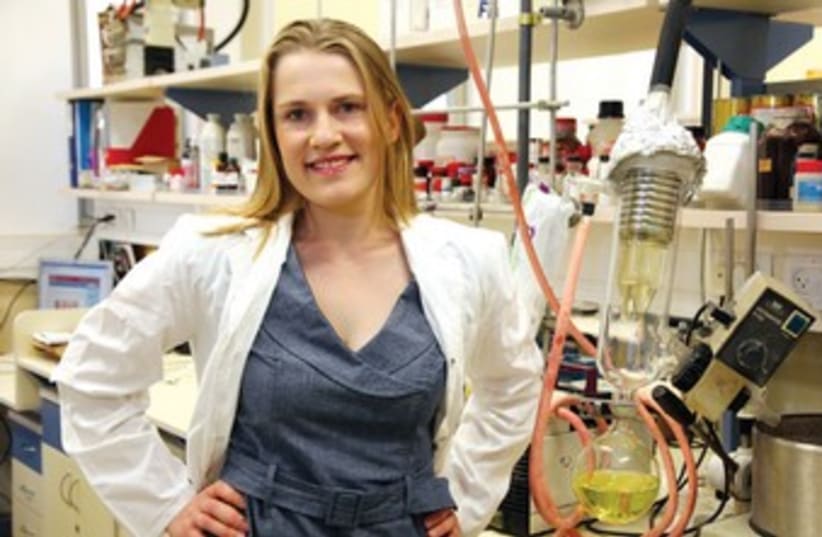
By JUDY SIEGEL-ITZKOVICHResearchers winning award(photo credit: Hebrew University)
The golden age of Israeli medical research seems to have passed – at least for now – as the amount and quality of clinical and translational (i.e., bridging between basic and applied) research in the biomedical sciences have declined, according to a new Central Bureau of Statistics (CBS) and Science and Technology Ministry report on the subject.While Israeli physicians spend an average of six hours a week (out of a weekly total of 48) conducting research, and 79 percent publish at least one piece of academic research per year, many opt out of this demanding extra work. And according to the latest figures that the CBS and the ministry’s National Council for Research and Development issued on Tuesday, Israel ranks only 24th in the world in the relative number of publications in clinical research.When it comes to the number times authors of other journal articles cited the country’s clinical research findings – an indication of quality – Israel ranked only 23rd in the world between 2007 and 2011, with an average of only 6.39 citations per publication. This contrasts with Belgium and Denmark, which lead the world at 9.5 citations. In previous decades, Israel’s relative rate came in near the top.The data are based on two surveys the CBS conducted – one in 2009 and one in 2011 – on research and development (R&D) in hospitals among 1,000 of 2,570 physicians with clinical/academic appointments, and a partial sample of physicians without such appointments who work in hospitals.The surveys found that among local researchers working for public health funds and government hospitals, those involved in medical research spent 43 percent of their time on applied research. However, at non-profit voluntary hospitals (non-government, non-health-fund medical centers like those of the Hadassah Medical Organization), the doctors devoted an average of 43% of their research time to basic research (i.e., understanding how things work), utilizing an average of nine weekly hours for this.During the four years the report studied, Israeli physician/researchers filed applications for a total of 220 patents for their discoveries, and voluntary institutions were significantly more prominent in this area than hospitals owned by health funds or the Health Ministry.About a quarter of the country’s published scientific research, according to the CBS data, involved clinical medical research.Prof. Yitzhak Ben-Yisrael, chairman of the National Council for R&D, said Tuesday that this was the first in-depth survey on research that physicians had conducted here.“It points to relatively broad involvement by doctors in research and a very high rate of academic publications in the field,” he said. “One of the reasons for the relatively low citation rate compared to the world may be the lack of adequate training of medical students and residents in carrying out research – a subject that requires more attention.”Asked to comment on the new survey, Prof. Shlomo Mor-Yosef, director-general of the National Insurance Institute and former longtime Hadassah Medical Organization director-general, told The Jerusalem Post that the health system did not really encourage clinical research.“Young physicians have less commitment to go into research in addition to their clinical work, as they know it’s on their own time and want to devote more time to family life and leisure,” he said.In addition, he said, with women comprising half of young doctors today, many are reluctant to devote a lot of time or any at all to research because of their family obligations.Senior physicians may devote time to private medical work rather than research, he added.Hadassah is different from most hospitals, as it has invested money in clinical research, set up infrastructure and provided financial compensation for spending extra time on it. This has encouraged physicians and researchers, but it is still relatively small.Mor-Yosef noted that he had been part of a team in 2010 that worked with Prof. Ruth Arnon, then-vice president (and now president) of the Israel Academy of Sciences. She called that year to promote Israeli clinical and translational research in the biomedical sciences, and to form American-style, independent National Institutes of Health here to allocate funds and coordinate this work.Arnon recommended allocating $100 million a year in public money to finance original Israeli clinical and translational research in the biomedical sciences. However, the government has not yet heeded her advice.Health Ministry chief scientist Prof. Avi Yisraeli, also a former Hadassah director-general, commented: “There is no doubt that medical research contributes directly to the level of medicine. It doesn’t matter if a specific physician does it, but for a hospital department to excel and give the best medical care, it needs to have a critical mass for research, asking questions, updating itself on innovations and teaching young doctors and students.”Without that mix, he said, “the level of medicine goes down.”Yisraeli’s office, which has a minuscule budget, issued an invitation to medical researchers to apply for a total of only 35 grants of NIS 65,000 each per year.“It is a very, very small amount of money, but that is what we have to offer,” said Yisraeli. “There have been several reports recommending that my office’s budget be raised significantly, but it has not happened yet. The amount of multicenter Israeli clinical research must also be increased. There are people [in government] who don’t understand the direct connection between funds for medical research and the quality of Israeli medical care.”Meanwhile, the Health Ministry put a positive face on the CBS survey, saying it was a “certificate of honor to research activity, the energy, interest and determination of physicians to carry out research under a pressed health system, while at the same time treating patients.... The relatively low citation rate – which is high [compared to other countries] – does not result only from quality but also from the centrality of the state in general and international awareness.”The ministry stressed the huge value of published medical research, “even if it is not cited [by other publications and researchers].... The quality and benefits of medical research stem from the fact that it is done, and not always from its being quoted.”It added that the trend of less clinical research and fewer citations “has shown up in a number of previous reports.”The ministry said it would “continue to work toward increasing the medical research budget at the disposal of the ministry’s chief scientist.”
if(catID != 151){
var cont = `Take Israel home with the new Jerusalem Post Store