CBS, which crunches figures on a daily basis, can offer insight on changes in health behaviors, demography, the medical system.
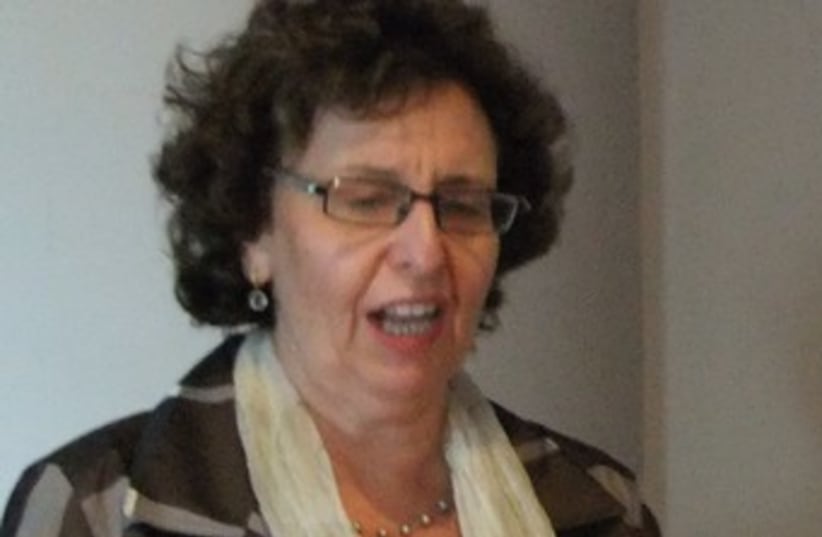
By JUDY SIEGEL-ITZKOVICHProf. Orly Manor 370(photo credit: Judy Siegel-Itzkovich)
You are being watched, and there’s no escaping it. From birth to death, the folks at the Central Bureau of Statistics (CBS) are saving and processing your information – anonymously, so one’s rights to privacy are not violated – so they can glean information for official records, decipher trends and help decision makers set policy.The amount of information they collect is huge, ranging from demography, household income, economic indicators and road accidents to disabilities, educational levels, manufacturing, sport, culture, education, tourism, taxes, foreign trade and health.Huge amounts of data are available free to the public at www.cbs.gov.il – also translated into English – while some government offices order and pay for special studies cross-matching and comparing a variety of data.The bureau not only puts data online but also produces nicely illustrated booklets, including one called “Women and Men, 1990-2009,” which includes a collection of various health data. The CBS has many women among its professional employees, for some reason, and it’s not always pleasant work. (Can you imagine handing out business cards stating you’re in charge of the CBS unit specializing in data on the causes of death?) The bureau recently held an unusual seminar on “Health and Fertility” at its headquarters in Jerusalem’s Givat Shaul quarter, attended by over 100 outsiders interested in the specific field, and it even invited the press.Deputy chief statistician Yoel Finkel told the audience that even before the founding of the state, information was collected by the British. Data on the causes of death were first provided during 1938. Data on births have been provided since the early 1950s. Recently, he continued, the government established a forum for strategic planning in various state offices because cooperation on data-sharing was very important.Na’ama Rotem, of the bureau’s health and vital statistics sector, said the bureau’s health data are only a small part of what it provides, but very important for setting policy. Among the information collected are births, chronic diseases, disability, accidents, absenteeism from work due to disease or accident, smoking, physical activity, obesity, exposure to the sun, use of medical services, health manpower, hospitalization, queues for surgery, prescription drug expenses, dentists, household health expenses, private medical services and supplementary heath costs.“Among our sources of data are forms filled out by the public, birth and death certificates, reports at district health offices on stillbirths and aborted babies, and also ongoing surveys we conduct every few years. Censuses conducted every decade also provide information,” she said.Shoshi Einhorn-Gerberchik said that every new baby must be reported with 10 days of birth, whether delivery was in a hospital or outside.“Connections between types of information, such as pregnancies according to the level of religious observance, have also been ordered. We receive some 40,000 different pieces of paper relating to births and deaths from the Interior Ministry, Health Ministry, National Insurance Institute, Israel Police and other authorities and have to coordinate them,” she said.Now, after more than six decades, one of the major innovations at the CBS is that an increasing amount of data is digitized and collected on paper instead of forms filled out by hand or typed in. This, she said, is more accurate and even allows some data to be provided in real time using a special icon on the CBS website.AS THE Israeli population has been growing by leaps and bounds over the past four decades, there are more deaths than before, said the bureau’s leading “causes of death” expert, Dafna Hartal, but it is clear that death rates are declining. During this period, death rates have declined by 17 percent. There are today fewer than 700 deaths per 100,000 residents. The most common cause is cancer (10,300 people), while heart disease – which for decades was the most common common cause of death – has been reduced by an astounding 76% due to prevention, improved less-invasive treatments, better surgical approaches, medications and rehabilitation.Following that are complications of diabetes, strokes, pneumonia, external causes such as accidents, kidney diseases, lung disorders and congenital diseases.Compared to the other OECD countries, Israeli men are ranked two in longevity and women somewhat lower but at an average of over 82, they still live longer than men, whose average life expectancy is now around 80. Residents of Ra’anana live the longest on average, while residents of Rahat and other Beduin towns have the shortest life expectancies.Information about health behaviors, said Olga Litinsky, is self-reported by those queried, rather than based on scientific data, so when people claim to exercise regularly or to go to complementary medicine practitioners, one cannot be sure the figures are absolutely accurate even though the answers are anonymous.Hypertension is the most common medical condition to have been diagnosed in individuals over the age of 65 (55%); followed by diabetes (23% of this age group); heart attack (14%); and cancer (9% of Jews and only 3% of Arabs). The average Israeli visited a doctor six times – or a record 45 million visits – a year. Women go to doctors more frequently than men, partly because of their “obstetrical duties.”Sixty-seven percent of women 50 years and older went for a mammography scan during the past two years, and the rate among Arab women has risen impressively, thanks to Israeli Cancer Society information efforts and the work of the four health funds.The statistics provided show that it’s very worthwhile to get a good education, and not only due to higher income. The better educated, said Litinsky, are more likely to exercise and get a mammogram, while they are less likely to suffer from disability or to smoke.As for fertility, some 166,000 babies are born annually, said CBS statistician Dvorit Angel; this compared to only 56,000 in 1965 and 94,000 in 1980. The average Israeli woman gives birth to three children, which gives Israel one of the highest fertility rates in the OECD countries, some of which are below replacement rates. Ten percent of babies born in Israel are the fourth in the family or more, way beyond the average OECD figure.Many Muslim women in Israel used to have 10 children or more, but their fertility in recent years has declined significantly due to improved education, use of contraception and their available level of health care. At 4.6 live births per Muslim woman, the fertility rate among them is still higher than among their counterparts in surrounding Middle Eastern countries, said Angel. There are no separate statistics on in-vitro fertilization for Muslims.The influence of haredi (ultra-Orthodox) women has made its impact on statistics, as the rate of women giving birth after the age of 40 has doubled since 1995 and totaled 6,877 last year.DR. AHMED Khliel, another bureau statistician, provided a very interesting presentation on differences between Jewish and Arab families.“Haredi women have the highest birth rate, while secular Jewish women have the lowest. Birth rates among Muslim women are declining. But we found no connection between religiosity and fertility; there is no effect of religiosity on fertility rates among Muslims,” he said.When compared on socioeconomic matters, there is a major difference between religiosity and educational level among Jewish women: Haredi women have lower (secular) educations than their modern Orthodox or secular counterparts. But, noted Khliel, there is no real difference between the levels of religiosity and education among Muslim women.Jews believe that religiosity has a major effect on how many children one has, while Muslims believe it is a socioeconomic matter and depends on the desire of the couples themselves.Social structure among Muslims is very difference than among Jews, said Khliel.Jews generally stick to segregation of residence and lifestyle according to the level of religiosity. Haredi Jews, modern Orthodox and secular Jews usually live in different places and always go to separate schools. Ninety-seven percent of haredi women have haredi husbands. What they get from their own media is different.On the other hand, Muslims all live according to family or tribe.A single Muslim family, he continued, c a n include women with head covers and without, people who fast during Ramadan and relatives who don’t, and they go to the same schools.Decisions about family size, birth control and abortion are influenced by families and not religious leadership among Muslims, while it works completely differently among Jews, he noted.PROF. ORLY Manor, head of the Braun School of Public Health and Community of the Hebrew University-Hadassah Faculty of Medicine said that children play a major role in the health of their parents.While healthy individuals are more likely to procreate than people with disease, there are other factors, such as social relationships reducing stress and anxiety and promoting healthy behaviors, she said.But at the same time, financial stress resulting from having a large family can also create psychosocial, physical and emotion stresses.“Families are changing,” said Manor.“There’s a decline of fertility in OECD countries – but not in Israel. Fifteen percent of American women in their fertile years are childless, but it is much lower in Israel at about five percent.”According to the latest statistics, mortality rates among Israelis are lowest among couples with two, three or four children, while there is a higher rate if one has no children at all and in those with eight children and more. “It’s an upside-down U-curve.”She reported, however, that the rate of reproductive cancer is lower in women who have had more children, but it also means more obesity and heart disease among the parents. But while there is a connection, it doesn’t mean that one causes the other, Manor continued.Haredi women who give birth after age 45 seem to have a “different expression of genes” than women who have their last child by the age of 35; their genes apparently make it more possible for them to conceive and give birth after 45, and it is not just due to the fact that they do not use birth control.Figures are disparaged in the phrase “Lies, damned lies and statistics,” which describes the persuasive power of numbers, particularly the use of statistics to bolster weak arguments or to cast doubt on an opponent’s point. But while working as a statistician could be considered by some to be a tiresome profession, looking at the numbers can reveal interesting trends and conclusions. They are necessary for senior people in government to change courses and policies – if they indeed study them carefully.
if(catID != 151){
var cont = `Take Israel home with the new Jerusalem Post Store