South African university studying report on Israeli institution’s "collaboration with military, occupation and apartheid practices."
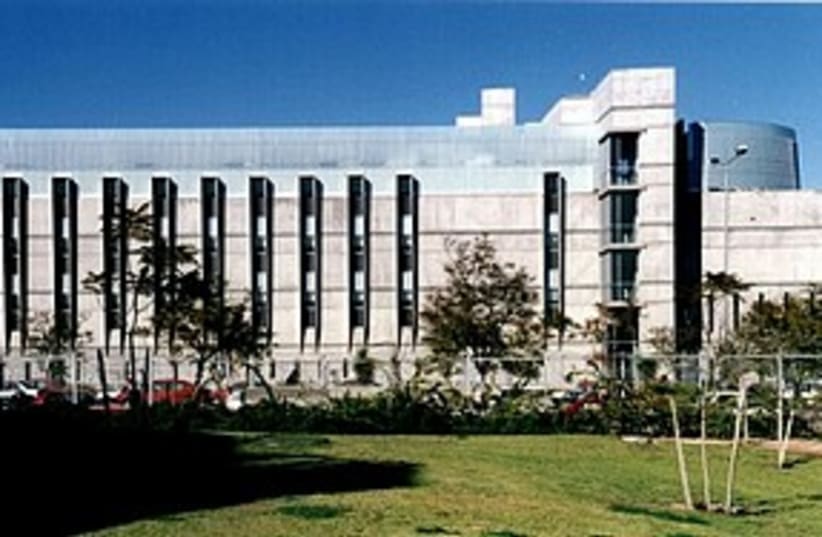
By BEN HARTMANben gurion university building 311(photo credit: Courtesy)
The University of Johannesburg held a seminar on Wednesday to begin deliberating the future of its academic ties with Ben-Gurion University of the Negev.Academics from across South Africa, as well as officials from Amnesty International, gathered to discuss a report released by UJ on Tuesday titled “Findings on Ben-Gurion University of the Negev: Institutional Complicity and Active Collaboration with Israeli Military, Occupation and Apartheid Practices.”The seminar – itself titled “The Politics of Water Research and the Ethics of Academic Engagement – Should UJ terminate its water research with Israel?” – was the latest development in a campaign launched by UJ in September 2010, when more than 250 South African academics and supporters such as Archbishop Desmond Tutu called on the university to sever ties with BGU. In particular, the move would end cooperation on water purification research, a program launched about a year and a half ago.The group later set several conditions for the relationship to continue, and gave the Israeli university six months to comply. In a follow-up move, it sent a fact-finding mission to Israel and the West Bank in February 2011 to “examine BGU’s compliance with UJ’s Senate Resolution as well as get input and guidance from Palestinians and Israelis.”Meetings held with the Palestine Water Authority resulted in the report released on Tuesday.The report details what it calls BGU’s “active role in supporting and extending the efficacy of the Israeli military and the occupation.” It cites “BGU’s development of research specifically aimed for application in military uses (such as un-manned robot technologies) as well as BGU’s participation in programs specifically sponsored by and benefiting the Israeli Defense Forces (such as an advanced technologies park and the Israeli state’s atomic research programs and facilities).” It also documents what it claims are BGU’s “ongoing, deliberate, and wide-ranging support for the Israeli military and illegal occupation.”While the report contains some examples of BGU’s alleged links to the IDF – for instance, that it awards academic scholarships to students who are army reservists, helps Israel Air Force pilots obtain university degrees, and helps cover the tuition of veterans of Operation Cast Lead – for the most part it appears to make the case that BGU is guilty by association in that it is a state university of Israel.“As a university embedded in a highly militarized Israeli society, BGU’s obligation to implement state policies, and its research and other relationships with the Israeli armed forces, does have a significant impact on the society, and therefore on the continued subjugation of the Palestinian population in Israel,” the report states, continuing that “it is therefore accepted that BGU maintains material links to both the Israeli Defense Force (IDF), as well as the arms industry, and in doing so structurally supports and facilitates the Israeli occupation.”Among other justifications for the boycott, the report describes how BGU researchers “have been working on developing unmanned ground vehicles – autonomous robotic systems capable of traversing rough terrain. BGU researchers note that these robots can be used for military search and rescue applications.”The report also claims that “due to the entrenched complicity of BGU, like other Israeli universities, in the practices of the Israeli military and state, the academic environment in Israel is characterized by stringent limits on academic freedom and free expression.”To back up its claim that BGU is complicit in the violation of free speech, the report cites a quote attributed to BGU Prof. Neve Gordon, a prominent supporter of the Boycott, Divestment, and Sanction (BDS) movement and author of a highly controversial pro-boycott article. The quote leads into a section of the report titled “BGU limits the ability of academics to voice political views.”Gordon was discussed by Prof. David Newman, dean of BGU’s Faculty of Humanities and Social Sciences and a Jerusalem Post columnist, who told the Post on Wednesday that his colleague “was never disciplined by the university, although there was major criticism throughout the university of his pro-boycott article. During the past year he has been promoted, due to his excellent academic record, to associate professor status, and the politics was not allowed to interfere in this process.”Newman also stated that among Israeli universities, BGU’s faculty is considered the most critical of the occupation and that, if anything, ending the joint research project would only end up harming people in South Africa who lack access to safe drinking water. Newman’s claim was given credence by the NGO Im Tirtzu, which last August sought to persuade BGU donors to withhold funding to force the school to hire a faculty that was less critical of Israeli policies.In response to Wednesday’s seminar in Johannesburg, BGU released a statement saying “the senior administration of the University of Johannesburg recently visited Ben-Gurion University and saw for themselves the reality of a vibrant university that is dedicated to the values of academic freedom, regional cooperation and the advancement of social justice through education and research.”The statement also said BGU feels the administrators would “reject this so-called ‘report,’ as it is a collection of lies and mistruths about BGU and the State of Israel. It would be unfortunate to cancel a research agreement that is meant solely to improve the quality of life for the residents of South Africa.”
if(catID != 151){
var cont = `Take Israel home with the new Jerusalem Post Store