EU: Egypt shouldn't distract from Mideast peace process
Quartet issues statement after meeting in Munich, says "regrets" end to settlement freeze, further delay in talks detrimental to prospects for peace.
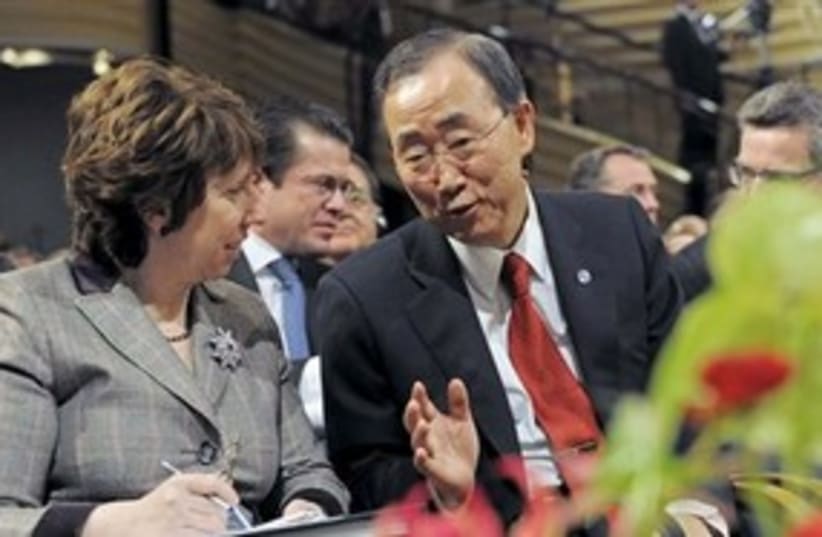
By ASSOCIATED PRESSCatherine Ashon, Ban Ki-moon 311 AP(photo credit: AP)
MUNICH — European Union foreign policy chief Catherine Ashton said Saturday that the Quartet of Mideast peacemakers can't be distracted from their task by political upheavals in Egypt and its neighbors.The quartet — the UN, the US the EU and Russia — met on the sidelines of the Munich security conference amid ongoing pro-democracy protests in North Africa and the Middle East.RELATED:Clinton tells Mideast leaders to enact democratic reformsPM pledges to support Palestinian economic growth Ashton said US Secretary of State Hillary Clinton, UN Secretary-General Ban Ki-moon and others called for urgent progress on efforts to press Israel and the Palestinians to resume talks on a peace settlement."I believe that regional events shouldn't distract us from that objective for the future. We want to see peace and stability in the region. We believe the Middle East peace process is an essential part of that," Ashton told reporters.She said that envoys would hold separate talks with Israeli and Palestinian negotiators before another meeting of the Quartet leaders next month.In a statement, the Quartet said it regretted Israel's decision to end a 10-month moratorium on construction in West Bank settlements and east Jerusalem. That led peace talks to stall just weeks after they had restarted in September."In view of developments in the Middle East, the Quartet expressed its belief that further delay in the resumption of negotiations is detrimental to the prospects for regional peace and security," the group said in a statement.German Foreign Minister Guido Westerwelle said the Quartet meeting — which also included Russian Foreign Minister Sergey Lavrov, US special envoy for Middle East Peace George Mitchell and the Quartet's envoy Tony Blair — had delivered "clear messages.""Those who want to support moderate forces in the Middle East, those who want to support constructive forces in the Middle East, are well advised to press for progress in the Middle East peace process," Westerwelle said.Ashton defended the EU — and herself — against criticism that the 27-nation bloc had been slow and timid in its response to events in Egypt. "I really don't accept that we have been slow. I think that we have to be very measured, and very clear," she said.
Related TagsTony Blair
if(catID != 151){
var cont = `Take Israel home with the new Jerusalem Post Store