EU trip to Iran canceled amid international criticism
"Germany refuses to realize that isolation is important, we need to cut diplomatic ties with Iran," German-Iranian expert Farzan says.
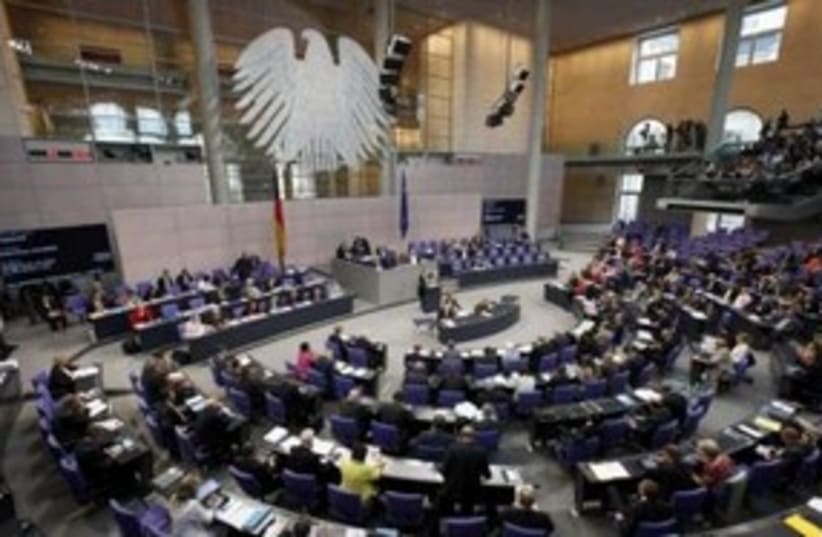
By BENJAMIN WEINTHAL JERUSALEM POST CORRESPONDENTThe German Bundestag in Berlin 311 (R)(photo credit: REUTERS/Fabrizio Bensch)
BERLIN – A slated European Union lawmakers’ five-day trip to Iran in late October and early November was canceled on Wednesday. The controversial trip – which was organized by five lawmakers, including two German European members of parliament (EMP), Barbara Lochbieler and Kurt Lechner – faced intense criticism from fellow EMPs and Iranian dissidents.Saba Farzan, a prominent German-Iranian expert on the Islamic Republic and EU-Iranian relations, told The Jerusalem Post on Thursday, “The planned Iran trip by a European delegation and an Iran event hosted by a think tank in Berlin reveals a major dilemma. Germany refuses to realize that isolation is important, that isolation works and that we need more isolation, including cutting diplomatic ties with one of the most brutal regimes of this world.”RELATED:Clinton: Iran morphing into military dictatorshipIranian chess master expelled for refusing to play IsraeliShe continued that “only in Berlin have I observed such a refusal. As a German Iranian journalist, this leaves me ashamed and shocked while it would be so easy and without any major cost for my country to side with the cause of freedom for the country of my childhood. Ongoing dialogue and business is not in our strategic interest. A Middle East with a democratic Iran certainly is.”There were conflicting reports about which party canceled the visit to Tehran.
According to a report from the Kuwait News Agency on Wednesday, the Iranians pulled the plug on the planned trip. The news agency quoted the Finish EMP chairwoman of the Iran delegation, Tarja Cronberg.“This decision means that the visit is effectively canceled, despite considerable preparations and planning. No clear reasons were given for this unexpected decision,” said Cronberg in a statement.She added that the “European parliament’s delegation was ready to engage in a constructive dialogue with Iranian parliamentarians, government officials and representatives of civil society on issues such as the nuclear program; human rights; drug related issues; energy and the environment; regional security and the upcoming parliamentary elections in Iran. The delegation very much regrets the fact that the Iranian authorities chose to break off this timely opportunity for dialogue.”There was, however, speculation in Europe that rising political and media pressure contributed to the cancellation.During an EU debate about the controversial Iran trip in October, British MEP Struan Stevenson, said, “In view of the news this morning that the American government has uncovered a plot by the Iranians to assassinate the Saudi ambassador in Washington, together with the news that another 300 prisoners have been transferred to death row expecting imminent execution – and these are people, mostly students, who were arrested during the uprisings in Tehran and other cities in Iran – I think it is a deeply retrograde step that this house, that the conference of presidents, has agreed to send a delegation to Tehran in two or three weeks time.”“I think Iran is now beyond the pale; to give them that kind of publicity, to give them that kind of oxygen is completely wrong. We should think again about that conference of presidents’ decision,” he continued.President of the EU Parliament Jerzy Busek, who hails from Poland, responded to Stevenson, saying, “Your remarks will certainly be taken into consideration.”According to Christian Zimmermann, from Germanbased human rights NGO Büro für Menschenrechte und MinderheitenAngelegeneheiten, Busek said during an October visit to Berlin that he does not “think this trip will take place because in view of the changing behavior of the Iranian regime, it is not a good time to travel to Iran to hold talks.”Zimmerman’s human rights NGO fights to combat repression against pro-democracy Iranians and victims of the Iranian government’s policies.The Italian MEP Marco Scurria, joined his colleague Stevenson in objecting to the EU visit. He placed a statement on his personal website requesting that Cronberg walk away from the visit because of Iran’s alleged assassination plot to bomb a Washington restaurant and murder the Saudi Arabian ambassador to the US.A report in last week’s The Huffington Post said the EU trip to Iran would cost European taxpayers 100,000 euros.The Huffington Post article titled “European Parliament ‘Iran Delegation’ Plans Shameful Trip To Tehran” cited outraged Iranian dissidents.According to the Huffington Post, “an EP visit would only be interpreted by Iran as if no matter what crimes they commit, they are still respected and welcomed by the international community!” said Ali M., who escaped from repression in Iran several months ago. He is seeking asylum in Luxembourg, noted the Huffington Post.“Any visit to that regime is an insult to the blood of our loved ones who were murdered by the regime’s henchmen,” Fereshte Dashti, told the Huffington Post, adding, “I am appalled to see these people insisting so much to make such trips. They seem to have nothing but personal interests. Human lives seem to mean nothing to them.”The online news website reported that she “lost seven of her closest relatives for opposing the dictatorship in Iran.”Meanwhile, the German Foreign Council on Foreign Relations (DGAP), a policy think tank, unleashed a storm of criticism on Wednesday for hosting Iran’s Deputy Finance Minister Muhammad Reza Farzin. According to a report on Ynet, diplomatic sources said Deputy Foreign Minister Danny Ayalon raised Farzin’s appearance at the DGAP event with German diplomats.DGAP president and former German ambassador to the Islamic Republic of Iran Paul von Maltzahn personally invited Farzin to Berlin.The German political scientist Dr. Matthias Küntzel slammed the DGAP decision to court Iran’s government and reject tough sanctions against Tehran. Küntzel, an author of essays and an authoritative book on German- Iranian economic and political relations, wrote on his website on Tuesday that the DGAP’s “orientation takes for granted an acceptance of the Iranian bomb and Iranian terror.”
if(catID != 151){
var cont = `Take Israel home with the new Jerusalem Post Store