Washington imposes unilateral sanctions, freezes assets of Gaddafi family; Obama says Libya violating human rights.
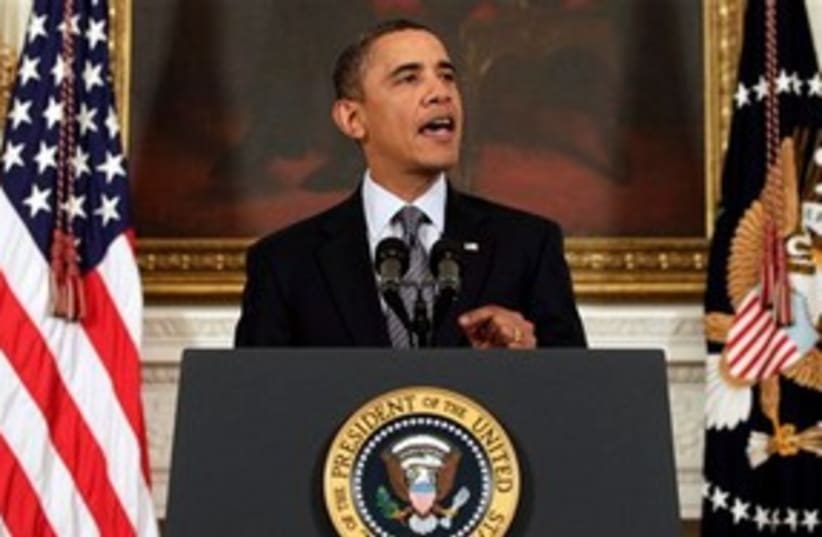
By HILARY LEILA KRIEGER, ASSOCIATED PRESSUS President Barak Obama 311 AP(photo credit: AP)
WASHINGTON – The US imposed unilateral sanctions on Libya Friday and temporarily shut its embassy there as Western leaders pushed to end Col. Muammar Gaddafi’s use of violence in his quest to cling to power. Though the US has criticized Gaddafi for using force against civilian protesters throughout the week, the moves Friday were the strongest steps the US has taken to pressure an Arab leader in the face of street protests roiling the Middle East as greater freedom and representative government is demanded.US President Barack Obama said the sanctions were justified by Libya's "continued violation of human rights, brutalization of its people and outrageous threats" that have drawn condemnation from the world.RELATED:Pro-Gaddafi militias fire on protesters in Libyan capitalUNSC draft: Libya attacks may be 'crimes against humanity'Wiesenthal Center slams 'solidarity' with Gaddafi"By any measure, Muammar Gaddafi's government has violated international norms and common decency and must be held accountable," Obama said in a statement announcing the penalties.He said the sanctions were designed to target Gaddafi's government and protecting the assets of Libya's people from being looted by the regime.In an executive order detailing the sanctions and signed by Obama, the president said the instability in Libya constituted an "unusual and extraordinary threat" to US national security and foreign policy.Also on Friday, The Guardian reported that senior Libyan officials were receiving a dire warning from Britain: Desert Gaddafi or face trial for crimes against humanity.The sharper US tone and pledges of tough action came after American diplomatic personnel were evacuated from the capital of Tripoli aboard a chartered ferry and a chartered airplane, escorting them away from the violence to Malta and Turkey. As they left, fighting raged on in Tripoli and elsewhere in Libya as Gaddafi vowed to crush the rebellion that now controls large parts of the country.With US diplomats and others out of harm's way, the administration moved swiftly. Shortly after the chartered plane left Libyan airspace, White House spokesman Jay Carney said the US had been constrained in moving against Gaddafi and his loyalists due to concerns over the safety of Americans but was now ready to bring more pressure on the government to halt its attacks on opponents.Click for full Jpost coverage ofturmoil in the Middle East"It's clear that Colonel Gaddafi has lost the confidence of his people," Carney told reporters. "He is overseeing the brutal treatment of his people, the fatal violence against his own people and his legitimacy has been reduced to zero in the eyes of his people."The US put an immediate freeze on all assets of Gaddafi's regime and the Libyan government held in American banks and other institutions.The sanctions apply also apply to assets held in the US by Gaddafi and three of his sons and a daughter. The order also directs the secretaries of state and treasury to identify other individuals who are senior officials of the Libyan government, children of Gaddafiand others involved in the violence.Stuart Levey, undersecretary for terrorism at the Treasury Department, said officials believe "substantial sums of money" will be frozen under the order. He declined to give an estimate.Carney said sanctions would "make it clear that the regime has to stop its abuses, it has to stop the bloodshed." International officials say thousands may be dead.But the hesitancy to outline the full range of US punishments reflected in part the administration's skepticism that it had many options to influence Gaddafi. The 68-year-old has had a rocky relationship with the West, and American officials are worried about his unpredictability as he desperately seeks to maintain his four-decade grip on power.
if(catID != 151){
var cont = `Take Israel home with the new Jerusalem Post Store