In Globes interview, defense minister claims US respects Israel's right to decide for itself on matters of its security.
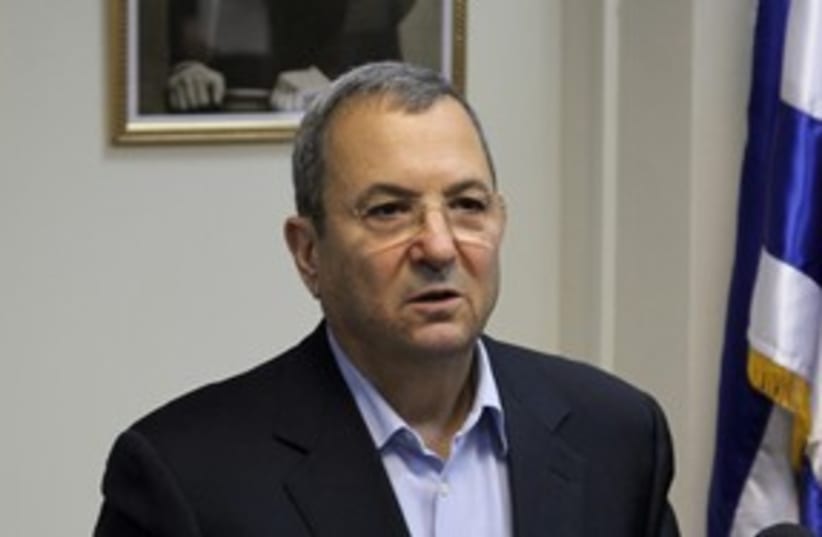
By JPOST.COM STAFFDefense Minister Ehud Barak 311(photo credit: Marc Israel Sellem)
Defense Minister Ehud Barak downplayed differences between the US and Israel regarding the Iranian threat on Thursday.The leadership of both countries agreed that Iran must not be allowed obtain a nuclear weapons capability, he said.“It is very important that when Israel says that it is not possible to allow a nuclear Iran and that all the options are on the table, it means it.There is agreement between us and the Americans on the need, but there are differences about how fast the clock is ticking. We’re continually reviewing the reality, and the Americans understand and know from us that Israel reserves the right and the responsibility to decide for itself on matters related to its future and security, and they respect this,” Barak told Globes.“Obviously, it would be better for us were the Americans to speak out more, though they have spoken a lot...They have explicitly made two quality descriptions of red lines, not detailed like the small print in a financial contract, but lines: If the Iranians close the Straits of Hormuz, we’ll be forced to act; and if there is a breakthrough to a nuclear weapon, we’ll be forced to act. They have explicitly indicated this.”Barak said that Iran has not yet made the decision to build a nuclear weapon, but that such a breakthrough was liable to take place in the next year.The defense minister also addressed reports that he had taken a step back from a possible strike on Iran and that he and Prime Minister Binyamin Netanyahu no longer see eye-to-eye on the issue.“I always see eye-to-eye. We see the same threat, but had we already made a decision and approved it, you'd definitely know about it... I say, it’s necessary to listen more to the Americans.“We’d all be happy if we were to wake up one morning and discovered that the ayatollahs had seen the light, that the penny had dropped, and that they had decided to cancel the nuclear program. I don’t think that is going to happen. However, just as the Americans respect our rights, we respect theirs. None of us would object if they act. We know that they aren’t going to act in the near future. So we monitor and review,” Barak said.
if(catID != 151){
var cont = `Take Israel home with the new Jerusalem Post Store