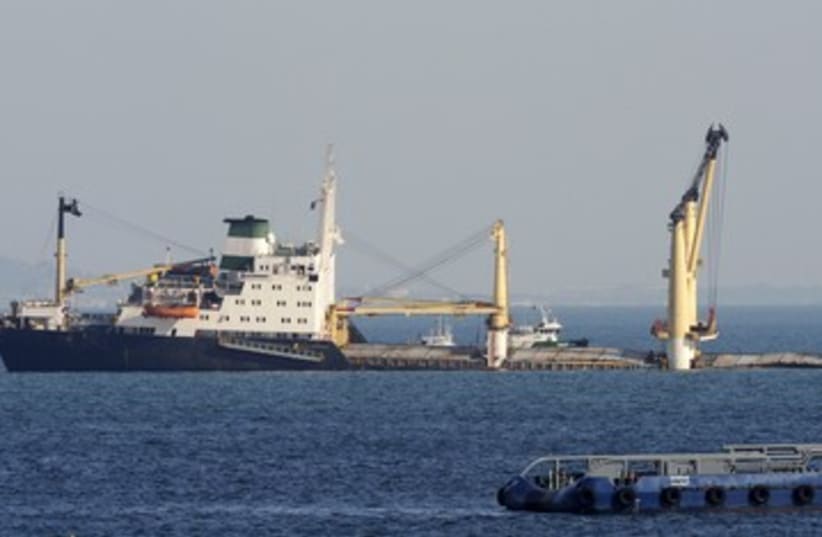
Islamic Republic of Iran Shipping Lines has renamed 90 of its 123 ships since 2008 in efforts to dodge sanctions, study finds.
By YAAKOV KATZIranian-flagged freight ship 390(photo credit: REUTERS)
Using a series of legal loopholes, Iran has renamed over a dozen cargo ships in the past year as it seeks to circumvent sanctions on arms transfers and the supply of nuclear-related equipment, according to a new study released Monday.The report was published by the Stockholm International Peace Research Institute (SIPRI) and included an analysis of reported incidents of illicit arms and drug transfers in recent years.According to the report, the Islamic Republic of Iran Shipping Line (IRISL) has renamed a total of 90 out of its 123 ships since 2008. The company also reflagged a significant percentage of its fleet, which dropped off the list of the top 100 fleets in the world last April. It previously was ranked as the 23rdlargest container line in the world.Israel has captured a number of Iranian arms ships transferring weaponry to terrorists groups in the region in recent years. Last week, The Jerusalem Post reported on efforts by IDF Chief of Staff Lt.-Gen. Benny Gantz to recruit EU countries to help counter Iranian smuggling throughout the region.Gantz raised the issue with European counterparts he met at NATO headquarters earlier this month.In March, navy commandos seized the Victoria, which was transporting 50 tons of weaponry – including advanced radar-guided anti-ship missiles – to Hamas in the Gaza Strip. The ship was owned by a German company and was flying a Liberian flag.In late 2009, the navy seized the Francop, which was carrying hundreds of tons of weaponry en route to Hezbollah in Lebanon. It was also owned by a German company and was flying an Antiguan flag.“The Iranian ships are being shuffled like a deck of cards in a Las Vegas casino,” explained Hugh Griffiths, one of the authors of the report and an arms trafficking expert at SIPRI.Click here for full Jpost coverage of the Iranian threat“There is a constant game of cat and mouse being played and the renaming and reflagging of vessels of different states is a way of trying to avoid inspection because of sanctions.”The report, Griffiths said, was the culmination of two years of work by SIPRI during which it created the Vessel and Maritime Incident Database, which contains information on countries and shipping lines suspected of illicit activity.According to the SIPRI report, in October 2010 Germany removed ships suspected of being owned by IRISL from its shipping registry after the European Union imposed sanctions on the state-owned shipping company.The report claims, however, that despite the sanctions, other EU member states, including Cyprus and Malta, continue to have Iranian ships on their registries.
Related TagsSmuggling
if(catID != 151){
var cont = `Take Israel home with the new Jerusalem Post Store