Survey on Passover attitudes also shows almost two-thirds of Israelis hold Seder for family, Jewish tradition and culture.
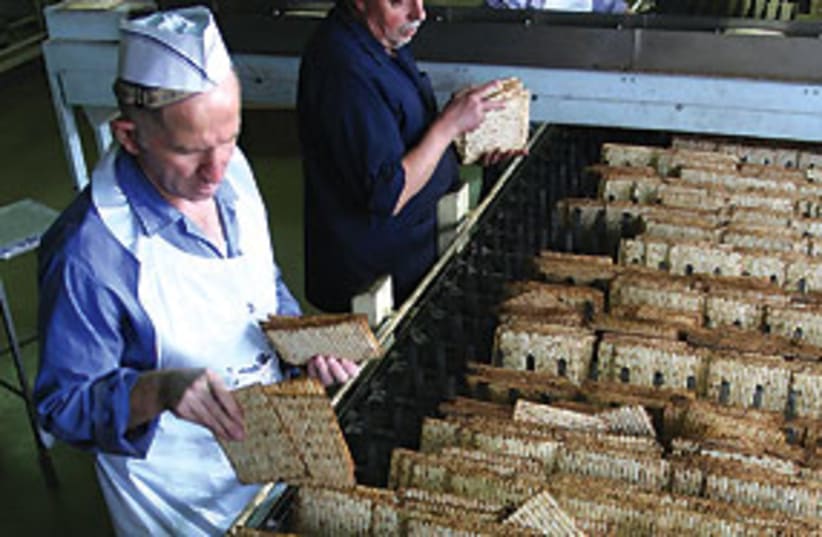
By JONAH MANDELmatza passover pessah 311(photo credit: Ariel Jerozolimski)
Nearly one of every five new olim will not be attending a Pessah Seder next Monday night, and almost two-thirds of the Israelis holding the ceremonial meal do so primarily on the grounds of family values, Jewish culture or tradition, a new survey released on Sunday revealed.With the Jewish holiday of freedom around the corner, the Bina Center – which combines Jewish identity and Hebrew culture with social activeness and empowerment – recently commissioned the Geocartography Knowledge Group to survey 500 Israelis on their habits and attitudes toward the Seder, which combines the fundamental commandment of retelling the biblical story of the Exodus from Egyptian slavery with a meal alluding to the bygone Pessah sacrifice.RELATED:Non-traditional items showing up on Seder platesCounter-Terror Bureau warns of terror threat in Sinai Nearly all Israelis who defined themselves as religious or haredi will be participating in a Seder, and just over 1 percent of those with a “traditional” religious inclination won’t be at one.Some 12% of the secular people surveyed won’t be holding a Seder, a figure comprising 18% of the new olim surveyed, in contrast to only 6% of the Israeli-born populace.Click for special Jpost Pessah featuresAs for why Israelis hold or attend a Seder, 39% of those who defined themselves secular explained it as part of the Jewish tradition, 26% said it’s a pleasant family event, 14% because of a connection to Jewish culture, and 9% linked it to faith and fulfilling the commandment.From among the religious and haredi Israelis, faith and the mitzva were the primary motivation to holding a Seder (75%), with a significant 18% noting the connection to tradition, and 6% stating the event as one connecting to Jewish culture. None of the religious and haredi Israelis hold a Seder because it’s first and foremost a “pleasant family event.”From amongst the traditional Israelis, an almost equal number noted religious observance (39%) and Jewish tradition (43%) as their Seder motivation, with 10% citing Jewish culture and another 8% stressing the family experience.Of respondents with higher education, 18% noted Jewish culture as the dominant Seder factor, while 7% of those without a college degree stressed that element. People with a monthly income of at least NIS 12,000 were more than twice as inclined to hold the Seder for cultural reasons than those with a take-home pay of less than NIS 8,000, the rates standing at 16% and 9% respectively.Eran Baruch, the head of Bina, said on Sunday that “the fact that two-thirds of the Jewish public in Israel holds a Seder as a family event, or linked to Jewish culture and tradition, underlines the relevance and vitality of Judaism to the general Israeli public.“At the same time,” he continued, “the fact that 18% of new olim do not mark the holiday in any way is very worrying, and indicates a trend of severe alienation experienced by the immigrants toward Judaism and the rabbinical establishment, which represents Judaism to them.”
if(catID != 151){
var cont = `Take Israel home with the new Jerusalem Post Store