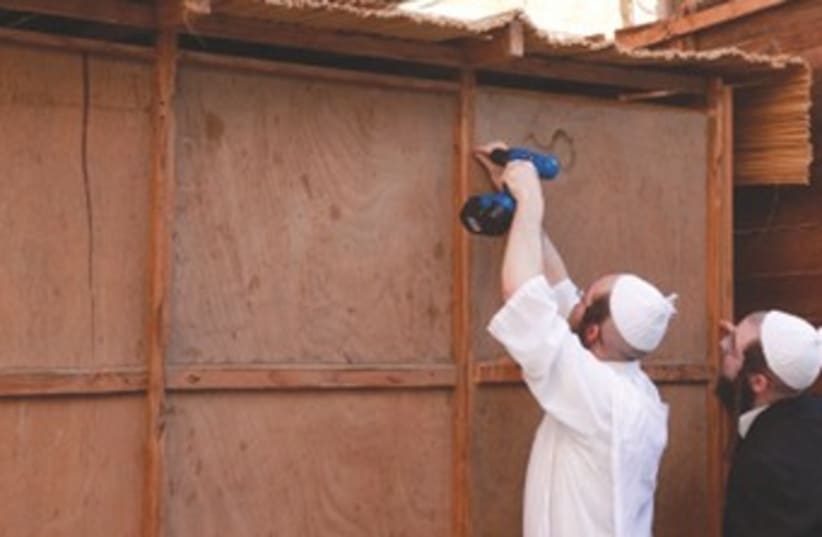
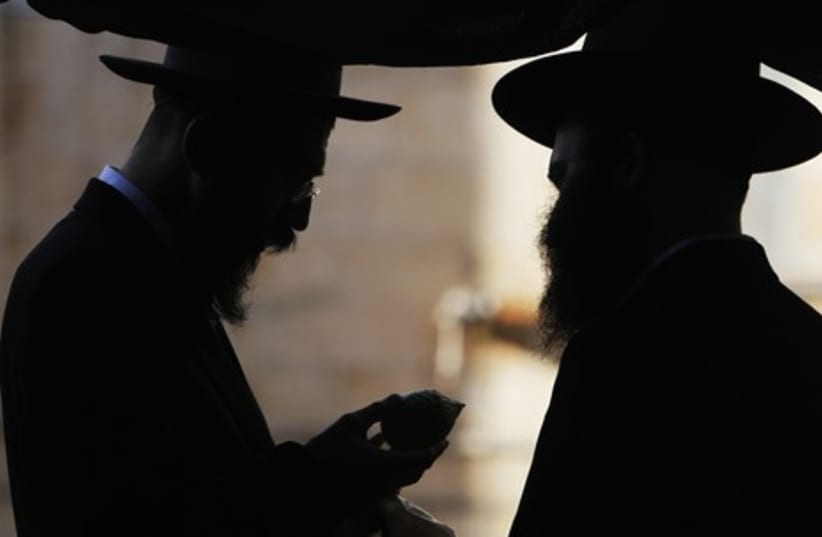

But the hard work and effort put into erecting these flimsy dwellings was undone by dramatic storms and strong rains in many locales that drenched dinners and in some cases ripped insubstantial succa roofs right off.Wine was diluted, halla bread soaked and moods dampened by the downpours, with many people electing to retreat into their homes at differing stages of their holiday meals.Those who defied the elements, however, were treated to spectacular lightening displays and heavy peals of thunder as they ploughed on with their chicken soup and holishkas, a traditional Succot delicacy of steamed cabbage leaves stuffed with meat.Rabbi Benny Lau, head of the Ramban synagogue in south Jerusalem and a prominent figure in the national-religious community, said in his sermon Monday morning that the rains on the first night of Succot conveyed definite divine displeasure, referencing a passage from the Talmud on the topic of rain during the Succot festival.“This is the first time since I can remember that I have not been able to sleep in the succa on the first night of Succot and it feels as if God has humiliated us,” the rabbi told his congregation.In many places in the Diaspora where rain during Succot is common one does not take inclement weather during the festival to heart, he continued.“But during Succot in Israel God invites us into the succa, which is in effect His house under His protection. After Yom Kippur, to sleep in the succa is a happy and tranquil experience, but when it rains it’s as if God is kicking us back out again, which we should take as a sign of rebuke and reproach.”According to Lau, the message that should be heard is that of the importance of bettering interpersonal relations “We must know how to treat our fellow man, our relations between each other need to be less violent. You cannot treat people in this way and then go into God’s house to live under his protection.”