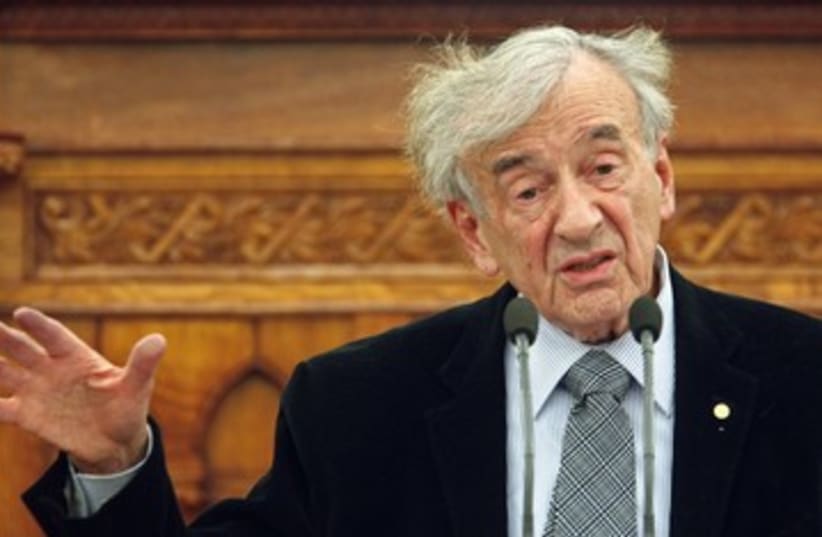
The Holocaust has become common currency in every conflict. It is always used for comparison, even in political debates."I don’t like this. It is unacceptable and impossible to make comparisons with the Holocaust. For example, there are the haredim (ultra-orthodox), who put yellow stars on their children in protests - and in Israel of all places. What have we come to?"Prime Minister Benjamin Netanyahu frequently compares the Holocaust to the threat facing Israel from Iran."Iran is a danger, but to claim that it is creating a second Auschwitz? I compare nothing to the Holocaust."The German people have turned remorse over the Holocaust into part of their identity. But most countries do not normally express remorse over genocides they have committed. Do you appreciate the Germans' choice or do you criticize the nations that do not act in this way?"Both. I oppose declaring collective punishment. Only the perpetrators of the crime are guilty. There are German students who study with me and are wonderful people. It is heartwarming to see how they are accepted by other students. They feel guilty, even though they are not. Interestingly, the people who should feel guilty, do not."The Holocaust generation is dying out. Do you fear about what will happen to the memory of the Holocaust in the next generation?"No. When I began teaching at university 40 years ago, there were few courses on the subject. The situation is different today. I've never taught so many subjects related to the Holocaust in so many countries. There have never been so many conferences and so many books published about it. Anyone who listens to a witness who experienced the Holocaust becomes a witness himself, and today they are listening to us."Over the years, Wiesel has been engaged in opposing extreme violations of human rights. He has fought against Apartheid in South Africa, Argentina's Dirty War and its desaparecidos (disappeared) in the 1970s and 1980s, the ethnic cleansing in Bosnia in the early 1990s, the suppression of the Kurds, the Rwanda genocide of 1994, and the contemporary Darfur genocide in Sudan.
Which of these events remind you of the Holocaust and the lesson 'Never Again'?“None of them reminds me of the Holocaust. Only Auschwitz was Auschwitz. I went to Yugoslavia when reporters said that there was a Holocaust starting there. There was genocide, but not an Auschwitz. When you make a comparison to the Holocaust it works both ways, and soon people will say what happened in Auschwitz was ‘only what happened in Bosnia.’"
In 2007, Wiesel turned down an offer by then Prime Minister Ehud Olmert to become Israel's president. "I refused because I am not Israeli and I don’t live in Israel. He said, 'I'll make you an Israeli in five minutes.' There was pressure on me to accept the offer. In Israel, when you say no, the pressure is only increased. But I said that it wouldn’t happen, because I'm not suited for the job and that my wife would divorce me. Six weeks after the offer, I made a visit to Israel and I was welcomed like never before."