The Jerusalem Post
Jpost search icon google-icon iphone
  Set as Homepage
Tue, May 21, 2013   12 Sivan, 5773
newspapers magazines
 
    • Breaking News
    • Diplomacy & Politics
    • Defense
    • National
    • Mideast
    • Syria
    • Iran
    • World
    • Business
    • Sports
    • Health & Science
    • Environment
  • Video
  • Opinion
    • Columnists
    • Editorials
    • Op-Eds
    • Letters
  • Jewish World
  • Lifestyle
    • Arts & Culture
    • Food & Wine
    • Travel
  • Features
    • Insights & Features
    • Week in review
    • On the Web
    • Shalva Superheroes
    • Obama in Israel
  • Blogs
    • In the news
    • Judaism
    • From the Middle East
    • Lifestyle
    • Aliya
    • Science and Technology
  • JPost Apps
    • iPhone app
    • iPad app
    • Android app
    • Twitter
    • Facebook
    • RSS feeds
    • JPost Toolbar
    • JPost Newsletter
    • JPost Alert
  • Premium Zone
    • The Jerusalem Report
    • The Experts
    • 20 Questions
    • e-paper
    • Ivrit
    • Christian Edition
    • Dash
    • Magazine
    • Metro
    • In Jerusalem
  • French
    • Politique & Social
    • Affaires Palestiniennes
    • Diplomatie & Monde
    • Art & Culture
    • Israel
  • Green Israel
JPost Learn Hebrew  
Advertise with us  
Nefesh Guided Aliyah  
Eldan  
AFMDA  
Africa Israel Group  
Isram Group  
Kupat Ha  
JPost Twitter  
JPost Facebook  
Classifieds  


Breaking News
 
 
  • JPost.com
  • Jewish World
  • Judaism
 

Ask the Rabbi: May Jews save all lives on Shabbat?

By SHLOMO BRODY
06/28/2012 15:37
Tweet

While Judaism embraces the extreme value of life, it is not always the supreme value.

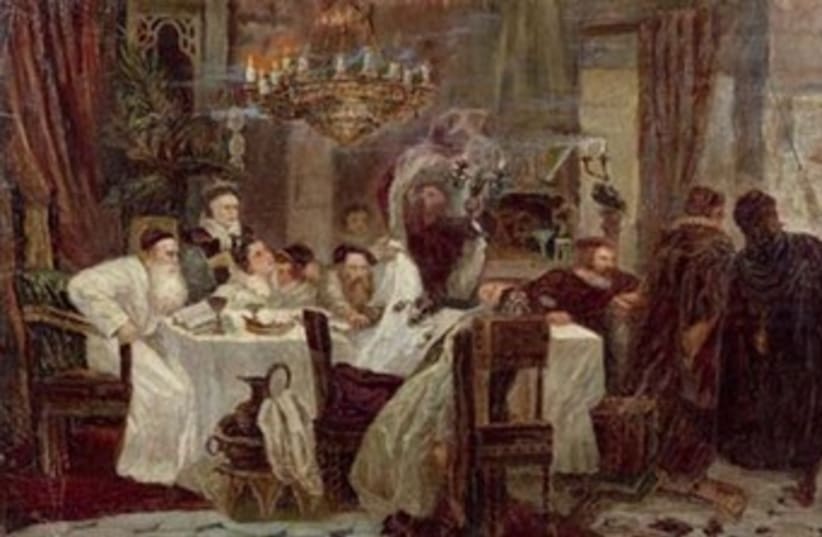
Shabbat table
Shabbat table Photo: Thinkstock/Imagebank
From the outset, let me state very clearly: Jewish law obligates Jews to save the lives of all humans, Jews and gentiles alike, even if it entails violating Shabbat. This is the universal conclusion of all contemporary decisors, despite confusing media reports of a recent public lecture by a senior Israeli scholar.

While this ruling is not disputed, scholars do disagree regarding the legal argumentation that leads to this consensus position.

While Judaism embraces the extreme value of life, it is not always the supreme value. God, the Bible tells us, took the Jewish people out of Egypt so they could serve Him. This service entails giving up one’s life rather than committing idolatry as well as the other unconscionable transgressions of murder and illicit relations.

Given the importance of Shabbat observance, a biblical reader might have come to believe that this value also trumps lifesaving.

Indeed, in the time of the Hasmoneans, some Jews refused to go to battle on Shabbat, leading to their quick decimation.

To negate this sentiment, the Talmud declares that the value of life trumps Shabbat observance (pikuah nefesh doheh et hashabbat). God, the Sages contended, commands us to “guard my laws and statutes... and live by them” (Leviticus 18:5), but not to die to observe them. Consequently, even in cases when there is a doubt whether the danger is life-threatening, one still violates Shabbat to save a life.

Shabbat remains sacrosanct, however, and if it does not compromise the speed or efficacy of the life-saving efforts, one should minimize the transgressions performed in the life-saving process.

A NUMBER of talmudic texts make clear that this understanding only permitted Shabbat desecration to save fellow Jews.

Some have criticized this interpretation as falling short of the ethical standards found in the Hippocratic oath. Others have more notoriously accused Jews of believing that gentile blood is less red than Jewish blood. One infamous incident occurred in 1965 when an anti-religious Israeli journalist, Israel Shahak, alleged that he witnessed an Orthodox Jew refusing to use his telephone to help save a non-Jew. While his inability to provide any evidence for this incident led many to claim it was a modern version of a blood libel, it nonetheless generated a public clarification that his claim was a definitive distortion of Jewish law. Jewish law definitively mandates saving the lives of all humans, even if it entails violating Shabbat.

While the Talmud never provides a definitive rationale for this distinction between gentiles and Jews, one passage implies that the belief was that Jews needed a dispensation to save their own, while non-Jews could supply their own lifesavers without resorting to Jews to violate Shabbat. Such an interpretation might justify an “on-call” system for regular healthcare providers (like hospital rotations), but obviously would not help in an acute emergency when circumstances dictated that a gentile could only be saved by a Jew. The Talmud, followed by medieval sages, contended that for the sake of preventing enmity (mipnei eiva), Jews may violate certain prohibitions. Many scholars used this dispensation to justify violating transgressions in order to save the lives of gentiles.

Rabbinic scholars dispute whether dispensations to prevent enmity may justify breaking a biblical prohibition or only a rabbinic edict. Be that as it may, Rabbi Moshe Sofer noted that the failure to save non-Jews would not only create enmity, but could also lead to gentiles refusing to treat Jews, or even to pogroms. As such, Jews must save the lives of all humans, even if it entails violating biblical prohibitions on Shabbat, because a lack of reciprocity endangers the Jewish community.

This remains true even when one might think that no one would notice one’s dodging life-saving responsibilities.

WHILE THIS argumentation practically results in treating all lives equally, some scholars, including Rabbi Yehiel Y. Weinberg, have expressed reservations that the logic stems from overly particularistic and pragmatic considerations. During the Shahak affair, chief rabbi Yehuda Unterman contended that concerns for enmity reflected more fundamental beliefs in the importance of peaceful relations (darchei shalom). While rabbis Hayim David Halevi and Immanuel Jakobovits shared this position, it was rejected by others who believed this apologetically reinterpreted a definitively pragmatic argument.

Recent scholars, however, have pointed to the 13th-century commentary of Rabbi Menahem Hame’iri, who contended that the Talmudic failure to apply the dispensation to save the lives of gentiles only applied in ancient societies where the non- Jewish majority regularly abused its Jewish inhabitants. In cultures where the larger population acts on ethical principles, no distinction is made between saving the life of a Jew and that of a gentile. In the words of Rabbi Nahum Rabinovitch, “Compassion and mercy for all men are the mark of the Jew, just as they are of God.”

The writer, online editor of Tradition and its blog, Text & Texture (text.rcarabbis.org), teaches at Yeshivat Hakotel.

JPostRabbi@yahoo.com
  • Send
  • Large
  • Small
  • Print
  • Share
Most Viewed in
1
Dershowitz to PM: Watch ‘Curb Your Enthusiasm’
2
Bennett reveals reform of religious services
3
WJC to probe 'Claims Conference fraud cover-up'
4
Lapid tops Post's 50 most influential Jews list
JPost Community
Tweet
Shabbat Judaism Egypt Jewish Observance Life
Share this article
Tweet
Share
Send
Your comment must be approved by a moderator before being published on JPost.com. Disqus users can post comments automatically.

Comments must adhere to our Talkback policy. If you believe that a comment has breached the Talkback policy, please press the flag icon to bring it to the attention of our moderation team.
JPost Services
conferenceConference
newsletterNewsletter
iphoneMobile Apps
kotelcamKotel Cam
kolboJPost Alert
premiumPremium
JPost TV News  
Mobile Apps  
Bank Hapoalim  
Meir Panim  
Yad Ezra  
Rambam Hospital  
TourLuxe  
Zev Goldstein PLLC  
Penrose Gallery  
JPost Premium Zone  
JPost kotel Camera  
         
 
Israel Focus
JPost TV News
Coming soon to a screen near you!  
Nefesh B'Nefesh Guided Aliyah
Already living in Israel? Enjoy the Benefits of Aliyah!  
Give "Freedom" this Passover
to needy Israeli families. Donate now  
War Threatens
Protect the People of Northern Israel  
Intelligence Squared
The international debate forum, announces it is coming to Israel  
Bank Hapoalim
Israeli's number one bank  
Jerusalem Post Lite
Lite Edition of the Jerusalem Post for English improvement  
Learn Hebrew with us
Get 10 minutes free personal coaching in Hebrew through phone or Skype  
JPost newspapers
Sign up for the JPost newspapers and receive one month free subscription  
Kosher English Magazine
English language weekly magazine - especially for religious people  
JReport Kindle Edition
Now you can get the Jerusalem Report directly to your Kindle  
JPost Premium Edition
The very best articles are available only in our Premium edition  
Lifestyle Magazine
 
 
Real Estate
Don't Look For a House!
In Israel, our website will do it for you!  
 
Travel
Eldan Rent a Car
20% off all Car Rental Reservations in Israel  
Hertz Car Rental
Special Online Discounts!  
The King David Jerusalem Hotel
One of the world's truly iconic hotels, and a Jerusalem landmark  


Sites Of Interest:

Jerusalem Hotels
KKL-JNF
Poalim Online
BreitBart.com
Our Friends
Jerusalem Attractions
Jerusalem Tours
itraveljerusalem.com

JPost sites:

Learn Hebrew
The Jerusalem Report
Our Magazines
JPost Edition Francaise
Green Israel
Christian World
Jerusalem Post Lite

Services:

JPost Mobile Apps
JPost Premium
JPost Newsletter
JPost Toolbar
JPost News Ticker
JPost RSS feeds
JPost Archives
JPost Alert
JPost Kotel Cam

JPost Conferences:

NYC Conference
Diplomatic Conference

Information:

About Us
Feedback
Staff E-mails
Copyright
Sitemap
News Partners
Advertise with Us
Price List
Statistics
Ad Specs
Terms Of Service
Jpost.com, the online edition of the Jerusalem Post Newspaper - the most read and best-selling English-language newspaper in Israel. For analysis and opinion from Israel, the Jewish World and the Middle East. Jpost.com offers expert and in-depth reporting from Israel, the Jewish World and the Middle East, including diplomacy and defense, the Palestinian-Israeli conflict, the Arab Spring, the Mideast peace process, politics in Israel, life in Jerusalem, Israel's international affairs, Iran and its nuclear program, Syria and the Syrian civil war, Lebanon, the Palestinian Authority, the West Bank and Gaza Strip, Israel's world of business and finance, and Jewish life in Israel and the Diaspora.
 
About Us | Advertise with Us | Subscribe | Premium | Newsletter | RSS | Contact Us
 
All rights reserved © The Jerusalem Post 1995 - 2012