Peres: World not doing enough to stop Syria bloodshed
Israeli President says he hopes rebels win; Sida, liberal opposition figure who had presided over council since it was formed in August of last year, succeeds Ghalioun as new Syrian rebel leader.
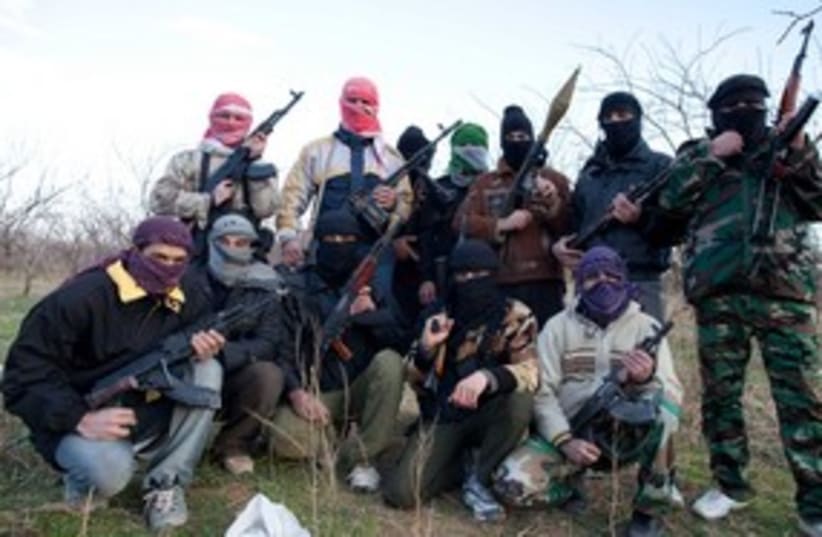
By JPOST.COM STAFF, REUTERSSyrian army defectors 311(photo credit: REUTERS)
President Shimon Peres on Sunday said that the world is not doing enough to stop the bloodshed in Syria, according to an interview with Israel Radio."Murders are increasing everyday and this scandal is unprecedented," said Peres.He added that he has "great respect" for the rebels continuing to protest and that he hopes "that they win," Israel Radio reported.Peres made the comments leading up to his trip to the US on Sunday in which he will receive the Medal of Freedom from US President Barack Obama and meet with a number of key US officials to discuss Iran, the peace process and other issues.Meanwhile, the main Syrian opposition umbrella group, the Syrian National Council, elected Kurdish activist Abdelbasset Sida as its leader at a meeting in Istanbul on Sunday, a council statement said.Sida, who has been living in exile in Sweden for many years, was the only candidate for the three-month presidency of the SNC at a meeting of 33 members of the councils' general secretariat.The 56-year-old succeeds Burhan Ghalioun, a liberal opposition figure who had presided over the council since it was formed in August of last year.Ghalioun, another exile living in Paris, has come under criticism for having had his presidency constantly renewed when the council was supposed to represent a democratic alternative to the authoritarian rule of Syrian President Basher Assad.The Muslim Brotherhood, the most influential player in the council, had initially indicated it wanted Ghalioun to remain president, but then opted to support Sida after opposition activists inside Syria raised objections to Ghalioun following a third renewal of his term last month.Click for full JPost coverageAdib al-Shihakly, a founding member of the council, had also threatened to resign if Ghalioun remained president.Opposition sources said the election of Sida could help enlist more Kurds, who number one million out of Syria's 21 million population, behind the 15-month uprising.Demonstrations against Assad's rule have been regularly breaking out in Kurdish regions of Syria but without matching the intensity of protests in the rest of the country.That may be partly because of support by Assad for the armed Kurdistan Workers Party (PKK), which is suspected of being behind assassinations of several anti-Assad Kurdish opposition figures since the revolt erupted in March 2011.Kurdish members of the council have also had open disputes with the remainder of the body over the issue of Kurdish rights and whether a post-Assad Syria would be built around a federal structure similar to that in neighboring Iraq.Sida said his priority would be to expand the council and hold talks with other opposition figures to include them in the council, which some have accused of being dominated by Islamists."The main task now is to reform the council and re-structure it," Sida told Reuters.Bassam Ishak, a member of the general secretariat, said Sida was elected to fulfill demands from within the council and from the opposition inside Syria as well as international powers to make the council more democratic.Sida will work on convening a meeting of the whole council after a month, during which a new general secretariat and a new president could be elected, possibly making Sida a transitional leader, Ishak said.
if(catID != 151){
var cont = `Take Israel home with the new Jerusalem Post Store