The Jerusalem Post
Jpost search icon google-icon iphone
  Set as Homepage
Wed, Jun 19, 2013   11 Tammuz, 5773
newspapers magazines
 
    • Breaking News
    • Diplomacy & Politics
    • Defense
    • National
    • Mideast
    • Syria
    • Iran
    • World
    • Business
    • Sports
    • Health & Science
    • Environment
  • Video
  • Opinion
    • Columnists
    • Editorials
    • Op-Eds
    • Letters
  • Jewish World
  • Lifestyle
    • Arts & Culture
    • Food & Wine
    • Travel
  • Features
    • Insights & Features
    • Week in review
    • On the Web
    • Shalva Superheroes
    • Obama in Israel
  • Blogs
    • In the news
    • Judaism
    • From the Middle East
    • Lifestyle
    • Aliya
    • Science and Technology
  • JPost Apps
    • iPhone app
    • iPad app
    • Android app
    • Twitter
    • Facebook
    • RSS feeds
    • JPost Toolbar
    • JPost Newsletter
    • JPost Alert
  • Premium Zone
    • The Jerusalem Report
    • Magazine
    • Metro
    • In Jerusalem
    • ePaper
    • Expert Opinion
    • Q&A
    • Dash
    • Christian Edition
    • Ivrit
  • French
    • Politique & Social
    • Affaires Palestiniennes
    • Diplomatie & Monde
    • Art & Culture
    • Israel
  • Green Israel
JPost Learn Hebrew  
Advertise with us  
Nefesh Guided Aliyah  
Eldan  
AFMDA  
YTA  
Isram Group  
JPost Twitter  
JPost Facebook  
Classifieds  


Breaking News
 
 
  • JPost.com
  • Middle East
 

Qatar moves to reach food sustainability

By ARIEH O’SULLIVAN / THE MEDIA LINE.
LAST UPDATED: 09/12/2011 10:39
Tweet

Gulf country plans to develop 45,000 hectares as it boosts food security, will use most technological advances to overcome natural challenges.

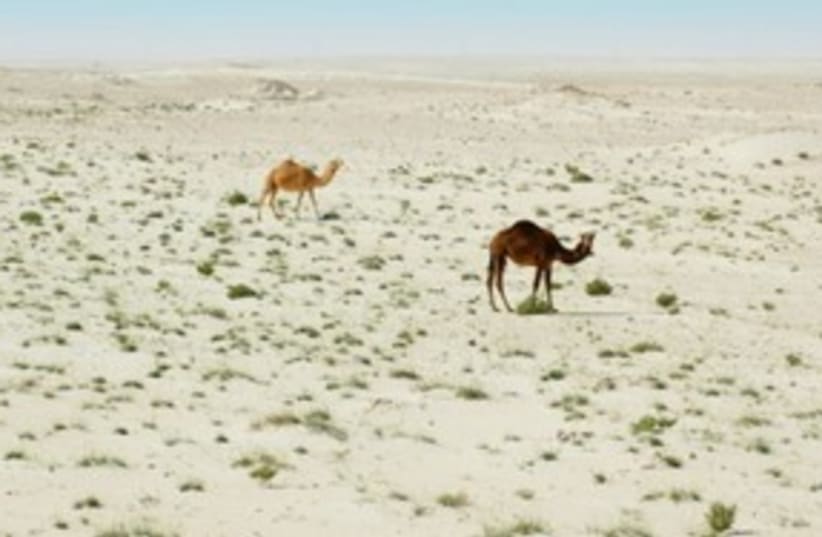
Qatar desert scape
Qatar desert scape Photo: Thinkstock/Imagebank
Many Gulf countries have been investing in foreign farmland, mainly in fertile Africa, to serve as their bread basket.

But Qatar has recently announced that it was going to boost its own food security and start investing in a master plan to turn 45,000 hectares (111,000 acres) of its own land into farms. The government’s Qatar National Food Security Program says its plan is to achieve self-sufficiency using the most modern technological advances to feed its booming population.

RELATED:
'Erekat accuses Qatar of investing in settlements'

At the moment, Qatar, an arid country of some 1.8 million inhabitants jutting off Saudi Arabia into the Gulf, can only produce about 10% of its food needs and is desperately reliant on imports. Greenhouses are a rarity at the moment and they exist only about 1% of cultivated land, according Food and Agriculture Organization (FAO) of the United Nations. 

As a first step, Qatar plans to set up 1,400 farms, according to Mohamed Al-Attiyah, chairman of the Qatar National Food Security Program. He said these will use the latest agricultural technology and train more people to work in the agricultural sector to improve productivity.

Currently, only 1.6 % of Qatar is arable land and agriculture only contributes 0.1% to gross national product, according to the FAO. Attiyah noted that existing farms were working at only 10% of their capacity since it suffered from a lack of qualified staff and water shortages.

Qatar’s emir, Sheikh Hamad bin Khalifa Al Thani, issued a decree calling for a master plan to be ready by 2013 and for full food security to be reached within a decade.

“This decree is an important message that demonstrates Qatar’s willingness to overcome one of its main challenges,” Attiyah said.

Pedro Berliner, an expert in dryland agriculture and director of the Jacob Blaustein Institutes for Desert Research, said this was feasible, but that Qatar faced many obstacles. 

“Technology has been able to overcome many natural conditions. You can desalinate water, and add fertilizer. You don’t even need soil and can grow plants hydroponically. It all depends on the costs,” Berliner told The Media Line. “You could grow wheat in a greenhouse, but it would cost about five times what you’d pay on the market.”

This also would require a very high degree of technological skill and you have to acquire that or seek out the alternatives and bring in trained foreign workers, Berliner added.

Attiyah warned in a recent interview with The Peninsula newspaper in Qatar that climate change and water shortages “could pose a very serious problem for future development.”

According to the World Bank, the Gulf Cooperation Council (GCC) member states of Qatar, Kuwait, Bahrain, Oman, Saudi Arabia and the United Arab Emirates import some 90% of the food they need to feed their 40 million-strong population at a cost in 2010 of $25.8 billon. Qatar itself imports some $1.3 billion in food annually. 

“High dependence on imports makes the GCC food supply very vulnerable and highly dependent on the world food market. In the past, any form of disruption in food imports, either due to policy restrictions by exporting countries or natural calamities has affected the region significantly,” according to a recent report by Alpen Capital Investment Bank.

The oil boom brought a population explosion to Qatar and the rest of the Gulf states and food production has not been able to keep pace. Furthermore, food prices and oil prices are interconnected. As oil prices rose so too did food prices. Wealthy Arab states have been trying to create a food pipeline to stave off riots.

In an effort to improve their food security Gulf state countries have been buying up tracts of fertile, but often underutilized land in African countries like Ethiopia, Sudan and Mozambique. Qatar recently leased 400,000 hectares of farmland in Kenya in the Tana River Delta to grow food for home in exchange for a $3.5 billion loan to the government. This “land grab” has raised alarms by these countries who fear they won’t be left with any food for their own people.

The announcement by the chairman of the Qatar National Food Security Program to improve domestic food production seems to reflect a little paranoia that in times of crisis, it would not be able to import food for its residents.

“This is the opposite of globalization,” said Berliner of the Blaustein Institute. “In a global world everyone provides their best product and they are traded around the world so you have what you need. This is going the other way around. It would seem that they do not want to be affected by globalization.”
  • Send
  • Large
  • Small
  • Print
  • Share
Most Viewed in
1
Peres: Ahmadinejad will be accountable
2
Peres supports US plan to arm Syria rebels
3
Assad warns: Europe will 'pay price' if it arms Syrian rebels
4
Syria: Egypt's Morsi joining US, Israeli conspiracy
JPost Community
Tweet
Qatar agriculture farming Gulf food security Gulf Cooperation Council
Tweets by @Jerusalem_Post
Share this article
Tweet
Share
Send
Your comment must be approved by a moderator before being published on JPost.com. Disqus users can post comments automatically.

Comments must adhere to our Talkback policy. If you believe that a comment has breached the Talkback policy, please press the flag icon to bring it to the attention of our moderation team.
JPost Services
conferenceConference
newsletterNewsletter
iphoneMobile Apps
kotelcamKotel Cam
kolboJPost Alert
premiumPremium
JPost TV News  
Mobile Apps  
Bank Hapoalim  
Meir Panim  
Israel Law Center  
Inbal Hotel Jerusale  
Meier on Rothschild  
Weizmann Institute o  
JPost Premium Zone  
JPost kotel Camera  
         
 
Israel Focus
JPost TV News
Watch Now!  
Israel Law Center
The ultimate Mission to Israel, October 21 – 28, 2013 Register now!  
Nefesh B'Nefesh Guided Aliyah
Already living in Israel? Enjoy the Benefits of Aliyah!  
One year International MBA
in English, Bar-Ilan University, Israel – Open House July 9, 2013, 17:30  
Give "Freedom" this Passover
to needy Israeli families. Donate now  
YTA – A Yeshiva in Israel…
in English. Come Join Us  
War Threatens
Protect the People of Northern Israel  
Bank Hapoalim
Israeli's number one bank  
Jerusalem Post Lite
Lite Edition of the Jerusalem Post for English improvement  
Learn Hebrew with us
Get 10 minutes free personal coaching in Hebrew through phone or Skype  
JPost newspapers
Sign up for the JPost newspapers and receive one month free subscription  
Kosher English Magazine
English language weekly magazine - especially for religious people  
JReport Kindle Edition
Now you can get the Jerusalem Report directly to your Kindle  
JPost Premium Edition
The very best articles are available only in our Premium edition  
Lifestyle Magazine
 
 
Real Estate
Meier on Rothschild
Tel Aviv's Most Prestigious Address  
Don't Look For a House!
In Israel, our website will do it for you!  
 
Travel
Tourism Magazine
June 2013  
The Inbal Jerusalem Hotel
Hot summer deal, order now!  
Eldan Rent a Car
20% off all Car Rental Reservations in Israel  
Hertz Car Rental
Special Online Discounts!  
The King David Jerusalem Hotel
One of the world's truly iconic hotels, and a Jerusalem landmark  


Sites Of Interest:

Jerusalem Hotels
KKL-JNF
Poalim Online
BreitBart.com
Our Friends
Jerusalem Attractions
Jerusalem Tours
itraveljerusalem.com

JPost sites:

Learn Hebrew
The Jerusalem Report
Our Magazines
JPost Edition Francaise
Green Israel
Christian World
Jerusalem Post Lite

Services:

JPost Mobile Apps
JPost Premium
JPost Newsletter
JPost Toolbar
JPost News Ticker
JPost RSS feeds
JPost Archives
JPost Alert
JPost Kotel Cam

JPost Conferences:

NYC Conference
Diplomatic Conference

Information:

About Us
Feedback
Staff E-mails
Copyright
Sitemap
News Partners
Advertise with Us
Statistics
Ad Specs
Terms Of Service
Jpost.com, the online edition of the Jerusalem Post Newspaper - the most read and best-selling English-language newspaper in Israel. For analysis and opinion from Israel, the Jewish World and the Middle East. Jpost.com offers expert and in-depth reporting from Israel, the Jewish World and the Middle East, including diplomacy and defense, the Palestinian-Israeli conflict, the Arab Spring, the Mideast peace process, politics in Israel, life in Jerusalem, Israel's international affairs, Iran and its nuclear program, Syria and the Syrian civil war, Lebanon, the Palestinian Authority, the West Bank and Gaza Strip, Israel's world of business and finance, and Jewish life in Israel and the Diaspora.
 
About Us | Advertise with Us | Subscribe | Premium | Newsletter | RSS | Contact Us
 
All rights reserved © The Jerusalem Post 1995 - 2012