The right of response is arguably one of the most important elements in journalism codes worldwide.
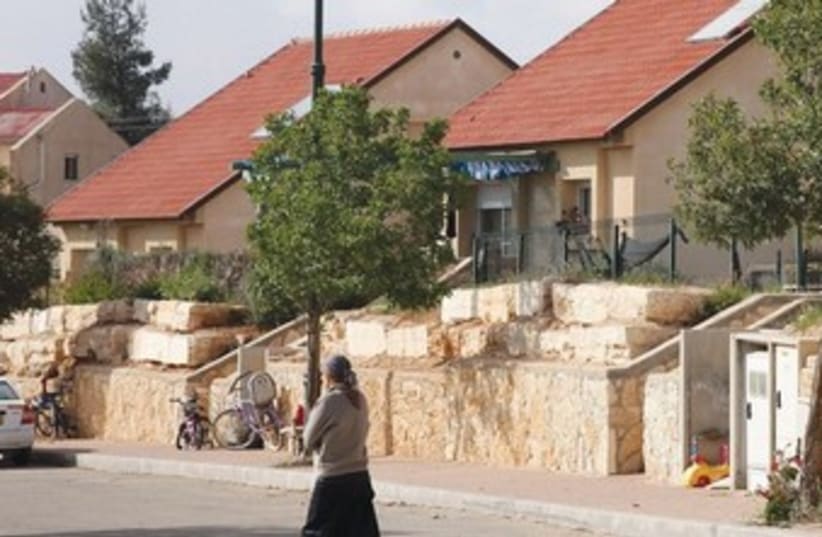
By YISRAEL MEDAD, ELI POLLAKSussiya_521(photo credit: Marc Israel Sellem)
The Swiss Neue Zueriche Zeitung (NZZ) is a major media player in that country and even considered as the “local New York Times.” And it might very well be that it shares much with not only the Times, but with Israel’s Ha’aretz, as well.A few months ago, the NZZ sent a new correspondent to Israel, Monika Bolliger, and gives her reports ample space. On June 21, she published two articles, one about the Battir village which was hoping for UNESCO status and the second titled “Entrance fees for access to the synagogue.” The subtitle was: “The Palestinian village Susya will shortly be sacrificed to the bulldozers. The residents built their domiciles without a license, this after they were expelled from their original homes.”Bolliger then proceeds to describe the tragic history of this poor village: “The village is in reality a collection of tents. ...At least seventy percent of these will be torn down, among these a tent which serves as a clinic, a small village business center, a kindergarten as well as solar panels – the only source of electricity for the village. In 1986 the villagers of Susya were expelled from their center, this shortly after the [Jewish] settlement of Suseya was established close by. ...The residents were expelled from their domiciles without receiving reparations. Having no other place to go to they moved to live on their agricultural areas. Today the synagogue stands as part of a well-kept archeological park, which is accessible only by payment of entrance fees.”“Susya is in the so-called C-area which is under Israeli military rule. Building licenses must be obtained from the Israeli authorities and are almost always refused. ...In 2001 the army destroyed tents, caves, cisterns and fields and killed animals. At the same time, the settlers built outposts. In 2011, around 70 constructs [of the Arabs] were destroyed. The actual implementation of the latest evacuation order was temporarily prevented by the actions of a lawyer employed by the Israeli NGO Rabbis for Human Rights.”Bolliger contends that “the settlers threaten the security of the Palestinians.” She cites the testimony of a local Arab resident, Samih Nawaja, who claims that shepherds are routinely attacked by settlers while the army stands by and does nothing.One of us (EP) wrote a letter to Mr. Markus Spillmann, chief editor of the NZZ, pointing out that the article does not give any right of response to anyone on the Israeli side that is attacked in the article.The testimony of one “Samih Nawaja” is described in detail, but his accusations both against Israeli citizens and the IDF remain unanswered.The right of response is arguably one of the most important elements in journalism codes worldwide.The editor was requested to provide a further report which would include the “other side” in this story.An answer came, quickly enough.Mr. Martin Woker ably defended the NZZ by pointing out that an Israeli documentary film was cited as a source and that, in any case, there were no “accusations” included, only “facts” which all could be verified and, after all, he claimed the same correspondent also covered the Ulpana neighborhood evacuation with balance.Notwithstanding his protestations, the story does have another narrative.Susiya’s struggles with its Arab neighbors have been reported fairly extensively in the Israeli press and should have been available to Bolliger.The Jewish residents have complained about a campaign of provocation led by various leftist organizations who are particularly active on the Shabbat. Last December, in response, Susiya residents obtained rabbinic permission to video film on Shabbat activity they feel is an immediate security threat.In an interview last year, at Israel National News, Ofir Avidan, who manages the Jewish community’s agricultural services, claimed that the activists empty the ancient water cisterns in the surrounding fields from which the shepherds of Susiya water their flocks of sheep as part of a deliberate, planned attempt to cause damage. He is quoted saying, “They come with tanks, and pump out the water to the last drop.”He added, “We had discussions and agreements with the Arabs.There was co-existence and dialogue, but since the leftist activists entered the picture, everything has changed.” He asserted that aerial photographs from 30 and 40 years ago show that the Susya area was arid desert, in contradiction to Bolliger’s claim that the Arab residents tilled the fields for hundreds of years.Earlier this month, with the approval of the Israeli Supreme Court, which is highly respected internationally, the Civil Administration handed out demolition orders against 52 buildings. This order resulted from a petition filed by Regavim, an NGO watchdog group for Jewish national property rights, against the massive illegal Arab construction taking place in Susya.Regavim’s attorney, Amir Fisher, claimed that, as reported by INN, “Palestinians everywhere are building freely without obtaining building permits and yet the Civil Administration ignores this,” and that it was only due to his group’s initiative that lands are being protected.He added: “They built near Susya, on state land. Not only did the Civil Administration not remove them, they ordered local Jewish farmers to leave the area so as to prevent friction.”None of this appears in Bolliger’s narrative.Bolliger writes that “it is told that the husband of the radical leader of the settlers was killed by a terrorist.”Indeed, Jewish shepherd and farmer Yair Har Sinai was murdered by local Arabs in 2001. As explained below, the murderer’s family returned to the region and, the settlers claim, poses a threat.As reported in Arutz 7, in April 2011 the commanding officer in the region imposed a closure order around the entire area, allowing Jews to walk about freely only in Susiya proper, thus threatening to turn it into a ghetto. In a confrontation between Brig.-Gen. Hazut and residents of Susya on Shabbat, the commander was accused of failing to relay to his superiors the security implication of the decision. The murderers have become sufficiently emboldened to threaten Susya residents with “another Itamar.”Rabbi Eliezer Altshuler, the community’s spiritual head, explained that “The murderer’s family had abandoned the area after the murder and this accounted for the relative quiet. The Arab family has a notorious reputation among those who deal with security in the region. Now the IDF hierarchy is letting them return to the places they abandoned. The Jewish community plans to thwart this. These are lands that have not been registered and therefore the Arabs cannot claim title. The Army wants quiet and they don’t care about the Har Sinai family and its rehabilitation.Little was done when a flock of sheep was recently stolen by the Arabs.”And so, yes, there are at least two sides to this story, and to many other stories which are poorly handled by the media, such as the Battir village story published in The New York Times last week when Isabel Kershner adopted in toto the Arab narrative with no investigative reporting and regurgitated in the NZZ also by Bolliger.We would strongly urge all those who are approached by Bolliger and others in the future to be very careful in what they say to her and at the very least provide responses only after obtaining assurances of fair play. The NZZ reading public deserves balanced reports.The authors are vice chairman and chairman of Israel’s Media Watch www.imw.org.il, respectively.
if(catID != 151){
var cont = `Take Israel home with the new Jerusalem Post Store