The law establishes proper checks and balances, and fills a vacuum that needed to be filled.
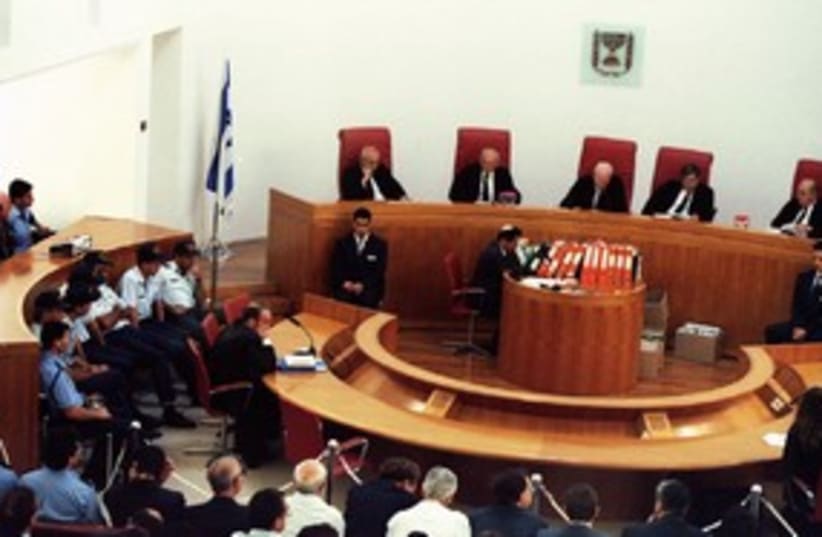
By ZVI ZIEGLERIsraeli Supreme Court 311(photo credit: REUTERS/FILE)
An unbelievable chorus of criticism broke out as soon as details of the memorandum proposing the new Basic Law: Legislation emerged. It is understandable that some people will criticize every piece of legislation that does not fit their concepts exactly, but it seems that the proposed law takes into consideration many of the arguments for and against that were presented in the public discourse a few years ago when such a law was debated. The memorandum will, naturally, be subject to modifications and improvement, which will be ironed out in the Legislative Committee before it is brought to the Knesset. Notwithstanding the need for fine-tuning and modifications, it is an important step forward in the legislative history of Israel.Let me start by stating the (almost) obvious – when a vacuum exists, something is going to fill it. If it is not done with forethought, the filling causes friction, and lots of dissatisfaction on all sides. This has been the case with respect to the power of the court to overturn legislation. It came about in a haphazard way, without explicit authorization and was not universally admired, although nobody would imagine disobeying the high court of justice.It remained unclear which court may nullify Knesset laws, whether a single Supreme Court judge may do it, what the proper way to proceed is once the law is nullified, etc. This has caused friction and doubt, which hopefully will be put to rest once the basic law passes.These issues have been dealt with in the proposed law. There will be basic laws, which will have a special standing, will need a preferred majority of 65 in order to pass, and will not be open to amendment by a simple majority of those voting, correcting one of the deficiencies of the present system. There is a transition period – not well defined – in which basic laws may be legislated with simple 61 majorities.This should be defined a priori, I believe, and a one year period is amply sufficient.The Supreme Court will be authorized to nullify laws passed by the Knesset, provided that at least nine justices sit in judgment.No lower court will be authorized to do it, and if a lower court feels there is a constitutional question involved, which may require an examination of the lawfulness of the law, it will refer it to the high court.The Supreme Court can also consider the lawfulness of a law in cases which have not been referred to it by a lower court.If a law is nullified by the Supreme Court, the Knesset can reinstate it if at least 65 members vote for it in all three readings, after having considered the judgment nullifying it. The law would then be in effect for five years, unless the Knesset changes its mind before the five years pass, and it can be reinstated again for periods of five years.THESE ARE reasonable provisions and provide safeguards against an incidental majority of the Knesset enacting laws which limit liberties. I would be happier with increasing the required special majority to 70, as proposed by the Neeman committee a few years ago, but one can live even with the 65 requirement.In the rare cases when the court nullifies a law, it will be hard, even in a 70-member strong coalition, to assemble 65 votes required to reinstate a law struck down by the court. It will happen, I believe, only in cases where the legislation passed with a substantial majority to begin with, and not a razor-thin one.Moreover, fears with regard to indefinite reinstatement, in five-year installments, is not well-founded. The time-frame is key.Past experience shows that nullifications usually relate to laws passed by a previous Knesset. Whether a current Knesset, or future Knessets, will reinstate laws the Supreme Court chose to nullify is debatable.There is one aspect of the memorandum which hopefully will be modified, and that is the undefined transition period for enacting it.The Supreme Court has been the protector of civil liberties, and of human rights.It has done an admirable job. The proposed legislation does not detract from its power to continue protecting us. It just establishes proper checks and balances, and fills the vacuum that needed to be filled. The writer is a Professor at the Technion.
if(catID != 151){
var cont = `Take Israel home with the new Jerusalem Post Store