I challenge my fellow philanthropists, Jewish foundations and organizations to support young leadership programs.
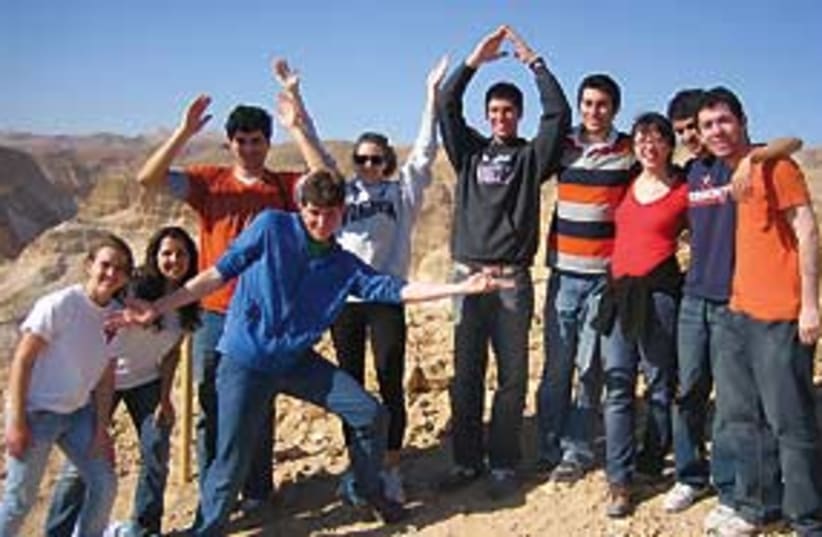
By LYNN SCHUSTERMANbirthright 311(photo credit: Neta Shor)
Do you know Yitzy? In an old Jewish joke, he meets Monday nights with a group of elderly Jewish men. Usually, they talk about world affairs, and the tone is often negative. But one day Yitzy shocks his friends: “I’ve become an optimist,” he declares.They are stunned, until Benny speaks up: “If you’re an optimist, Yitzy, why do you look so worried.”And Yitzy says: “You think it’s easy being an optimist?” I SMILE because I know the feeling, especially when I ponder where the Jewish community will find its next generation of leaders. But the fact is, I am an optimist, and here’s why.This week, outside of Tel Aviv, 120 young, creative business and social entrepreneurs, innovators, thinkers and artists will convene for the ROI 2010 Summit for Young Jewish Innovators. They represent more than 500 members of the ROI Community, a global network of young Jews, which we helped launch in 2006 in partnership with the Center for Leadership Initiatives and Taglit-Birthright Israel.Together we hoped ROI would energize and empower a generation of Jews who often feel cut off from the Jewish world and help them take to scale the innovative projects they believe can revitalize Jewish life.We wanted to explore how to strengthen Jewish communal life by combining all the new tools of digital technology and the Internet with the powerful and high potential encounters built into face-toface meetings.The results have been heartening, and we’ve learned some important lessons that might help others in their search for the Jewish leaders and activists of tomorrow.1. The network empowers: When David Cygielman arrived at the ROI summit in 2006, he was seeking new ideas for Moishe House, a network of community hubs for 20- something Jews. He discovered a group of inventive, supportive, enthusiastic new friends from all over the globe. These connections helped him launch seven new Moishe Houses around the world.Today there are 29.2. Unexpected partnerships produce extraordinary results: To spotlight the plight of Jewish women denied Jewish divorces by abusive husbands, ROI served as matchmaker.A social psychologist in Israel teamed up with a cartoonist in New York to narrate a very personal and powerful drama. This spring, the cartoon was featured prominently at an exhibit in New York’s Museum of Comic and Cartoon Art. A series on green technology and the plight of Darfur refugees followed. At our conference, they will unveil their latest series on leadership.3. Widening our circle of discourse lends perspective: We’ve embraced the talmudic art of respectful disagreement and dissent by encouraging exploration and debate without promoting any one platform or party line. Our inclusiveness prompted one of our most left-wing participants to say: “This is the first and only place in the Jewish world where I could bring my full world view and struggle as a Jew and not be told that I was wrong or a detriment to the Jewish people.” He said this standing next to his right-of-center ROI friend.4. Virtual reality is nice, but it pales beside the real thing. While many ROI initiatives could not exist without social platforms that connect people and communities in ways previously unimaginable, we have seen firsthand that face time beats Facebook every time. That’s why we’ve chosen the somewhat costly and logistically challenging but highly effective approach that brings participants together in person for intellectual exchange, shared experiences, wrestling with values, along with celebration and deliberation over the state of the Jewish people. Our crafted gatherings promote resource sharing and transnational strategic partnerships.Jewcology.com, an international Web portal collaboration by 17 ROI environmental activists, grew out of contacts forged at previous summits. And, we meet in Israel, enveloped by the land, people and history, to remind us that we are working toward the same ultimate goal: the perpetuation of our global Jewish community.5. Don’t just believe in young Jews – invest in their ideas. It’s easy to say that young people are our future, and that nurturing their Jewish identities is a priority. But talk is cheap and building a future isn’t.ROI is making a significant dollar investment in our members and their projects. I challenge my fellow philanthropists, Jewish foundations and Jewish organizations to support excellent young leadership programs that enable and empower the next generation of Jewish leaders.ROI’s biggest “return on investment” is the lesson that ROI grantees continue to teach each other – and me: A dream to spread the joy of Jewish living, giving, and learning can become a reality, but only when it’s pursued as part of a community. For without each other, even I would lose my optimism.The writer, chair of the Charles and Lynn Schusterman Family Foundation, is the founder of ROI Community.
if(catID != 151){
var cont = `Take Israel home with the new Jerusalem Post Store