I have a deep sense of the social and spiritual potential in this partnership between Jews, those who keep kosher and those who do not.
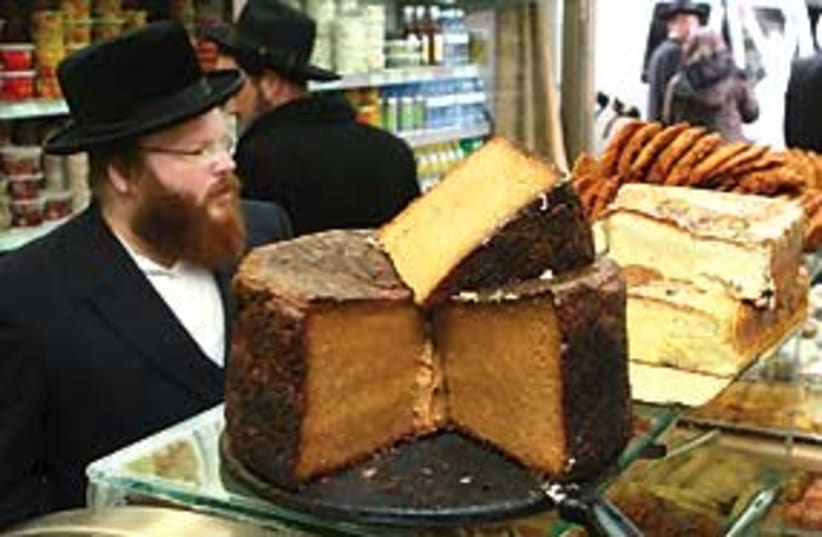
By RABBI AARON LEIBOWITZharedim kosher food 311(photo credit: Ariel Jerozolimski)
The Kashrut Yerushalmit project, a community volunteer-based supervision I have been developing with the Yerushalmim Movement, has been prematurely cast in the media limelight. This has emerged from left field as a result of the Jerusalem Rabbinate delivering warnings and citations to restaurants that present themselves as kosher but do not hold an authorized kashrut certificate from the Chief Rabbinate and the local religious council.Whether these establishments have violated the law is questionable, and I will leave that for the legal experts to sort through, but I want to clearly state that by simply claiming they are kosher, they have in no way violated the Halacha.The real question is, of course, whether people are permitted, or advised, to believe them. We should note that there are good reasons not to accept a business owner’s claim in this department. They are not objective and clearly stand to profit by claiming they are kosher.They are not trained experts in the laws of kashrut and therefore are not able to make the claim with authority. Last but not least, if they do not proscribe personally to all the precepts of Jewish law, they will perhaps not assign sufficient gravity to the details to satisfy those of us who truly care.The laws of kashrut are not simple, and those who choose to trust while saying “What here could not be kosher?” may not be aware of the details such as tithe, hallah and infestations, not to mention the myriad products in the modern kitchen that themselves require supervision.That being said, it is also not rocket science. After all, many of us maintain a kosher home without regular professional support. I suspect that despite the details involved, many of these kosher claims may be valid, or very close to valid. Certainly, one business owner I spoke to, who had an authorized certificate for years, was well experienced and knowledgeable enough in my judgment to continue to maintain the standards on his own.If these eateries desire to maintain their kosher status, and indeed claim to be doing just that, the Chief Rabbinate should be asking itself why they have chosen not to subscribe to its service.Sadly, the complaints we are hearing raise significant questions. As citizens we should be demanding more transparency from the rabbinate. How often is a kitchen inspected? Why are mashgichim (kashrut supervisors) paid directly by the restaurant, and why does the business not receive a receipt? What are the standards required and how are they enforced when inspections are often few and far between? It breaks my heart to hear well-meaning owners express their anger at the lack of significant supervision, squeezed for what they feel amounts to paying for protection.When will the rabbinate wake up and realize that it is the face of Torah, and that stellar service, best practices, impeccable ethical standards, and the highest of human relations skills are required? Yechiel Spira, the owner of the blog Jerusalem Kosher News, wrote in his summer advisory: “From my hours and hours of visiting stores, monitoring stores, spying on stores, stakeouts, picking through garbage, observing mashgichim, walking the shuk and other areas in the center of Jerusalem I have reached the conclusion that one seeking reliable kashrus may no longer rely on the Jerusalem Rabbinate hashgacha [supervision] in restaurants, regular and/or mehadrin, unless you are personally familiar with the goings on in the restaurant you wish to visit.”I do not know for a fact that things are as bad as Yechiel claims, but this statement does triangulate with the complaints of the business owners we are in touch with.The law that mandates rabbinate supervision is at heart a law to protect the customer from false advertising and fraud; what are we to do when in reality it may be doing the opposite? Competition in kashrut supervision in Jerusalem is long overdue, and I firmly believe it is the only way to bring change. The rabbinate should be given the poetically just role of enforcing the best practices of private agencies through supervision, investigation and the legal prosecution of fraudulent standards.This way, the market would drive industry quality up, and the government would be positioned in its natural role of legislation and enforcement.Since time immemorial, and in almost all world cultures, the sharing of food is a sign of trust and kinship. The acts of breaking bread, raising glasses, or even meeting over a cup of coffee are ripe with symbolic meaning. Imagine if kashrut were a vehicle for building trust and community, instead of the divisive issue it has become. The Yerushalmim Movement and my yeshiva, Sulam Yaakov, are developing a new model based on a covenant of trust between the business and the community.This unique process includes study, emotional engagement and strict volunteer supervision by trained community representatives and rabbis.There will be no certificate; rather this will mark a return to the days of the small village, where reputation and word of mouth were the foundation of trust. The village square will be the World Wide Web, where community members will be able learn about the process, examine the standards, and read first-hand, dated reports from every inspection.Jerusalem is the city of shalom and shleimut, peace and unity. I have a deep sense of the social and spiritual potential in this partnership between Jews, those who keep kosher and those who do not. This is trust-building, and community- building at its core. It is the real rebuilding of Yerushalayim, Jerusalem.The writer is the dean of the Sulam Yaakov yeshiva in the capital’s Nahlaot neighborhood and an activist for Yerushalmim.
if(catID != 151){
var cont = `Take Israel home with the new Jerusalem Post Store