Eilat Magistrate’s Court imposes fine for harming the coral in the Red Sea bay by crushing the organisms with rocks and dirt.
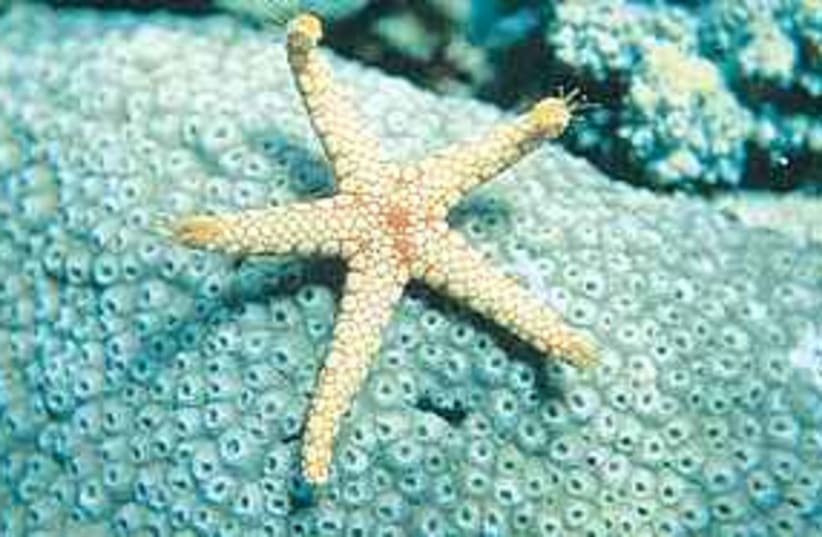
By SHARON UDASINA sea star on coral 311(photo credit: Prof. Zvy Dubinsky)
The Eilat Magistrate’s Court charged the administrators of the city’s “Dolphin Reef” with a fine of NIS 100,000 on Sunday for harming the coral in the Red Sea bay by crushing the organisms with rocks and dirt.Dolphin Reef, established in 1990, is a popular site where families come to swim with dolphins. The damage to the area’s coral reefs began about five years ago, when workers upgrading the facility dumped rocks and dirt from their work with a tractor into the sea, which in turn smashed the reefs, according to the Israel Nature and Parks Authority.
Slamming the company for destroying protected elements of nature, the court fined both owner Roni Zilber and his facility NIS 50,000. In addition to these fines, the judge also charged the company and its management with a NIS 25,000 fine suspended for three years.“We see all development activity that harms wildlife, values of nature and landscape as very grave, and we are responsible for their protection,” said Roni Malka, INPA head of security and law enforcement, in a statement released by his office, arguing that the Dolphin Reef management knew it was causing the reef damage and was conducting work without proper permits.“I am pleased that the court was not deterred and set the bar for punishment high for offenses against valued natural treasures,” Malka continued.“Without severe penalties for offenders convicted of damaging nature, we will not be able to eradicate this ugly phenomenon.”
Related Tagsdolphin
if(catID != 151){
var cont = `Take Israel home with the new Jerusalem Post Store