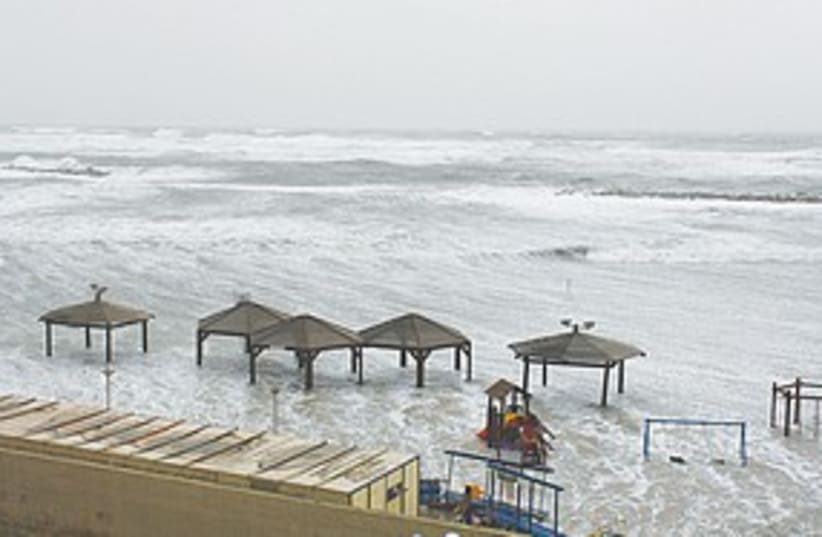
2 TA beaches closed due to sewage, 2 from storm damage
Contamination shuts Gordon Beach just three weeks after receiving top marks in Environment Protection Ministry's quality rankings.
By SHARON UDASINstorm on beach_311(photo credit: Ben Hartman)
Gordon Beach and Charles Clore Beach in Tel Aviv have been closed until further notice due to sewage contamination, the Interior Ministry announced on Tuesday.The ministry also informed the Tel Aviv Municipality that Aviv Beach and the gender-separated Nordau “religious” beach would also remain closed for the time being because storm damage there has yet to be repaired.RELATED:Shavei Zion named Israel’s best beach in annual rankings Just three weeks ago, the Environmental Protection Ministry had released the initial results of its second Blue- Green Flag campaign, which ranks the quality of the nation’s beaches and is updated every two weeks throughout the swimming season, and Gordon Beach got top marks. The rankings – determined by the Environmental, Health and Interior ministries – were based on factors including quality of water, cleanliness, parking, handicapped accessibility, available facilities, sewage connections and public opinion.The committee assigned each beach a mark of “0” to “3,” with 0 being the lowest and 3 the highest, and Gordon Beach earned a 3 as well as a score of 92 percent for overall quality, while Charles Clore earned a 2, at 80%.As for the two beaches damaged by storms, Aviv Beach received a 1, at 57%, and was among the lowest rated in the country, while Nordau faired much better with a 3, at 88%.The reopening of these beaches will depend on further evaluations of the water pollution and of the conditions at the beaches that have not yet been repaired by the municipality since the winter storm season, an Interior Ministry spokeswoman said.Meanwhile, the Tel Aviv Municipality told The Jerusalem Post on Tuesday afternoon that the city had issued a public announcement and placed signs near the polluted beaches that morning, prohibiting bathing and relating warnings from beach inspectors against visiting the areas.“Information on the opening of the beaches will be relayed separately, after authorization from the Interior Ministry and the Health Ministry is received,” a municipal spokesman said.The city explained that the majority of the damage on the Nordau and Aviv beaches was caused by a big storm in December, and that an overhaul began in April after the work and budgets were approved.“The works are expected to be finished in the month of July, and they include a return to the original conditions as well as renovations of all the coastal structures, including the changing facilities,” the spokesman said.
if(catID != 151){
var cont = `Take Israel home with the new Jerusalem Post Store