All but one of 22 Palestinian villages refuse connection to sewage line, Environmental Protection Ministry says.
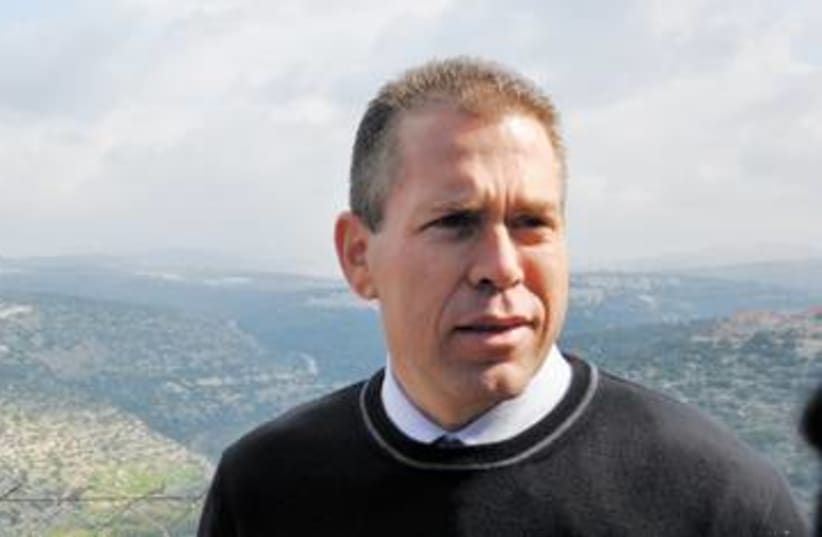
By SHARON UDASINGilad Erdan tours Samarian communities 390(photo credit: Courtesy Environmental Protection Ministry)
Swirling in the strikingly green valley below the southern Samaria community of Nofim is a rambling stream amid grass and trees – filled with dangerous quantities of sewage.A subterranean sewage pipe connects to the underbellies of four of the five surrounding settlements – Nofim, Yakir, Etz Ephraim and Sha’arei Tikva – and will within a few months also connect to that of Ma’aleh Shomron, bringing all of the effluent to a treatment facility in Eliyahu.Despite Israeli offers to connect the 22 surrounding Palestinian villages to the same pipe, all but one of them refused the proposal, Environmental Protection Ministry and Shomron Regional Council officials explained during an exclusive tour of the area on Thursday.Instead, their sewage flows into the aquifer below and ends up directly in the stream, according to the officials.“That’s a testament to the fact that we are doing everything we can to prevent pollution in Judea and Samaria, but nevertheless, the Palestinians refuse to cooperate,” Environmental Protection Minister Gilad Erdan told The Jerusalem Post during the tour.Although planned about 15 years ago, the pipeline was only constructed about eight years ago, and a decade ago sewage from the settlements as well flowed directly into the stream, according to Shomron Environmental Association director Itzik Meir.Erdan expressed hope that donor countries would agree to only continue giving the villages financial support if they agree to connect to the sewage pipeline. Meanwhile, he also said he hoped that the relationship between the local Palestinian and Israeli communities would improve, though he certainly has doubts about this matter.“Hopefully I will be surprised,” he said.“It’s important for me to reveal whether they’re making political use of water,” Erdan said. “Or maybe it’s a problem of misunderstanding – but that is hard for me to believe.”Another Environment Ministry official was slightly more optimistic, explaining that one of the 22 villages had, in fact, recently agreed to hook up to the sewage pipe, a deal that would be finalized in a few weeks time. The official said he could not reveal the name of the village at this point.Yet a third official told the Post he suspected that the local Palestinian governments were unwilling to connect their villages due to “political reasons” – simply “because they don’t want to recognize Israel as a presence in the area.”The Palestinian Water Authority could not be reached by press time.
if(catID != 151){
var cont = `Take Israel home with the new Jerusalem Post Store