Tremors felt through area between Safed and Tiberias in Israel's first earthquake in 2 months; no injuries or damages reported.
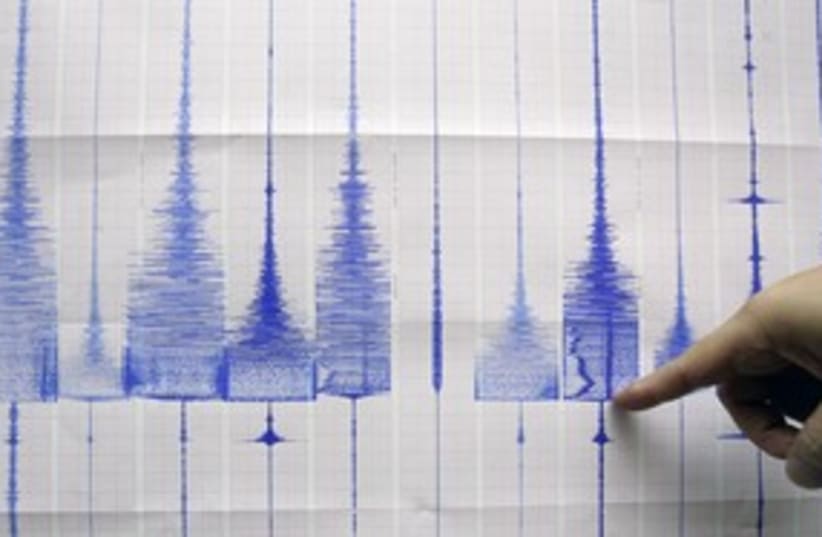
By JPOST.COM STAFFRichter Scale, earthquake quake hand graph 311 (R)(photo credit: Pichi Chuang / Reuters)
A small earthquake struck northern Israel on Thursday. Measuring 3.1 on the Richter scale, it sent tremors through the area between Safed and Tiberias.A number of people contacted the police following the earthquake to say they felt the tremors, but no resulting damages or injuries were reported.In December, a "less than moderate" earthquake hit Israel. No injuries were reported and it drew no call for concern from geologists at its 3.8 Richter scale magnitude.Israel is moderately prone to earthquakes because it sits on the Syrian-African fault line, and historically has suffered a destructive earthquake every 80 to 120 years, according to Dr. Ron Avni, a lecturer at Ben- Gurion University. The last major earthquake hit in 1927, and many experts have been a predicting another one soon.Shira Poliak and Sharon Udasin contributed to this report.
Related TagsTiberiasSafed
if(catID != 151){
var cont = `Take Israel home with the new Jerusalem Post Store