The Jerusalem Post
Jpost search icon google-icon iphone
  Set as Homepage
Tue, May 21, 2013   12 Sivan, 5773
newspapers magazines
 
    • Breaking News
    • Diplomacy & Politics
    • Defense
    • National
    • Mideast
    • Syria
    • Iran
    • World
    • Business
    • Sports
    • Health & Science
    • Environment
  • Video
  • Opinion
    • Columnists
    • Editorials
    • Op-Eds
    • Letters
  • Jewish World
  • Lifestyle
    • Arts & Culture
    • Food & Wine
    • Travel
  • Features
    • Insights & Features
    • Week in review
    • On the Web
    • Shalva Superheroes
    • Obama in Israel
  • Blogs
    • In the news
    • Judaism
    • From the Middle East
    • Lifestyle
    • Aliya
    • Science and Technology
  • JPost Apps
    • iPhone app
    • iPad app
    • Android app
    • Twitter
    • Facebook
    • RSS feeds
    • JPost Toolbar
    • JPost Newsletter
    • JPost Alert
  • Premium Zone
    • The Jerusalem Report
    • The Experts
    • 20 Questions
    • e-paper
    • Ivrit
    • Christian Edition
    • Dash
    • Magazine
    • Metro
    • In Jerusalem
  • French
    • Politique & Social
    • Affaires Palestiniennes
    • Diplomatie & Monde
    • Art & Culture
    • Israel
  • Green Israel
JPost Learn Hebrew  
Advertise with us  
Nefesh Guided Aliyah  
Eldan  
AFMDA  
Africa Israel Group  
Isram Group  
Kupat Ha  
JPost Twitter  
JPost Facebook  
Classifieds  


Breaking News
 
 
  • JPost.com
  • Environment & Technology
 

Research finds undersea gas leaks in Haifa Bay

By SHARON UDASIN
11/09/2012 02:09
Tweet

Geophysics researchers find natural active gas springs leaking on Haifa Bay sea floor, scientists don't yet know if gas is usable.

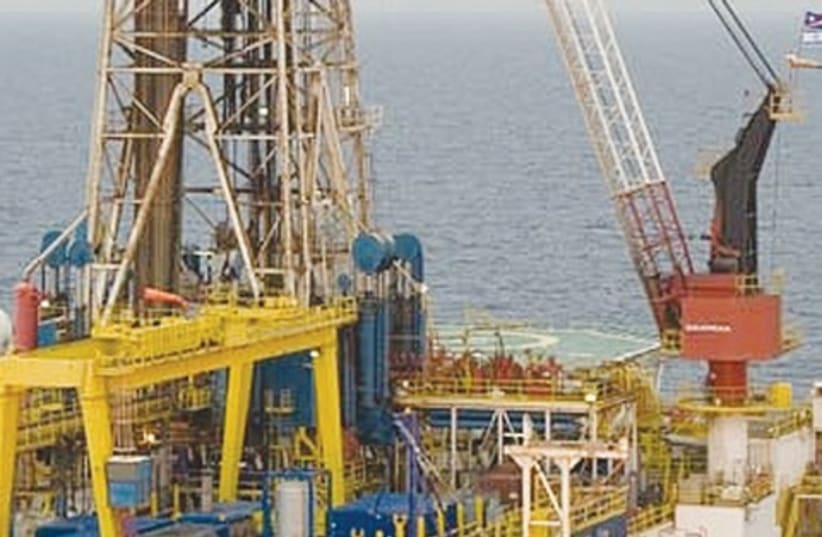
Tamar holds 240 billion cu.m. of gas.
Tamar holds 240 billion cu.m. of gas. Photo: Courtesy
While drilling companies focus on extracting natural gas buried deep in the Mediterranean’s core, a geophysics research team from the University of Haifa has discovered a series of active gas springs leaking on the Haifa Bay sea floor.

The springs are located at relatively shallow depths, just a few dozen meters below the surface of the seabed, the researchers learned in their study, which was recently published in the journal Continental Shelf Research.

After examining a sea floor map of Israel’s northern coast, the researchers first identified that there might be springs in the area, according to the university.

A joint effort with the Israel Oceanographic and Limnological Research Institute then ensued, revealing around 700 spots in the floor that might be gas springs.

Seismic data also showed that there were pockets of gas located beneath the seabed, university information said.

“This is a natural laboratory for researching gas emissions from the sea floor – natural springs and less natural ones,” said Dr. Uri Schattner of the Leon H. Charney School of Marine Sciences at the University of Haifa, who led the research. “We are only beginning to understand their contribution to climate and ecological change.”

With all of this evidence, the researchers then took to the sea – exploring four times to collect data from both on and below the floor. There, they found a gas deposit of 72 square kilometers on the continental shelf, in areas with water depths of between 37 and 112 meters, 10 meters below the sea floor. There is essentially a “cloud of gas” in the water, and then most of the gas is in pockets that extend up to 10 meters below the sea floor, in the mud, Schatter told The Jerusalem Post on Thursday.

“It’s something you overlook because normally you go to the deep sea,” he said.

Although deep sea drilling can cause these types of gas leaks and these have occurred in other parts of the world, the drilling in the Mediterranean did not cause these springs, which are, in fact, natural, according to Schattner. While the researchers know that there is plenty of gas down there, they do not know exactly what kind of gas it is.

Thus far, scientists have no idea if this new gas will be useable, as they first must trace the source of the gas, Schattner explained.

“I don’t mean only where does it come from in the subsurface, but what processes formed this gas – is it biogenic, is it thermogenic, does it say something about a very deep oil reservoir, or maybe it just comes from layers that are very rich with organic material,” he said.

No matter what type of gas it is and where it comes from, however, “Its role in undermining the stability of the seabed is clear,” said Dr. Michael Lazar, a member of the research team.

“This means that any discussion of marine infrastructure development must seriously relate to this shallow gas stratum,” Lazar added.

The existence of this deposit becomes especially critical as the Energy and Water Ministry formulates a National Master Plan to deal with the transmission of natural gas from their deep-sea drilling sites to their pressure-reducing facilities, which will be located on the continental shelf, the researchers explained.

“Now we are beginning to understand that there is no substitute for thoroughly researching the stability of the sea floor to prevent an infrastructure failure, since any leak could cause an ecological disaster,” Schattner said.

There are many different causes of instability on a sea floor, but shallow gas is certainly one of them, and can have a significant impact on designing infrastructure and determining financial factors like insurance, Schattner explained.

“Just think about building a hospital on quicksand,” he said. “It’s something that should be taken into concern and as we speak we are in conversation with the Energy and Water Ministry. They know about our work and we know about their concerns.”
  • Send
  • Large
  • Small
  • Print
  • Share
This article is by :
Sharon Udasin

Follow @sharonudasin
Recent stories:
  • 'Gas exports will create jobs in Israel'
  • Water consumption analysis finds faults,...
  • Be’er Tuviya residents protest gas plant
  • Erdan appeals gov’t approval of gas plan...
Most Viewed in
1
Kinneret water to be released into Jordan River
2
'Gas exports will create jobs in Israel'
3
Be’er Tuviya residents protest gas plant
4
Gas presence found in new Karish reservoir
JPost Community
Tweet
natural gas Haifa Haifa Bay gas springs Mediterranean sea
Share this article
Tweet
Share
Send
Your comment must be approved by a moderator before being published on JPost.com. Disqus users can post comments automatically.

Comments must adhere to our Talkback policy. If you believe that a comment has breached the Talkback policy, please press the flag icon to bring it to the attention of our moderation team.
JPost Services
conferenceConference
newsletterNewsletter
iphoneMobile Apps
kotelcamKotel Cam
kolboJPost Alert
premiumPremium
JPost TV News  
Mobile Apps  
Bank Hapoalim  
Meir Panim  
Yad Ezra  
Rambam Hospital  
TourLuxe  
Zev Goldstein PLLC  
Penrose Gallery  
JPost Premium Zone  
JPost kotel Camera  
         
 
Israel Focus
JPost TV News
Coming soon to a screen near you!  
Nefesh B'Nefesh Guided Aliyah
Already living in Israel? Enjoy the Benefits of Aliyah!  
Give "Freedom" this Passover
to needy Israeli families. Donate now  
Intelligence Squared
The international debate forum, announces it is coming to Israel  
Bank Hapoalim
Israeli's number one bank  
Jerusalem Post Lite
Lite Edition of the Jerusalem Post for English improvement  
Learn Hebrew with us
Get 10 minutes free personal coaching in Hebrew through phone or Skype  
JPost newspapers
Sign up for the JPost newspapers and receive one month free subscription  
Kosher English Magazine
English language weekly magazine - especially for religious people  
JReport Kindle Edition
Now you can get the Jerusalem Report directly to your Kindle  
JPost Premium Edition
The very best articles are available only in our Premium edition  
Lifestyle Magazine
 
 
Real Estate
Don't Look For a House!
In Israel, our website will do it for you!  
 
Travel
Eldan Rent a Car
20% off all Car Rental Reservations in Israel  
Hertz Car Rental
Special Online Discounts!  
The King David Jerusalem Hotel
One of the world's truly iconic hotels, and a Jerusalem landmark  


Sites Of Interest:

Jerusalem Hotels
KKL-JNF
Poalim Online
BreitBart.com
Our Friends
Jerusalem Attractions
Jerusalem Tours
itraveljerusalem.com

JPost sites:

Learn Hebrew
The Jerusalem Report
Our Magazines
JPost Edition Francaise
Green Israel
Christian World
Jerusalem Post Lite

Services:

JPost Mobile Apps
JPost Premium
JPost Newsletter
JPost Toolbar
JPost News Ticker
JPost RSS feeds
JPost Archives
JPost Alert
JPost Kotel Cam

JPost Conferences:

NYC Conference
Diplomatic Conference

Information:

About Us
Feedback
Staff E-mails
Copyright
Sitemap
News Partners
Advertise with Us
Price List
Statistics
Ad Specs
Terms Of Service
Jpost.com, the online edition of the Jerusalem Post Newspaper - the most read and best-selling English-language newspaper in Israel. For analysis and opinion from Israel, the Jewish World and the Middle East. Jpost.com offers expert and in-depth reporting from Israel, the Jewish World and the Middle East, including diplomacy and defense, the Palestinian-Israeli conflict, the Arab Spring, the Mideast peace process, politics in Israel, life in Jerusalem, Israel's international affairs, Iran and its nuclear program, Syria and the Syrian civil war, Lebanon, the Palestinian Authority, the West Bank and Gaza Strip, Israel's world of business and finance, and Jewish life in Israel and the Diaspora.
 
About Us | Advertise with Us | Subscribe | Premium | Newsletter | RSS | Contact Us
 
All rights reserved © The Jerusalem Post 1995 - 2012