Too few rooms, high operating costs cited as survey finds vast differences even within the same chains.
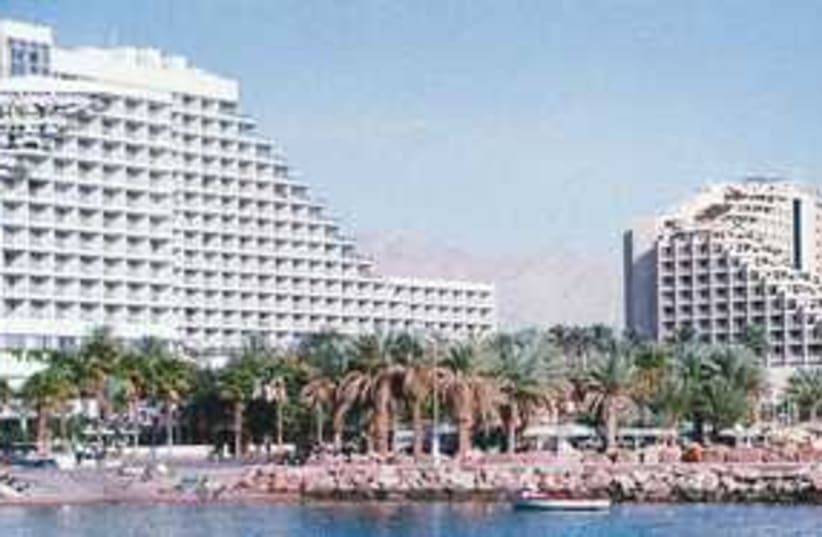
By RON FRIEDMANTel Aviv Hotel 311(photo credit: MCT)
Following Bank of Israel Governor Stanley Fischer’s comments last week at the OECD Tourism Conference, where he said that hotel prices in Israel are high in comparison to other countries, Israeli tourism company, Aladdin Travel, decided to check the statement empirically.The company conducted a survey comparing a November weekend stay in Tel Aviv with the same type of stay in eight leading European cities and found that in all but one case, Israeli prices were indeed higher.The survey examined the rates of hotels that belong to international chains for the first two weekends in November based on double occupancy rooms, for two nights, including breakfast.While a room at the Tel Aviv Hilton costs NIS 3,000, the same deal costs the equivalent of NIS 1,316 in Barcelona, NIS 1,984 in Berlin and NIS 1,016 in Prague. Even in London and Amsterdam, where prices are higher, they don’t reach the equivalent of NIS 2,500.In the Leonardo chain, visitors to Tel Aviv can expect to pay NIS 2,020 for a weekend at the Plaza and NIS 1,500 at the chains City Tower hotel in Ramat Gan. Meanwhile, at the Leonardo Royal in Berlin, a weekend stay costs NIS 900; at the Leonardo Rigihof in Zurich, NIS 950, and at the Leonardo Wavre outside Brussels, NIS 760.A weekend at the Tel Aviv Holiday Inn Crown Plaza costs NIS 2,500. The closest any other surveyed Holiday Inn hotel came to that was NIS 1,830 in Paris and NIS 1,650 in Amsterdam. In Barcelona, Berlin and Brussels the price was less than NIS 1,000.The only hotel chain in the survey that proved to be more expensive abroad than in Israel was the Meridian chain, whose deal in London cost NIS 2,812 compared to NIS 2,660 in the chain’s hotel in Eilat. Other Meridian hotel prices included NIS 2,536 in Barcelona, NIS 1,776 in Paris and NIS 1,648 in Brussels – all lower than in Israel.“Rates in Israeli hotels are higher than those of the same chain in other countries,” said Eyal Shtark, director of marketing for Aladdin Travel. “The gaps range between tens and hundreds of percentage points.“These findings are surprising since Israel is seen as problematic from a political perspective, and you would think that the prices would be lower so as to attract foreign tourists,” he continued.“The explanation lies in the severe shortage in hotel rooms. When there is high demand and little supply, these are the results.”But evaluating prices for just a certain week might be misleading to the public, warned the Israel Hotel Association: “During the first two weeks of November, occupancy levels in Tel Aviv are at their peak and the rates are accordingly high. It would have been better to compare the prices during the peak tourism seasons in other cities, like Paris during Fashion Week or Berlin during the ITB travel trade show.”IHTA president Eli Gonen said that the main reasons for the relatively high hotel rates in Israel are the high operating costs for labor, power, water and construction.It is estimated that there is a shortage of 18,000 hotel rooms in Israel. The Tourism Ministry has recently begun to encourage more investment in hotels.On Tuesday, Tourism Minister Stas Meseznikov said the shortage in hotel rooms will “severely affect the demand for incoming tourism” in years to come.
if(catID != 151){
var cont = `Take Israel home with the new Jerusalem Post Store