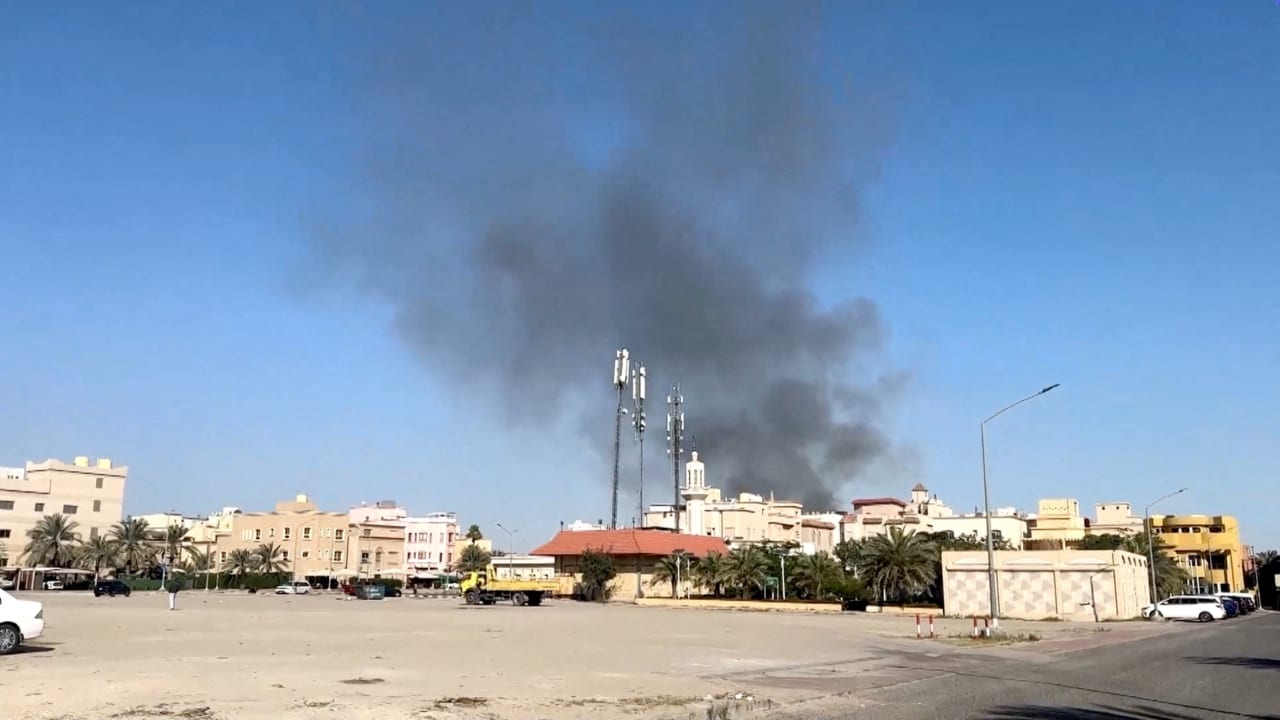
A US Army major who survived an Iranian drone strike on an American base in Kuwait in March has submitted a whistleblower complaint that alleges the Pentagon did not listen to concerns about the lack of proper protection for soldiers, according to a Monday report by CNN.
The soldier, identified as Maj. Stephen Ramsbottom also spoke to CBS News's "60 Minutes" on Sunday, during which he called the March 1 attack on Shuaiba port a "tactical failure" by the "Army, our leadership, and myself."
Six US Army Reserve soldiers were killed in the attack, and 25 others, including Ramsbottom, were wounded.
Ramsbottom described the US operations center in the port as a "trailer park."
Senior Pentagon officials said at the time that the building was fortified, including chief spokesperson Sean Parnell, who wrote on March 3 that the "secure facility was fortified with six-foot-high walls."
However, a source familiar with the location told CNN that it was only surrounded by concrete barriers that would provide protection from car bombs, but there was nothing to shield the site from drone or missile attacks. The outlet also previously cited a source familiar with the situation who reported that the attack came quickly without warnings or sirens to alert troops to evacuate or enter a bunker.
Ramsbotom said that he raised the lack of protection from aerial attacks to his superior officers in various meetings, but says they replied that "we don't have to worry about protection."
The whistleblower report also states that the Army installation did not have a physician or fixed aid station when the drone strike happened, and that there was only one ambulance at the site at the time.
Senior NCO said military would try to get counter-drone system to base, but never arrived, Maj. says
Ramsbottom also noted that the command sergeant major had previously said that the military was going to "try to get this counter-drone system sent out to you."
"It never arrived at Shuaiba. And we don't know if it was ever even ordered to or requested," Ramsbottom told CBS.
At approximately 9 a.m. the morning after the US and Israel conducted a strike killing then-supreme leader Ali Khamenei, soldiers posted at Shuaiba received the all-clear to return to their workspaces after spending all night running in and out of bunkers, CBS reported. Approximately 30 minutes later, the drone hit, the outlet added.
"I remember just getting knocked to the ground, and it was like someone came up behind me and hit me in the back of the head with a baseball bat or something. Everything just went black," Ramsbottom said.
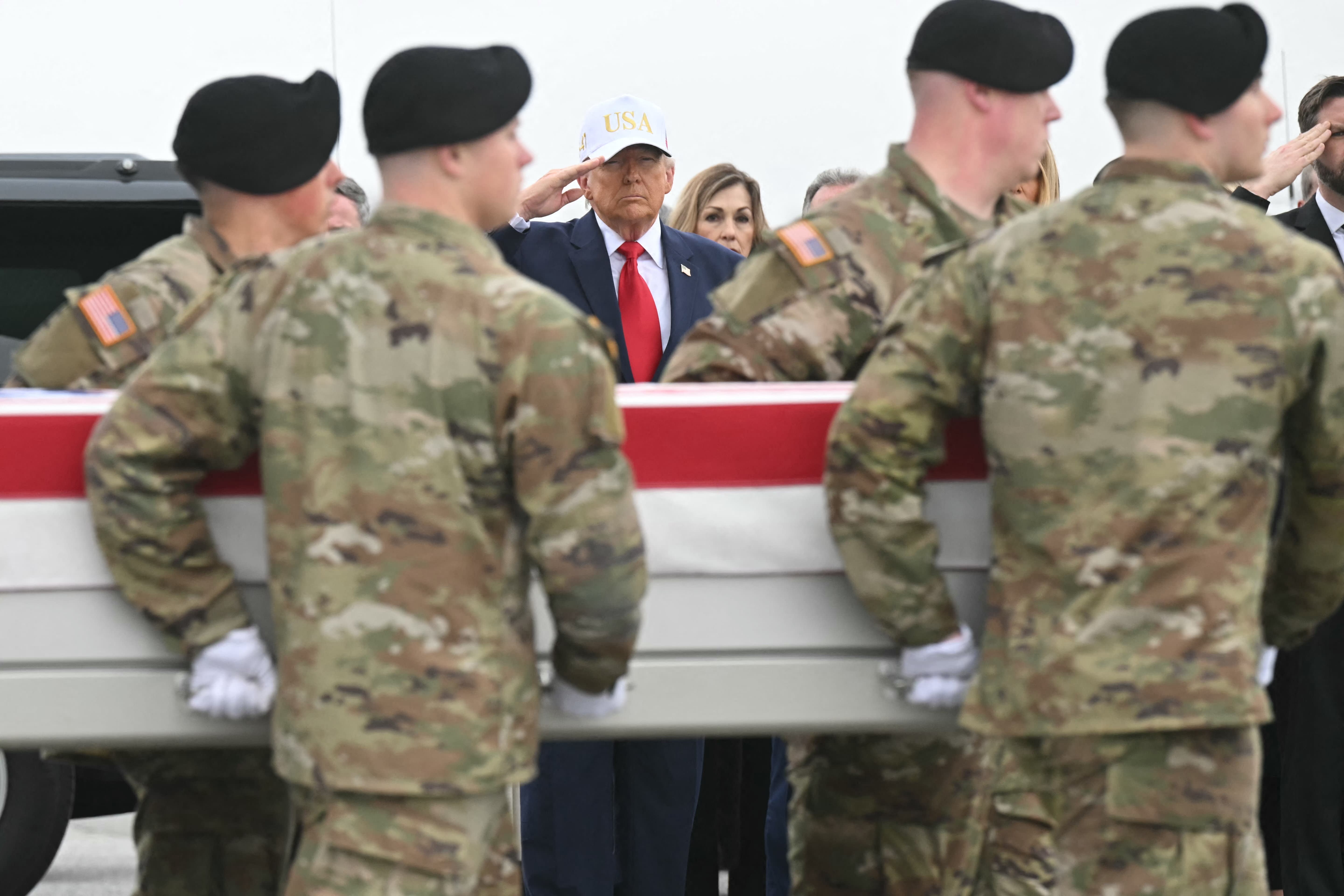
Additionally, six Gold Star families criticized the Pentagon and US Army for their failures to protect their fallen relatives from the drone strike.
The families have received military honors and outreach from the Trump administration, but do not feel like they have gotten the full story about what happened and why, they told "60 Minutes."
Despite the Army finishing its investigation into the attack in June, the families are only being briefed on the results this week, CBS reported.
Trump defends military against accusations made during '60 Minutes' interviews
US President Donald Trump responded to the accusations in a Truth Social post on Monday, saying: "The new people running 60 Minutes are even worse than their predecessors. A recent study on an attack in the early stages of Iran was not correctly stated."
"Since February 28, 2026, the start of Epic Fury, Iran has fired between 8,000 and 9,000 one-way attack drones. Only 2 of them got through, resulting in US fatalities, both on the first day, hitting Kuwait and Saudi Arabia. Likewise, Iran has fired about 2,000 Ballistic Missiles. Only 1 out of the 2,0000 got through and caused US fatalities (Jordan)," Trump continued.
"Translation: 99.99% of Iranian missiles and drones have been shot down or, in any event, not caused US deaths. CENTCOM defensive measures have been historically effective. No one in the World has the ability to do so well. All of this is being left out of the 60 Minutes 'report.' Thank you for your attention to this matter," he concluded.