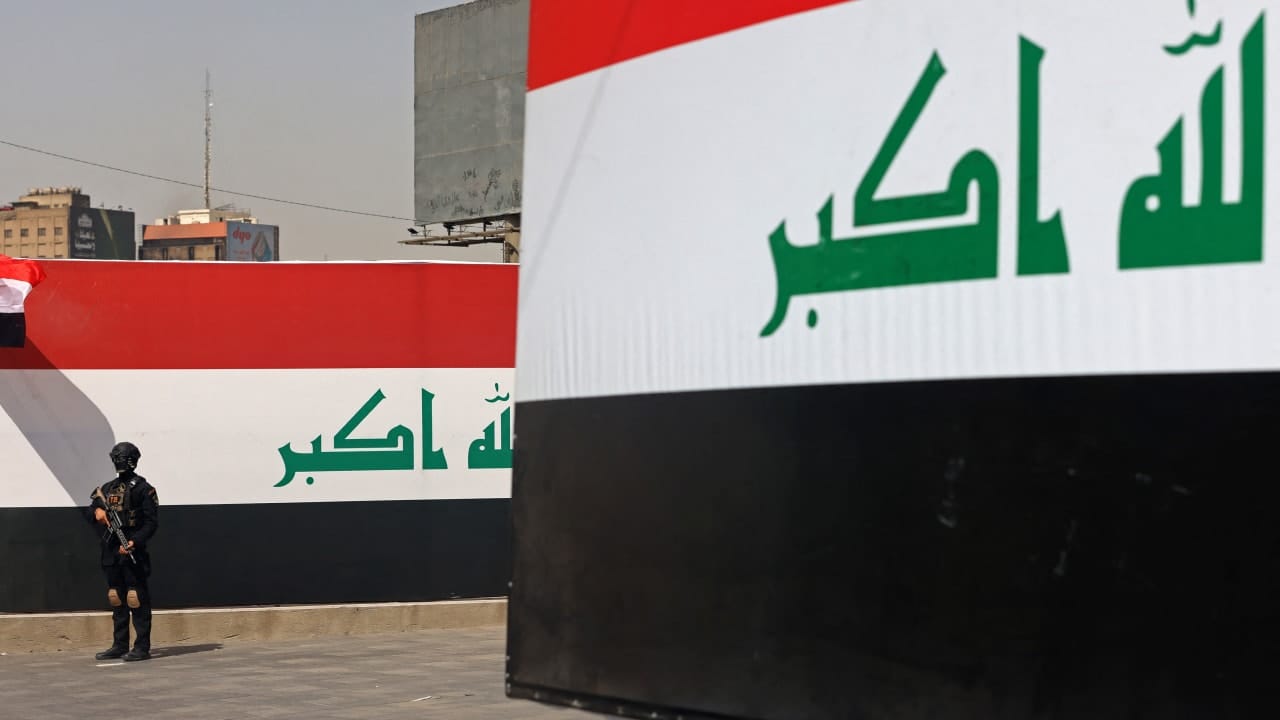
Iraq has taken an important step toward reasserting government authority in Jurf al-Nasr, an area south of Baghdad that has long been associated with the influence of Iranian-backed militias.
Kataib Hezbollah has controlled this place for a decade, displacing Sunni Iraqis who used to live there. It uses the area for oil smuggling and other illegal activities. It likely also had a secret prison there.
The Federal Police have taken control of three major checkpoints, while army units and Energy Police have deployed to secure roads and oil infrastructure, Iraqi officials said on Saturday.
The developments represent a test of Baghdad’s ability to bring areas controlled by powerful Iranian-backed groups under more direct state supervision. Jurf al-Nasr, also known as Jurf al-Sakhar, has been a particularly important and symbolic location because of its strategic position between Baghdad, Anbar, and Karbala.
It is the first test of the government of Prime Minister Ali al-Zaidi to rein in the militias and disarm them.
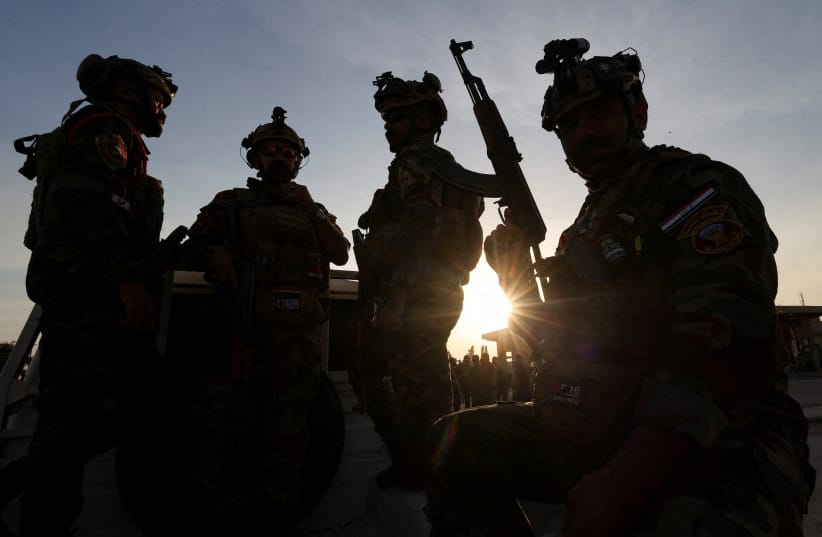
The latest redeployment involves the Iraqi Army, Federal Police, and Popular Mobilization Forces (PMF), Iraqi News Agency (INA) reported. Officials say the transition is proceeding smoothly and could be completed within weeks, the report said.
That the PMF is involved means the area might be swapping one militia for another, because the PMF is a paramilitary group made up of militia brigades.
The operation also illustrates the challenges facing the Iraqi government. Replacing military units and reopening roads is only one part of restoring state authority. The government must also address allegations of oil theft, rebuild infrastructure, and create conditions for displaced residents to return.
The latest developments followed a confrontation over alleged oil smuggling in Jurf al-Nasr. Zaidi ordered a security reorganization after investigations revealed suspected interference with oil pipelines.
A compromise had been reached with Kataib Hezbollah, allowing government forces to enter the area, while the militia’s fighters were reassigned, Reuters reported last week. The agreement helped avert an immediate armed confrontation, the report said.
Iraqi Federal Police take control of three key checkpoints in militia stronghold
Lt.-Gen. Saad Maan, head of Iraq’s Security Media Cell, on Saturday said the Federal Police had assumed control of three important checkpoints in Jurf al-Nasr.
“The Federal Police took control today of three major checkpoints, Al-Anwar, Al-Shuhada, and Al-Tahrir, with the assistance of liaisons from the PMF,” he told Al-Iraqiya News TV, INA reported.
The redeployment involved the withdrawal of existing units and the arrival of replacement forces, he said. The first to depart was the 1st Battalion of the PMF’s 45th Brigade, he added.
The operation is significant because the 45th Brigade is associated with Kataib Hezbollah, one of Iraq’s most powerful Iranian-backed militias.
THE NEW security arrangement, however, does not remove the PMF from Jurf al-Nasr. Other PMF formations, including the 72nd and 79th Brigades, are part of the redeployment plan.
Many of the militias have existed for decades. During the ISIS war, a fatwa by Grand Ayatollah Ali Sistani led to the creation of the PMF and the renaming of many militia units as “brigades.”
Maan said the handover could take several weeks, probably less than a month, because military equipment, weapons, and communications systems must be transferred. The security situation remained stable, he said, adding that no obstacles were preventing the operation.
The redeployment has also involved reopening roads that have been closed for years. The Federal Police had secured Al-Fadhiliya Road from the bridge to Al-Mayadeen junction, covering more than 30 kilometers, Maan said.
For many years, the Federal Police have been considered close to the Badr Organization, which dominates the Interior Ministry.
The Iraqi Army’s 38th Brigade has also begun securing the 38-km. Ya Hussein defensive line, which borders the Anbar Operations Command. The operation includes reopening a route connecting Fadhiliya Bridge, Al-Mayadeen, Jamaliya, and Karbala. Previously, the road was generally closed except during religious pilgrimages.
Iraq restores civilian access to Jurf al-Nasr, strengthens security around oil infrastructure
The reopening is a key development for residents and commercial traffic. It also provides a visible indication of the government’s intention to restore civilian access to the area.
Maan said the Energy Police had established 12 security posts along a 5.2-km. section of oil pipelines, INA reported.
Sabah al-Nuaman, a spokesperson for the commander-in-chief of the armed forces, said the Energy Police and Iraqi Army had completed their deployments in their assigned sectors.
“The process of replacing security units is proceeding very smoothly and in accordance with the planned timelines and procedures,” INA quoted him as saying.
A new command headquarters had been established to oversee the operation, bringing together the Iraqi Army, Federal Police, and PMF under a unified command structure, Nuaman said.
Federal Police Commander Lt.-Gen. Mohammed Qasim al-Fahd also said the rotation was proceeding according to schedule.
“Federal Police units are responsible for securing the entire Jurf al-Nasr sector,” he told INA.
Iraq's efforts to secure oil infrastructure face corruption and smuggling allegations
The struggle over Jurf al-Nasr is linked to broader questions about corruption and the protection of Iraq’s oil infrastructure.
An Iraqi court had ordered the arrest of a Najaf Provincial Council member and his brother, along with the detention of eight Energy Police personnel, over suspected oil smuggling, Rudaw Media Network, a news channel in the autonomous Kurdistan Region of northern Iraq, reported Saturday.
According to Iraq’s Supreme Judicial Council, investigators inspected a breached pipeline on land belonging to the Provincial Council member, who also heads the local energy committee.
THE NAJAF investigation is separate from the Jurf al-Nasr case, but it is an example of the important challenges facing Baghdad as it seeks to prevent oil theft and hold officials accountable.
In Jurf al-Nasr, government investigators have alleged interference with pipelines and the operation of unauthorized fuel facilities. Kataib Hezbollah has denied wrongdoing.
The government must also address the fate of residents displaced from Jurf al-Nasr during the war against ISIS. Maan said the government was prioritizing their return, although security screenings, the removal of explosives and infrastructure rehabilitation would be required first.
“The current priority is to complete the security deployment and assume full responsibility, followed by the clearance of war remnants and explosives, and subsequently, the rehabilitation of infrastructure and the restoration of services in preparation for the residents’ return,” INA quoted him as saying.
The 2027 budget would include funding for rehabilitation and public services, he said.
Meanwhile, PMF Chairman Falih al-Fayyad met Kurdistan Regional Government (KRG) Prime Minister Masrour Barzani on Saturday. They discussed national security, regional developments, and outstanding disputes between Baghdad and Erbil, INA reported.
Their meeting comes as Iraq continues to debate the relationship between federal authority, regional autonomy, and armed groups. Baghdad wants the armed groups to place weapons under the authority of the state.
It is possible that Baghdad may now pressure the Kurdish Peshmerga, who are part of the autonomous KRG.
Decentralization had contributed to fragmentation since 2003, veteran Iraqi politician Izzat al-Shabandar recently told Rudaw, indicating one aspect of Iraq’s debate over the distribution of political authority.
Iraq's militia redeployment deal leaves questions over full government control
The developments in Jurf al-Nasr represent a significant test for Zaidi’s government. He has demonstrated that Baghdad can deploy federal forces into an area long associated with Kataib Hezbollah without triggering an immediate armed confrontation.
The outcome, however, is also a compromise. PMF units remain part of the security arrangements, and the government has not established that all armed factions in the area are now fully subordinate to regular state institutions.
This matters because the PMF is formally part of Iraq’s security establishment, while some of its constituent factions maintain independent political and military influence. The agreement therefore represents progress in asserting government authority, rather than the complete dismantling of militia power.
The reopening of roads, protection of oil pipelines, and establishment of a unified command provide measurable signs of change. Yet the durability of these measures will depend on whether Baghdad can enforce its decisions after the initial redeployment. This is symbolic so far. More will have to happen.
The wider question is whether the Jurf al-Nasr arrangement can become a model for addressing militia influence elsewhere in Iraq. For Zaidi, the challenge is to translate a negotiated military redeployment into lasting state control, while avoiding a confrontation that could destabilize the country.
Jurf al-Nasr may mark a turning point in Iraq’s relationship with Iranian-backed militias. But the next stage, enforcing the new arrangements, investigating corruption, and returning displaced residents, may prove more difficult than crossing the bridge itself.