
Former attorney-general Avichai Mandelblit on Sunday said he had authorized police to examine suspicions that Prime Minister Benjamin Netanyahu received benefits from wealthy businessmen.
The defense’s contention that his approval had covered a narrower inquiry was not accurate, he testified at a court hearing.
The questioning at the hearing of Netanyahu’s criminal trial returned to the scope of the approvals that had preceded Case 1000.
Attorney-General Gali Baharav-Miara is scheduled to appear before the trial panel on Wednesday for a discussion on the management and progress of the proceedings.
Netanyahu’s defense attorney, Amit Hadad, said Mandelblit had authorized an inquiry into a suspected “bank” of benefits funded by Likud supporters, rather than into Netanyahu’s relationships with businessmen Arnon Milchan and James Packer.
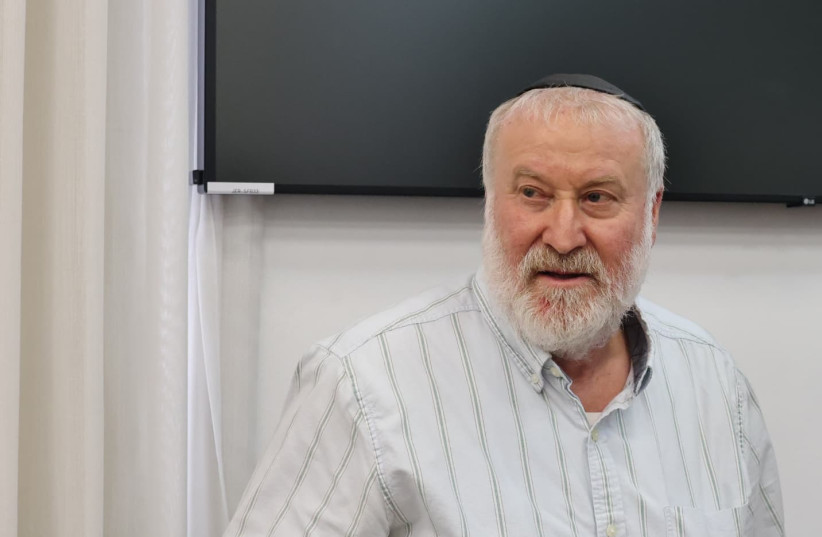
Mandelblit said the inquiry had developed from suspicions examined in June 2016 into what became Case 1000. The specific “bank” allegation was subsequently closed, he acknowledged. Nevertheless, he disputed Hadad’s interpretation of the limits of his authorization.
Case 1000 concerns expensive gifts that Netanyahu allegedly received from Milchan and Packer and actions he allegedly took to advance Milchan’s interests while in office.
Sunday’s testimony resumed after prosecutors, acting on a court order, provided the defense with additional excerpts from records of meetings at which the investigations and their authorization were discussed.
Mandelblit said receiving the material earlier would have helped refresh his memory of events that took place around a decade ago.
Hadad challenged his role in withholding it. The newly disclosed records had undermined earlier assurances about what had been redacted, he said.
Mandelblit said he had believed internal deliberations should be protected, while the portions recording his approval of preliminary inquiries and investigations should be disclosed. He had considered a memorandum sufficient, but the court took a different view, he said.
Prosecutors to cross-examine Mandelblit
The dispute extended to whether particular approvals reflected the full scope of the inquiry.
Hadad said investigative steps that Mandelblit approved in September and October 2016 had concerned Yair Netanyahu’s use of Packer’s apartment at the Royal Beach Tel Aviv Hotel, rather than cigars, champagne, or Milchan.
Mandelblit agreed with that description of those steps. Nevertheless, the broader authorization had covered suspicions of substantial benefits from businessmen, he said, adding that the inquiry developed as more evidence emerged, particularly Hadas Klein’s testimony.
Mandelblit distinguished between supervising the main investigative steps and approving every technical action. The disagreement concerned what police had been authorized to examine and how specifically that permission had to be given.
Prosecutors will be able to cross-examine Mandelblit after the defense finishes questioning him, following last week’s resolution of a separate procedural dispute.
Originally, the judges allowed the prosecution to question him in the format of reexamination, while leaving open the possibility of permitting a different approach on specific points. Their November 2 decision followed defense questioning that had effectively proceeded as cross-examination.
Prosecutors said the restrictions had hampered their ability to establish the facts and took the unusual step of petitioning the High Court of Justice against an interim decision in the ongoing trial.
Defense withdraws objection to prosecution's cross-examination
Last Wednesday, the defense withdrew its objection to prosecution cross-examination for practical and procedural reasons, while maintaining its legal position.
District Court Judges Rivka Friedman-Feldman, Moshe Bar-Am, and Oded Shaham said they would proceed accordingly for future defense witnesses, explicitly including Mandelblit.
The High Court struck out the petition the following day, saying the practical result prosecutors sought had already been achieved.
Supreme Court President Isaac Amit and Justices Yael Willner and Khaled Kabub canceled the hearing scheduled for Sunday and left the broader legal question unresolved.
Baharav-Miara's appearance before the panel was postponed by a week at the prosecution’s request. She has not been summoned to give evidence. The judges sought her attendance to discuss the proceedings directly with the official responsible for the prosecution’s decisions.
Netanyahu’s trial, which began in May 2020, is in its defense stage. He faces charges of fraud and breach of trust in three cases and bribery in Case 4000. He denies wrongdoing.