
Negotiating teams representing Gadi Eisenkot’s Yashar and Prime Minister Benjamin Netanyahu’s Likud met on Sunday afternoon for around four hours as part of ongoing talks on a potential unity government between the two blocs.
The central issue of forming a government through a rotation agreement was not discussed at the meeting, Eisenkot’s office confirmed to The Jerusalem Post without elaborating further on the discussions.
Likud and Yashar announced in a joint statement following their talks that a follow-up meeting would take place, but did not say when. The parties added that the sides had presented their positions on “a range of substantive issues and held detailed discussions.”
The issues reportedly discussed included haredi (ultra-Orthodox) conscription into the IDF, judicial reform measures, a state commission of inquiry into government failures on October 7, and the possibility of forming a government without the far-right Otzma Yehudit party, led by National Security Minister Itamar Ben-Gvir. No agreements were reached, according to Israeli media reports.
Likud sent MK Ofir Katz and Netanyahu’s former personal attorney, Michael Rabello, to represent the party at the meeting. Rebello recently withdrew his candidacy for state comptroller amid controversy over the integrity of the election process. Yashar was represented by MK Chili Tropper, businessman Yoav Horowitz, and political advisor Guy Gutman.
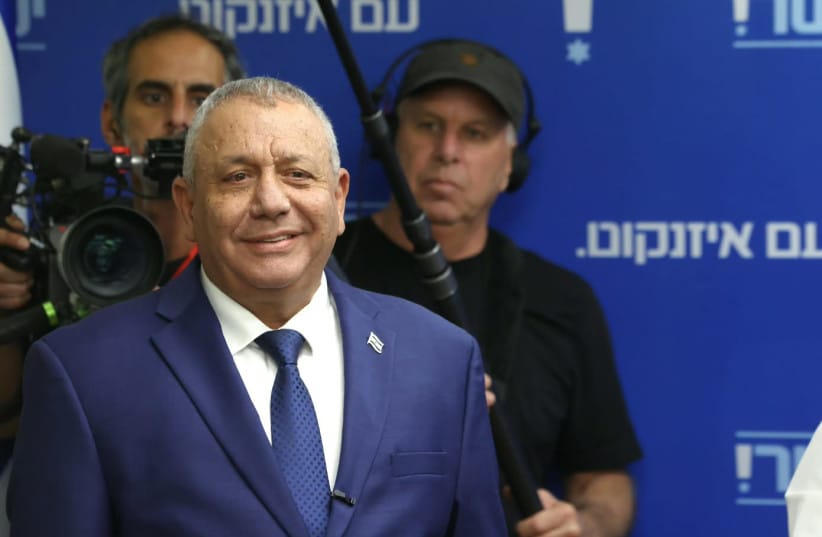
Representatives from the Eisenkot-led bloc met with Likud last Sunday as part of efforts to explore the possibility of forming a unity government, later announcing that the talks would continue and describing the initial discussions as “businesslike.”
A representative from Naftali Bennett’s B’Yachad party, who was present during the meeting last week, did not join the fresh round of negotiations on Sunday.
Katz reportedly said ahead of the meeting that the Likud negotiating team was hoping for genuine talks that were “not just for appearances.”
Planned talks part of effort to form new gov't
Yashar said on Saturday that the planned “marathon of talks” was part of efforts to “form a new government and exhaust every possible avenue.”
“The Yashar negotiating team will work to turn over every stone, enable bold moves, and achieve a breakthrough that will lead to the formation of a government,” the statement added.
Eisenkot had previously drawn a redline at serving in a government headed by Netanyahu – even in a rotation government agreement – and he has laid out four key principles that MKs must accept if they wish to join his coalition.
Netanyahu has repeatedly called for a unity government after his bloc lost its parliamentary majority to the Eisenkot-led bloc following the October 27 election.
On November 8, Eisenkot received the mandate from President Isaac Herzog to form the next government, giving him 28 days to do so, with the option of requesting an additional 14-day extension.
The party leaders of the Eisenkot-led bloc – Bennett (B’Yachad), Avigdor Liberman (Yisrael Beytenu), and Yair Golan (The Democrats) – all said last week that Netanyahu must be ousted. However, they have separately expressed differing views on how a government should be formed following the political deadlock that emerged after the election.
Liberman and Golan have drawn a redline against joining a unity government that is led by Netanyahu.
As the negotiations were taking place on Sunday, Golan reiterated his opposition to a unity government, instead calling for the formation of a minority government.
A minority government could potentially be formed with the backing of the Arab parties, through a Knesset confidence vote that secures a simple majority rather than an absolute majority of 61 seats.
“A minority government is currently the only realistic alternative. If the delays are part of a negotiating tactic, it is time to end the games,” Golan said.
He added that anyone seeking to form a unity government with Netanyahu would be “stabbing their voters in the back.”
The Democrats head said that the party leaders in the Eisenkot-led bloc “were elected to replace Netanyahu, not to sit with him. Therefore, The Democrats will oppose any such unity arrangement.”
Golan further called for cooperation with the Arab parties – Ra’am and the Joint List – saying that the possibility of working with them “must be examined seriously, rather than ruled out in advance, certainly not for ulterior motives that reek of racism.”
Liberman has meanwhile opposed the possibility of forming a minority government, saying that such an arrangement would be unstable and ultimately lead to another round of elections. Instead, he has called for partnering with the haredi (ultra-Orthodox) parties to form a government.
The Yisrael Beytenu leader’s stance has drawn criticism, as ahead of the elections, he had taken a hardline position against partnering with the haredi parties, demanding legislation to draft all haredim into the IDF.
Golan’s statement on Sunday also said that the formation of a government should not be solely dependent on reaching an agreement with the haredi parties: “If there is no agreed framework for cooperation with the haredi parties, negotiations with them must not become a condition for forming the government. It is possible to form a government and negotiate with them afterward, from a position of strength as an incumbent government.”
Though party leaders in the Eisenkot-led bloc have recently opened the door to coalition negotiations with the haredi parties – Shas and United Torah Judaism – they have been key partners in Netanyahu’s coalition, making it unclear whether they would agree to join a government led by Eisenkot.
Bennett openly backs unity gov't with Likud, led by Eisenkot
Meanwhile, Bennett on Saturday openly backed the formation of a unity government with Likud, provided it was led by Eisenkot, while stating that he was committed to not joining Netanyahu’s bloc “under any circumstances.”
Bennett’s statement on his position came after he met with Netanyahu in the prime minister’s Knesset office last week, without Eisenkot’s prior knowledge, sparking speculation over his intentions.
The B’Yachad leader had remained silent on his position immediately after the meeting in the Knesset, with reports stating that he was in support of a rotation agreement with Netanyahu, provided Eisenkot served as prime minister first.
The October 27 election results showed that the bloc seeking to replace Netanyahu won 48 seats, which, with the 19 held by the Arab parties, totalled 67, while Netanyahu’s bloc secured 53 seats.
No government has been formed yet, as most party leaders have drawn a redline at partnering with the Arab parties.
Nevertheless, Arab party support has allowed the bloc to advance key legislation in the Knesset even while Netanyahu heads a caretaker government.