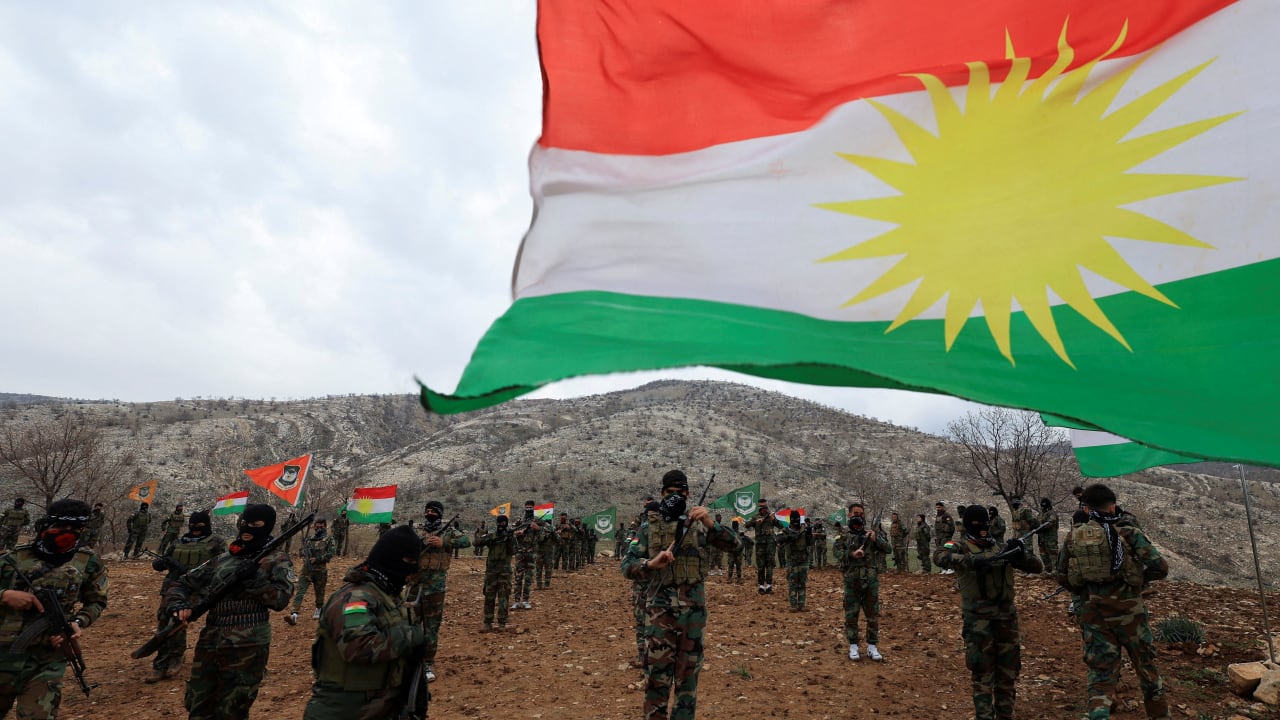
The Kurdistan Region of northern Iraq is concerned that Baghdad might be preparing a series of measures to roll back its semiautonomous status.
The Kurdistan Regional Government (KRG) is recognized by the Iraqi Constitution and has thrived over the past decade as the governing authority in a stable region of Iraq. It was a close partner with the US and other countries in the war against ISIS.
Recent comments and moves by Baghdad, however, are setting off alarm bells.
What’s at stake now appears to be how Iraq is slowly moving to consolidate power. Iraqi Prime Minister Ali al-Zaidi, who took office this past May, is backed by the Trump administration. He has sought to rein in Iranian-backed militias.
In recent months, Zaidi has secured a deal for a Yazidi armed group, the YBS, to disarm and integrate in the area of Sinjar. He has also secured a deal for Turkey to leave a base in Bashiqa, east of Mosul.
This past week, under the pretext of investigating oil smuggling, Zaidi sent forces into Jurf al-Sakhar, south of Baghdad, to remove the Iranian-backed militia Kataib Hezbollah.
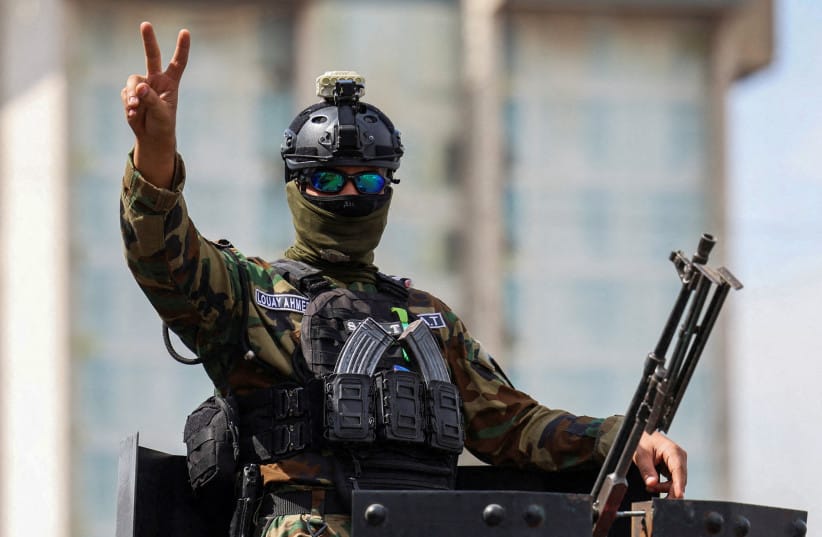
Jurf al-Sakhar was once home to Sunni Arabs, but it was taken over by Iranian-backed militias during the war against ISIS. Kataib Hezbollah had been refining and smuggling oil and using the site as an illegal prison.
In a recent interview, Elizabeth Tsurkov, the Princeton researcher kidnapped in Iraq in 2023, said she had been held in Jurf al-Sakhar. She was freed in 2025.
Zaidi had good reasons to take control of Jurf al-Sakhar. This has now empowered Baghdad to keep moving forward with consolidating power and dealing with various issues it wants to address.
Among the files Baghdad wants to deal with are border crossings in the Kurdistan Region. These include crossings to Turkey and Iran.
Iraq also appears to want to investigate oil smuggling and energy companies operating in the Kurdistan Region.
Taking the Jurf al-Sakhar case as an example, Baghdad could claim it needs to deploy Federal Police, Energy Police, or the army if it claims there is fuel smuggling in the Kurdistan Region. Baghdad also appears to want to claw back some of the areas it believes should be under federal control.
Kurdish leaders seek to avoid conflict as Baghdad gains leverage
All of the talk in Baghdad has set off alarms in the Kurdistan Region, and some Kurds are suggesting a conflict is possible.
The KRG leadership, made up of the Kurdistan Democratic Party’s Nechirvan and Masrour Barzani and the Patriotic Union of Kurdistan’s Bafel Talibani, will want to avoid open conflict. They all know what happened in 2017 when Baghdad sent tanks into Kirkuk and pushed the Kurdish Peshmerga out of the Kirkuk area.
Baghdad has the upper hand. It has an air force, tanks, and close ties with Iran and other countries. With the apparent backing of US Envoy to Iraq and Syria Tom Barrack, who is also US ambassador to Turkey, Baghdad will feel empowered to move forward and demand a compromise from the Kurds in Erbil.
KRG President Nechirvan Barzani said: “We listened with deep astonishment and concern to the statement by the spokesperson for the commander-in-chief of the Iraqi Armed Forces, particularly as talks between the Kurdistan Region and the federal government to resolve outstanding issues continue... We categorically reject any military rhetoric in dealings with the Kurdistan Region. Experience has shown that this approach solves no problems and serves neither Iraq nor any other party.”
“As a key partner in building the new Iraq and drafting its constitution, the Kurdistan Region, while supporting the protection of national resources and the enforcement of the law, stresses that relations between Erbil and Baghdad and the resolution of outstanding issues must be based on the constitution, respect for the constitutional status and rights of the Kurdistan Region, and a commitment to the principles of partnership and understanding,” Barzani said.
KRG Finance Minister Awat Sheikh Janab said the region faces an “existential threat” amid growing tensions with Baghdad.
Barzani warns of attempts to undermine Kurdish autonomy
Meanwhile, Stephane Dujarric, a spokesperson for the UN secretary-general said the KRG should solve issues through “existing constitutional structures.”
“Look, as always, the secretary-general’s good offices are always open if both parties involved ask for it,” he told Kurdistan Region-based news channel Rudaw Media Network.
KDP leader Masoud Barzani said: “For some time, we have observed troubling developments and escalating actions within Iraqi decision-making circles directed against the Kurdistan Region. These include attempts to undermine the principles of federalism and the Iraqi Constitution, disregard the rights of the people of Kurdistan, and advance reckless and ill-considered proposals.”
PUK leader Bafel Talabani said: “Wisdom, stability, and the rule of law must take precedence over all other considerations at this stage. The challenges we face today can and must be resolved only by turning to the Iraqi Constitution as the framework for resolving disputes.”
Various analysts have weighed in with comments on X/Twitter. Lawk Ghafuri wrote: “Ultimately Baghdad & Erbil will reach a deal over al-Zaidi’s latest demands. The question is whether it comes through U.S. mediation or follows a familiar Iraqi playbook: Baghdad tests the limits of its leverage, escalates its demands, then turns to political negotiations.”
Ranj Alaaldin, a foreign-policy specialist with more than 20 years of experience covering international security, wrote: “Much of the media coverage is reducing a brazen attempt by Baghdad to violently dismantle Kurdistan’s constitutional autonomy to a routine crackdown on oil smuggling. Yet, Baghdad is up to its old tricks: taking symbolic measures against Iran-aligned militias to placate Washington, while invoking federal authority to justify coercive measures against Kurdistan.”
Scharo Bajalan, an expert on the region, wrote: “What can be seen happening between Kurdistan and Baghdad is partly the result of the disunity within the KRG – but more importantly it is the result of the KRG’s failure in asserting itself as the dominant player within Iraq.
Experts warn weakening Kurdish autonomy could strengthen Iran's influence in Iraq
“The KRG lacks strategic vision – other than the status quo and maintaining the economic stability, the KRG has no other ambition. This has worked out in the past as every party has looked to maintain the status quo, but now the balance of power is shifting.”
Another expert, Mohammed A. Salih wrote: “Baghdad’s latest decisions concerning the Kurdistan Region are concerning, but hardly surprising. They should be viewed in the broader context of longstanding efforts by Iran-backed Shia factions in Baghdad to recentralize power and expand federal control over the Kurdistan Region.”
Nadine Maenza, an advocate for religious freedom in the region, wrote: “Baghdad seeks to weaken Kurdish autonomy by ordering federal authorities to take control of oilfields and border crossings. The Kurdistan Region has protected religious freedom, offered refuge to those fleeing persecution, and has provided a rare degree of peace and stability. Weakening its autonomy gives Iran more leverage in Iraq.”