Archaeology
Statues of gods, sarcophagi unearthed at ancient Egyptian cemetery dating back over 2,000 years
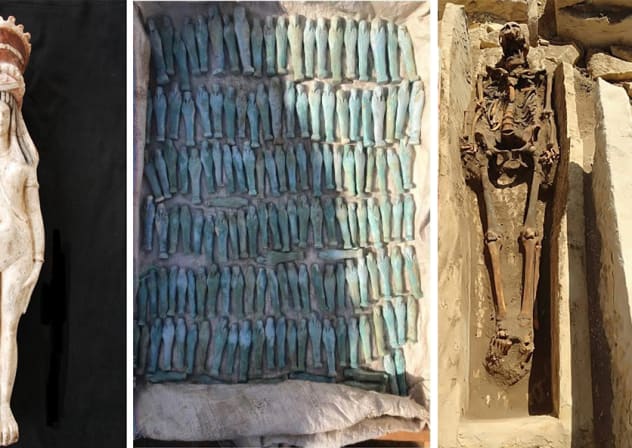
Upon examination, the remains revealed traces of mummification materials and resins, along with remnants of cartonnage layers and plaster painted in yellow, red, blue, and gold.

Greece to restore famed Phocian Wall, site of legendary battle that inspired film '300'

Iron Age ruler who convinced Claudius to invade Britain may have been female, new research argues

What to watch this week: ‘The Altruists’ turns Sam Bankman-Fried’s tech scandal into great TV
Collecting keepsakes may have helped autobiographical memory evolve in early humans, study suggests
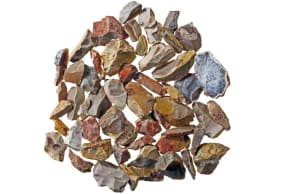
The study, recently published in the journal Evolutionary Anthropology, studied collections of various objects found at prehistoric sites across northern and central Israel.
'Not merely a mythological concept': Huckabee says Israel archaeology, Bible back Zionism
The convention took place at the National Campus for the Archaeology of Israel in Jerusalem, and was titled "returning the Zionist spirit to the influencer spaces in Israel."

Ancient Scythian burial site from Siberia reveals earliest known use of cannabis as an intoxicant
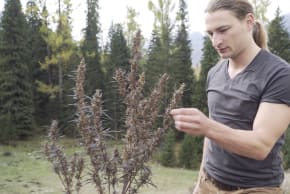
The site predates the oldest previous evidence from the first millennium BCE for mind-altering use of cannabis such as evidence of implements from the Middle East and the Asia.
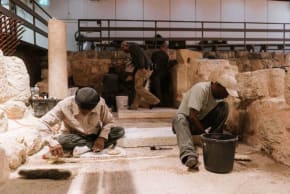
Preserving an ancient mosaic: Israeli specialists gather to conserve 1,500-year-old synagogue floor
Beit Alfa’s ancient synagogue was built during the Byzantine period, at the end of the fifth century CE, approximately 1,500 years ago. The mosaic floor was discovered in 1928.
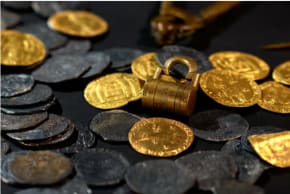
Welsh researchers solve 400-year-old combination lock recovered from Ann Francis’ shipwreck
The Ann Francis sunk in December 1583 after being blown off course while returning home to Norfolk from Spain. She wrecked on Margam Beach, near Port Talbot in South West Wales.
New LED technology helps archaeologists uncover details invisible to the naked eye
Instead of using standard white light to illuminate the soil, the Danish prototype uses LEDs set to 16 different wavelengths, ranging from near-ultraviolet to near-infrared.

Rare coin from reign of Norway’s King Olaf found for first time since 1924 among Viking hoard
The artifact was identified by archaeologist Anne Skogsfjord while cataloguing coins from the Mørstad Hoard, which was discovered by metal detectorists Vegard Sørlie and Rune Sætre in Rena in April.

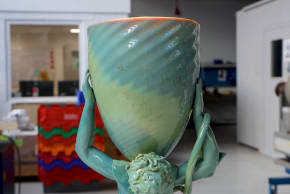
UK technician successfully recreates multi-colored Roman glass, cracking 1,600-year-old mystery
Elliot Walker, a UK glass artist and winner of season two of Netflix’s Blown Away series, was commissioned to create a contemporary sculpture using Hollands’ glass recipe.
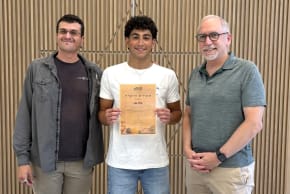
American teenager finds 3,300-year-old scarab amulet during school trip to ancient Canaanite city
Professor Ido Koch of Tel Aviv University’s Archaeology and Ancient Near Eastern Cultures Department examined the amulet, dating the seal to the Late Bronze Age.
Skeleton found in Roman sarcophagus at Westminster Abbey may have belonged to medieval monk
The sarcophagus’ decoration made researchers draw pause. Sculpted onto its lid was a Latin cross, dating to approximately the 10th or 11th century.