Clalit
Clalit launches initiative to identify woman at risk of breast cancer using new AI tool
The health organization is reaching out to about 1.2 million women between the ages of 25 and 74 through a personalized digital questionnaire designed to identify breast cancer risk factors.

Soroka opens expanded emergency department in wake of October 7 massacre

Google.org awards Clalit $2 million to develop AI system for patient access
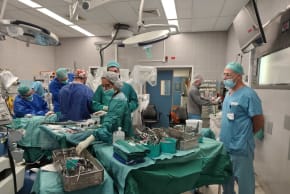
Israeli surgeons complete robotic lung transplant without fully opening chest, spreading ribs
Can AI tell when patients don't need medical tests? Israeli study puts chatbots to the test
“One of the hardest parts of practicing medicine is knowing when to hold back,” explained Ariel. Patients find comfort in an extra test, but it can set off unnecessary worry and treatment.

Israeli patient receives new non-invasive treatment for epilepsy in first outside Europe
The EASEE brain stimulation system, first developed in Germany by PRECISIS, is designed to treat epilepsy without opening the skull or inserting electrodes into the brain.

Israeli hospital launches AI system to enable hospitalized children to communicate without speaking
The system uses AI to create personalized printable communication boards in under five minutes, tailored to each child's needs as well as their age, language, gender, and background.

Israel faces a nationwide mental health crisis post-October 7, Clalit experts warn - study
All four public health funds have estimated that there are 60,000 Israelis who developed clinical PTSD between October 2023 and December 2025.

State of emergency: Unseen footage takes viewers inside Clalit-Soroka on October 7
Unseen Clalit-Soroka footage of October 7 premieres at President’s Residency

'After the holidays' has arrived: The expert's recommendations for a proper return to routine
The holiday period has ended. Dr. Sigal Mazor, director of the Department of Health Education and Promotion at Clalit, provides a series of recommendations on returning to routine.

Clalit, Check Point announce partnership to secure healthcare data of 5m. Israelis with AI systems
The companies explained that the partnership will allow "embedding AI into everyday workflows" in the healthcare provider, while also targeting cybersecurity threats.

Health funds launch flu vaccination campaigns as supplies gradually reach clinics
Health officials are urging the public to get vaccinated early, warning of high infection rates among children and the risk of complications.
Israeli surgeons use custom 3D-printed implant to remove tumor deemed inoperable
Mark was diagnosed where he lived in Russia, and due to the location and the spread, global specialists classified the tumor as inoperable.
Can children have a serious allergic reaction just by touching food? Israeli study says no
Findings from a recent study by experts at Rambam Health Care Campus in Haifa offer reassuring, evidence-based guidance that can help ease unnecessary food allergies anxiety.
