Romans
Iron Age ruler who convinced Claudius to invade Britain may have been female, new research argues
Russell emphasized the need to take archaeological evidence at face value, “and remember Verica as a female-king and one of the earliest and most important of British female leaders.


Archaeologists find tombs that may have belonged to ancient Jerusalemite aristocracy near Jericho
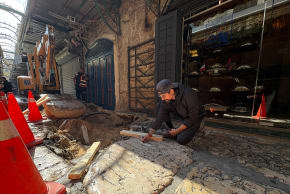
In historic first, Old City of Jerusalem’s Roman-era street to be made wheelchair accessible
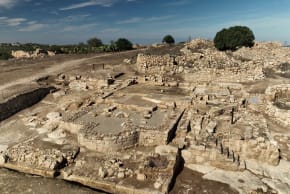
Ancient Bar Kokhba revolt-era hiding tunnels, Byzantine church reopened to public in Israel
Children buried in 'adult warrior' bronze belts discovered in 2,500-year-old tomb in Italy
A total of 34 burials dating between the 4th and 3rd centuries BCE were discovered, the Superintendency shared, half of which belonged to children between the ages of two and 10.

Archaeologists find evidence of postmortem 'crucifixion' in Roman burials
Archaeologists report nails driven into remains and deliberately scattered in tombs, indicating non-accidental postmortem 'crucifixion' as part of a dark funerary ceremony.

Mariners’ bane: Ancient ship graveyard identified off Libya’s coast
Seafloor surveys near the 2,300-year-old ancient Greek city mapped a harbor basin and cataloged multiple hulls.

Gladiator fight scenes found in monumental 2,000-year-old tomb
The mausoleum stands along the Appian Way between ancient Caudium and Montesarchio.
Experts use AI to crack mystery of 2,000-year-old Roman board game found in Netherlands - study
“This is the first time that AI-driven simulated play has been used in concert with archaeological methods to identify a board game,” Crist concluded.

Frescos of a peacock, fruit discovered in Roman villa near Pomepii belonging to Emperor Nero's wife
The discovery's announcement follow the site’s partial opening to the public for the first time.
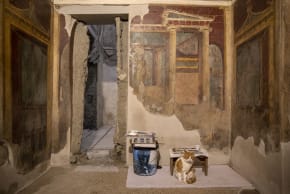
'Nothing quite like it': UK Treasure Act names Roman carriage ornament Essex's first 'treasure'
According to the Act, archaeological finds can be given the status of Treasure if they are deemed to be of historical, archaeological, or cultural importance.

Archaeologists discover Anglo-Saxon child buried with shield, spear in medieval cemetery in Kent
Four medieval swords were also discovered during excavation.
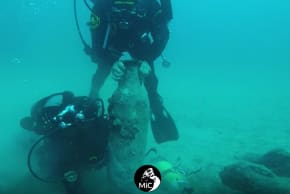
Authorities reveal discovery of fourth century Roman shipwreck off Italy’s southern coast
According to the ministry, the site has been under constant monitoring by Italy’s financial police to “protect the site from possible looting and to preserve its enormous scientific value.”
Residue from Roman vial reveals first evidence of ancient physicians' use of fecal medicine - study
The vial, also known as an unguentarium, is commonly believed to have held perfumes or cosmetic oils.
