Iraq has faced new oil-smuggling problems involving unauthorized pipelines, illegal refineries, tanker trucks, and cross-border trading networks. These cases have often raised questions about corruption, weak oversight, and the involvement of armed groups.
This matters because some of the smuggling has been linked to Iranian-backed groups. In other words, oil smuggling in Iraq may be aiding Iran.
The recent investigations in Najaf and Jurf al-Nasr illustrate two examples of the problem. In Najaf, investigators uncovered alleged pipeline theft and detained Energy Police personnel.
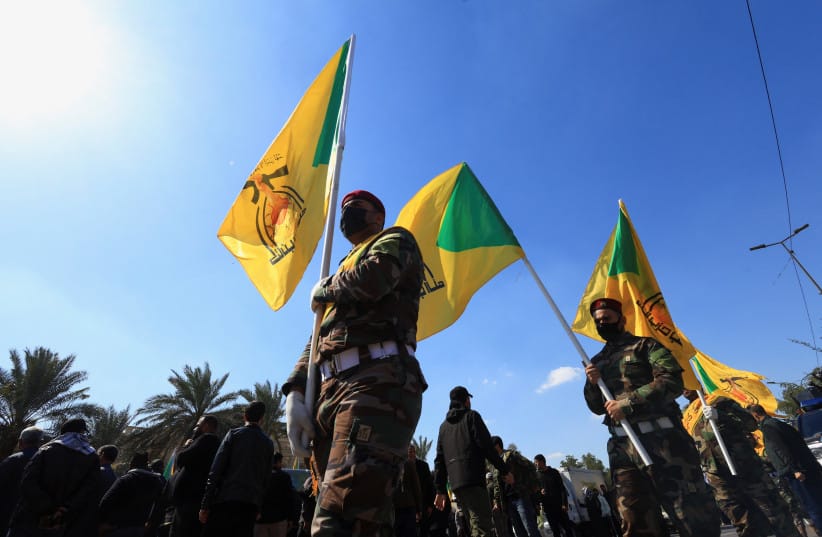
In Jurf al-Nasr, allegations of organized oil theft have become part of the government’s efforts to take over an area long associated with the Iranian-backed Kataib Hezbollah militia.
There have been other incidents. In 2022, there were accusations of oil theft in Basra. In 2025, reports in Kirkuk suggested a tunnel was used to siphon oil from a pipeline.
There have also been arrests in the Nineveh region near Mosul of people involved in shaking down oil-tanker trucks. In Salahaddin, there were reports that an illegal, small pipeline had been found.
The latest revelations include an investigation into oil smuggling in Iraq’s Najaf Province, which has expanded to include local political figures, members of the Energy Police, and individuals with connections to prominent political families.
Iraqi authorities have uncovered clandestine pipelines on agricultural land and are investigating allegations that politically connected individuals helped facilitate illegal oil operations, UAE-based news site Al-Ain News and Iraqi News Agency (INA) reported.
Iraq’s Supreme Judicial Council on Saturday said investigators had uncovered oil smuggling through a pipeline allegedly on land belonging to Najaf Provincial Council member Mohammed Ali al-Hasnawi, who heads the council’s energy committee, and his brother.
“The site is located on a plot of land belonging to a Provincial Council member, who also heads the energy committee, and his brother, as part of ongoing investigations into suspected oil smuggling operations,” the Supreme Judicial Council said following an inspection by an investigative judge.
“The inspection and preliminary investigations revealed oil-smuggling operations through the pipeline,” the judge confirmed.
The court subsequently ordered the “detention of five officers and three personnel from the Energy Police, pending investigation.”
According to the Judicial Council, testimony from the detained Energy Police personnel had implicated the Provincial Council member and his brother. As a result, “the court issued two arrest warrants against them in accordance with the law.”
Investigators also discovered that a trench had been dug around the property, restricting access and preventing outsiders from observing activities inside. Authorities are examining allegations of other illegal activities, including possible drug smuggling.
The investigation had expanded to agricultural properties in Al-Haydariya district, where security forces discovered two underground pipelines, Al-Ain News. One reportedly extended about 500 meters, while the other was nearly three kilometers long.
Hussein al-Abbasi arrest may be tied to Shiite National Movement
The arrest of Hussein al-Abbasi might be linked to Muqtada al-Sadr’s Shiite National Movement, the report said.
INA subsequently confirmed the arrest, citing an unnamed source.
“Security forces arrested Hussein al-Abbasi pursuant to an arrest warrant issued against him on charges of oil smuggling in Najaf province,” INA reported on Saturday.
Abbasi is the brother of Hasnawi, the Najaf Provincial Council member, and Iraqi lawmaker Abdul Hadi al-Hasnawi, the report said.
Security forces had encountered resistance from local figures attempting to prevent inspections, Al-Ain News reported, adding that military reinforcements were subsequently dispatched to support searches and pursue suspects.
The investigation has also raised questions about possible collusion within the security establishment.
Informed sources suspect that senior officers and numerous Energy Police personnel may have provided protection or facilitated smuggling operations, Al-Ain News reported.
Parliamentarian Ali Nahir, a member of former prime minister Mohammed Shia al-Sudani’s Reconstruction and Development Coalition, had intervened on behalf of detained officers and previously supported appointments to senior Energy Police positions, the report said. These allegations were attributed to unnamed sources and have not been established by the court.
Iraqi government cracking down on oil smuggling
The Najaf investigation comes amid a broader government campaign against oil smuggling. Prime Minister Ali al-Zaidi has intensified efforts to combat oil theft following reports of organized crude smuggling in Jurf al-Sakhr, also known as Jurf al-Nasr, in Babil Province.
The area has long been associated with Kataib Hezbollah, an Iranian-backed militia that has maintained a powerful presence there. Last week, Zaidi directed military commanders, provincial police chiefs, and intelligence officials to assume responsibility for preventing oil smuggling within their jurisdictions.
“We stress the need to tighten oversight and security measures to prevent these practices and hold those negligent accountable, and that not a single inch of Iraq, from Zakho to Basra, will remain where smuggling is practiced,” Zaidi said.
His statement indicated that Baghdad is seeking to confront oil smuggling as a nationwide security and governance problem, rather than treating individual cases as isolated criminal incidents.
The Najaf investigation highlights the potential involvement of officials responsible for protecting energy infrastructure, as well as allegations of political interference in security operations. The Supreme Judicial Council said investigations were continuing to determine responsibility and identify additional criminal activity.
The more important question is whether Iraqi authorities can dismantle smuggling networks that may benefit from political protection and connections within the security establishment. The judicial findings and arrests should be distinguished from allegations by Al-Ain News concerning political involvement, which remain under investigation.
The overall sense is that Iraq’s smuggling problems are a legacy of the past decades in which many groups and actors took advantage of the state’s relative weakness to exploit the country’s energy resources.
The new efforts in Baghdad to roll back this exploitation will likely lead to several more discoveries.